
Shotokan - Our Karate Style
 The symbol representing Shotokan is commonly referred to as the Shotokan Tiger, and was designed by the Japanese artist Hoan Kosugi.

Shotokan is one of the most widely practised styles of karate in the world.
Developed by Gichin Funakoshi, it is built on a foundation of strong basics, disciplined training, and a philosophy that extends beyond physical technique.
At Kyōtō (橋頭), Shotokan Karate is taught not just as a system of movement, but as a way of developing character, discipline, and lifelong progression.
What is Shotokan Karate?
Shotokan Karate is a traditional Japanese martial art based on:
- Kihon (Basics) – fundamental techniques such as punches, blocks, and stances
- Kata (Forms) – structured patterns simulating combat situations
- Kumite (Sparring) – controlled partner training
These three elements form the core of all training.
Each develops different aspects of karate:
- Kihon builds precision and power
- Kata develops timing, balance, and understanding
- Kumite applies technique in a dynamic, reactive environment
Key Characteristics of Shotokan
Shotokan is known for:
Strong, Stable Stances
Training develops a solid base, generating power from the ground up.
Linear, Direct Techniques
Movements are efficient and purposeful—focused on maximum effectiveness.
Kime (Focus)
Each technique is delivered with controlled power, timing, and intent.
Discipline and Structure
Classes follow a structured format, reinforcing consistency and progression.
More Than Physical Training
Shotokan Karate is not just about learning techniques.
It develops:
- Discipline and self-control
- Confidence and resilience
- Respect for others
- Focus and mental clarity
These qualities are as important as physical ability.
The Philosophy of Shotokan
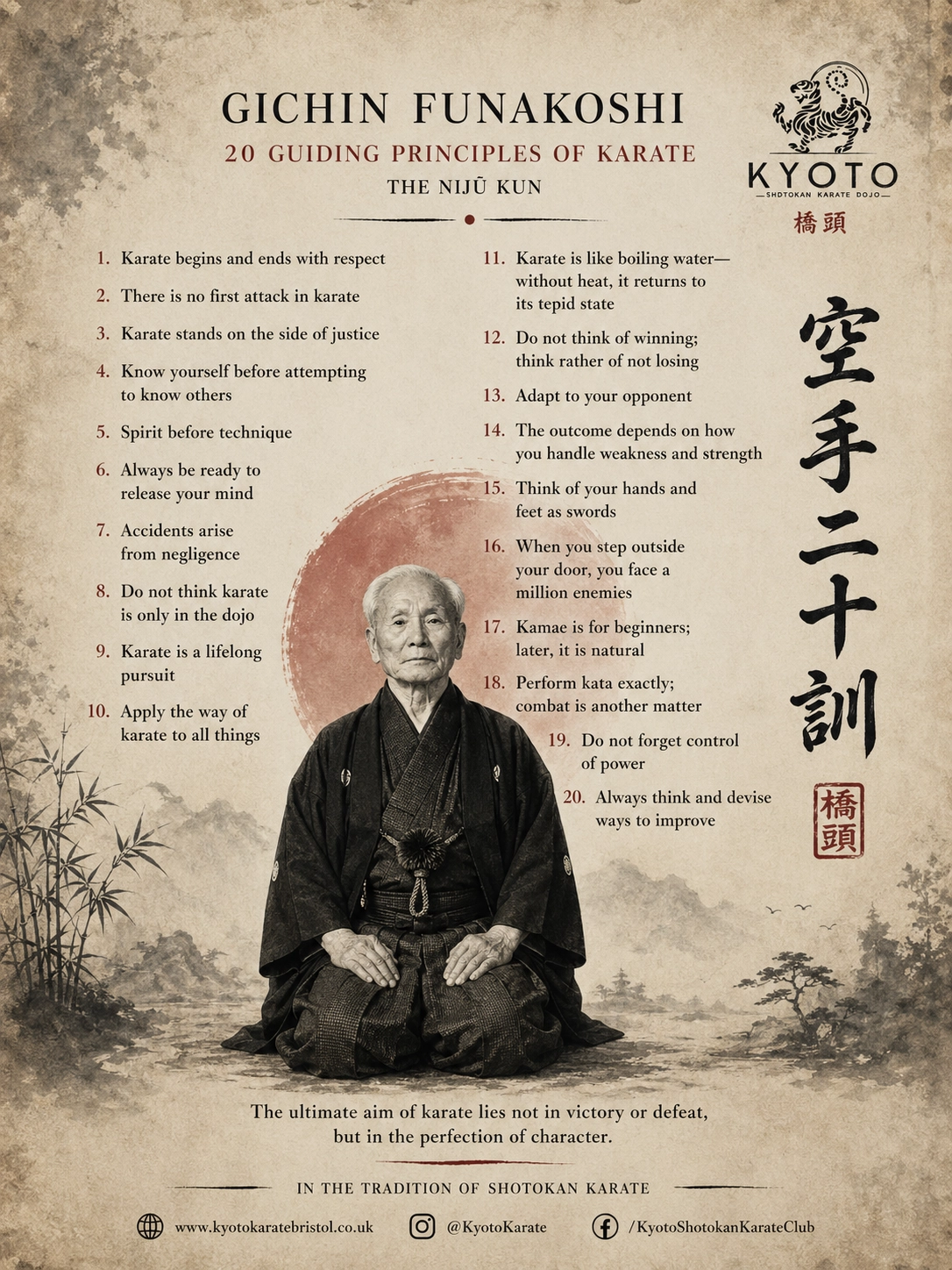 At its core, Shotokan is guided by principles established by Gichin Funakoshi.
One of the most well-known is:
“Karate begins and ends with respect.”
Training is not about aggression—it is about self-improvement.
Progress in karate reflects:
- Consistency
- Effort
- Attitude
Shotokan at Kyōtō (橋頭 – Bridgehead)
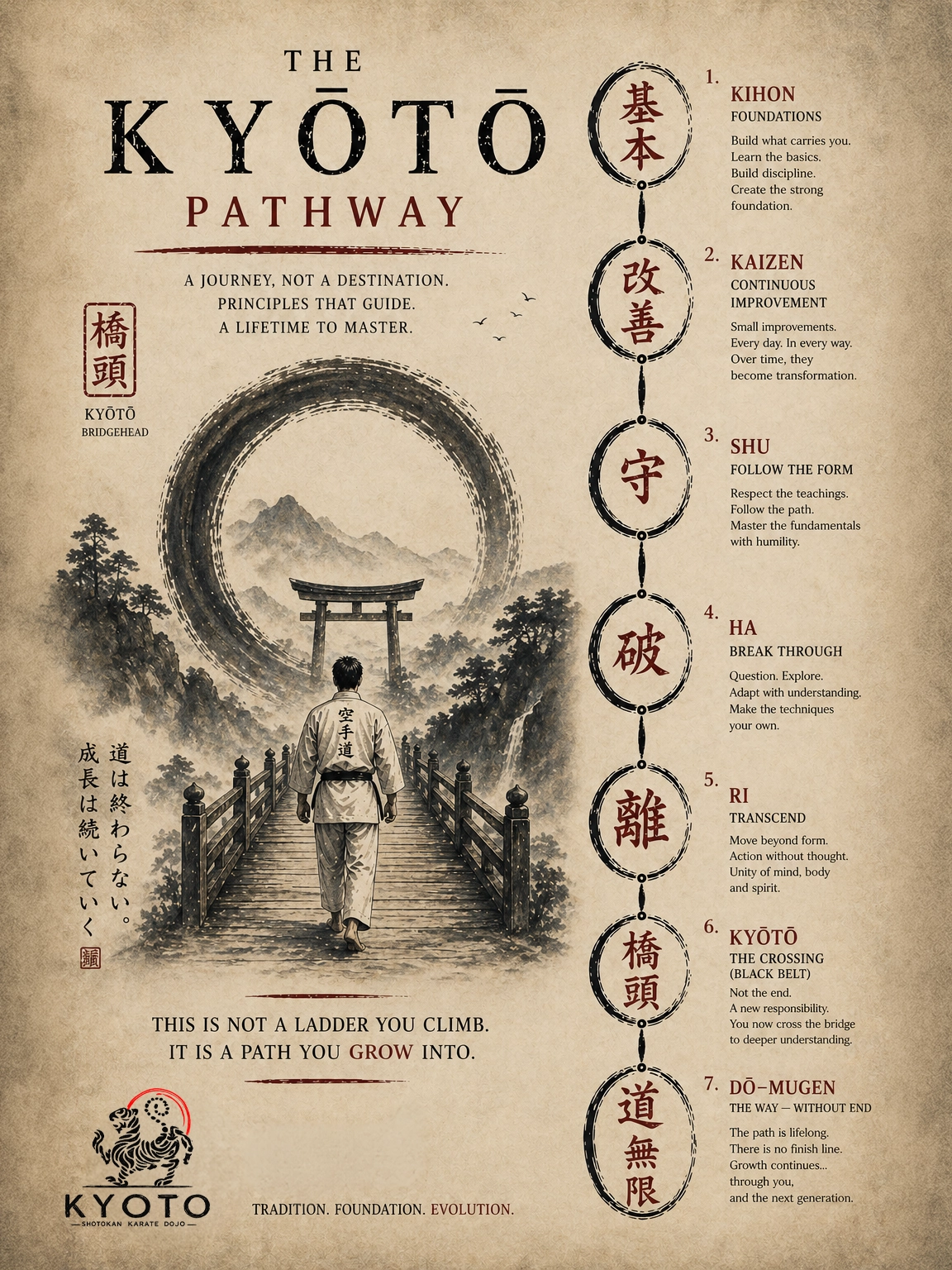 At Kyōtō Shotokan Karate Dojo, training follows traditional Shotokan principles while remaining accessible and relevant to modern students.
We emphasise:
- Correct technique and strong fundamentals
- Structured, progressive learning
- A respectful and supportive training environment
- Opportunities for development at all levels
Classes are designed so that:
- Beginners can start with confidence
- Experienced students continue to be challenged
- Children and adults can train together effectively
A System for Life
Shotokan Karate is not something learned quickly.
It is a long-term journey.
Students progress step by step, building:
- Technical ability
- Physical conditioning
- Mental strength
There is no shortcut—only consistent training.
Why Shotokan?
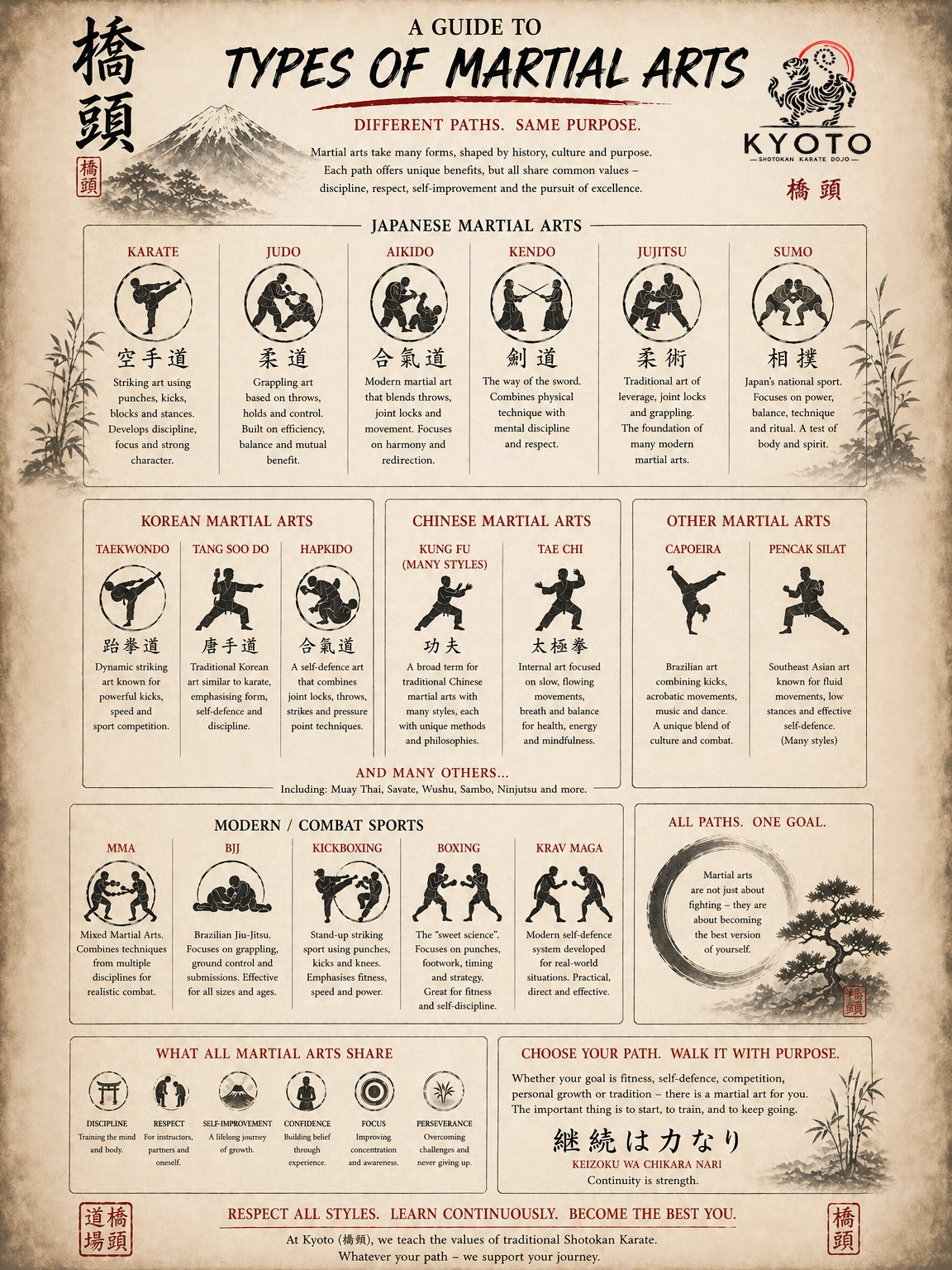 Shotokan provides:
- A clear and structured progression pathway
- Internationally recognised standards
- A balance of tradition and practicality
- A lifelong discipline that continues to evolve
The Kyoto Perspective
At 橋頭 (Kyōtō – “Bridgehead”), Shotokan represents a point of connection:
- Between tradition and modern training
- Between student and instructor
- Between beginning and progression
Karate is not just about where you start—
it is about how far you are willing to go.
Read more about the Kyōtō perspective here.