Sunday 10th May 2026 – Beaufort Centre, Newport
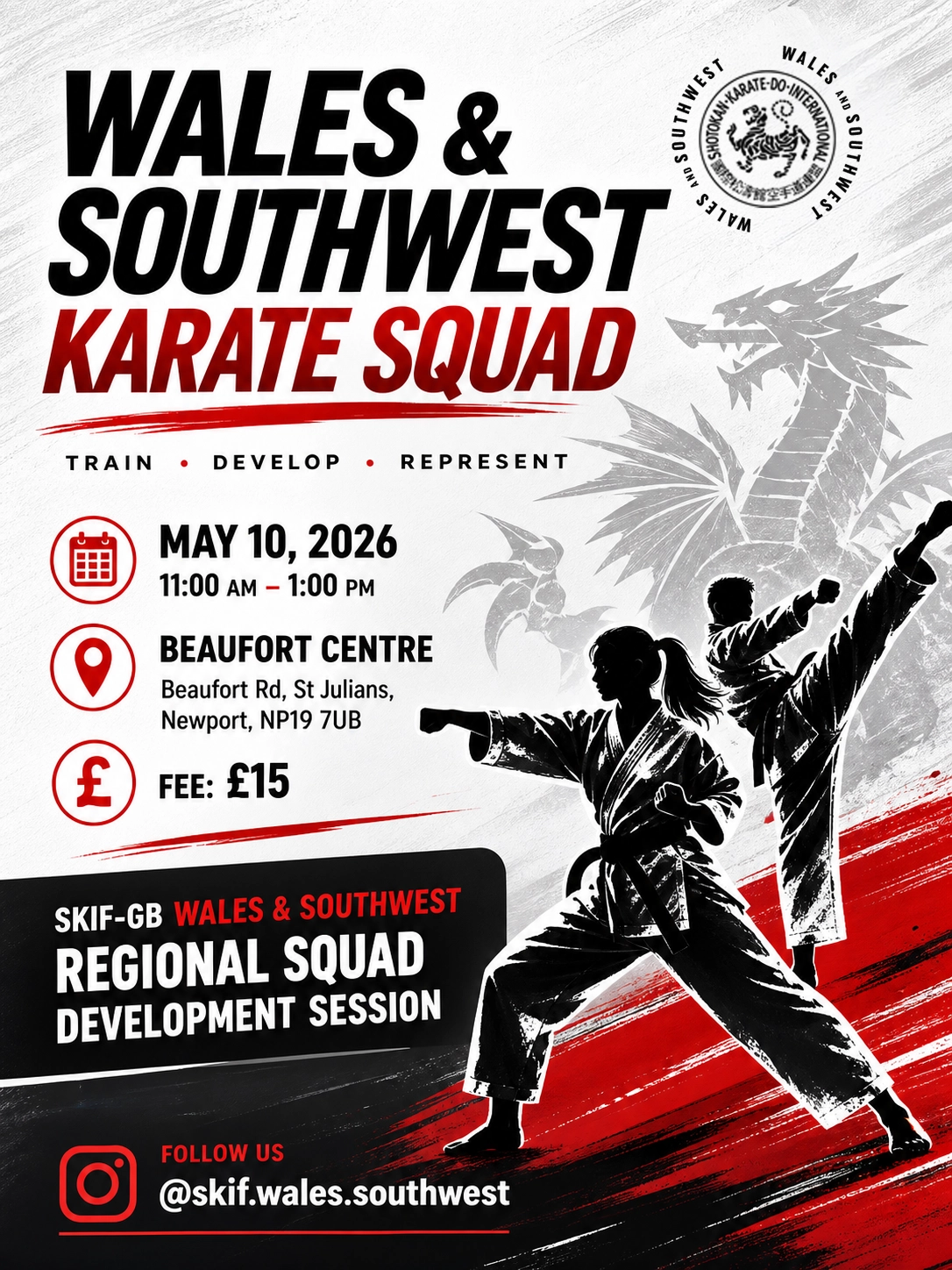 The latest SKIF-GB Wales & Southwest Regional Squad Development Session took place on Sunday 10th May 2026 at the Beaufort Centre in St Julians, Newport.
Originally scheduled to take place at St Bedes Catholic College in Bristol, the venue had to be changed a couple of months beforehand due to the sports hall being required for examinations. Instead, the squad headed across the Prince of Wales Bridge into South Wales, with the Beaufort Centre providing a large open training hall for the day’s session. Whilst spacious, the vinyl-covered floor certainly reminded everyone it was designed more for practicality than comfort — cold underfoot and with very little give.
The session was led by Wales & Southwest Regional Coach Dave Griffiths Sensei (7th Dan), with Kyōtō’s Steve Ashby Sensei attending in his role as Assistant Regional Coach.
Despite the smaller numbers — understandable with exam season beginning across the region — the quality and spirit of the training remained high throughout. Five students attended the session, including regular squad member Nick Bruce-Jones Sensei travelling up from Exeter, collecting Steve Sensei en route before making the journey into Newport.
It was particularly encouraging to welcome three new attendees from Newport, including two orange belts (8th kyu) experiencing regional squad training for the first time, alongside a black belt also attending his first Wales & Southwest session. John also made the trip across from Bristol, helping round out a small but enthusiastic group.
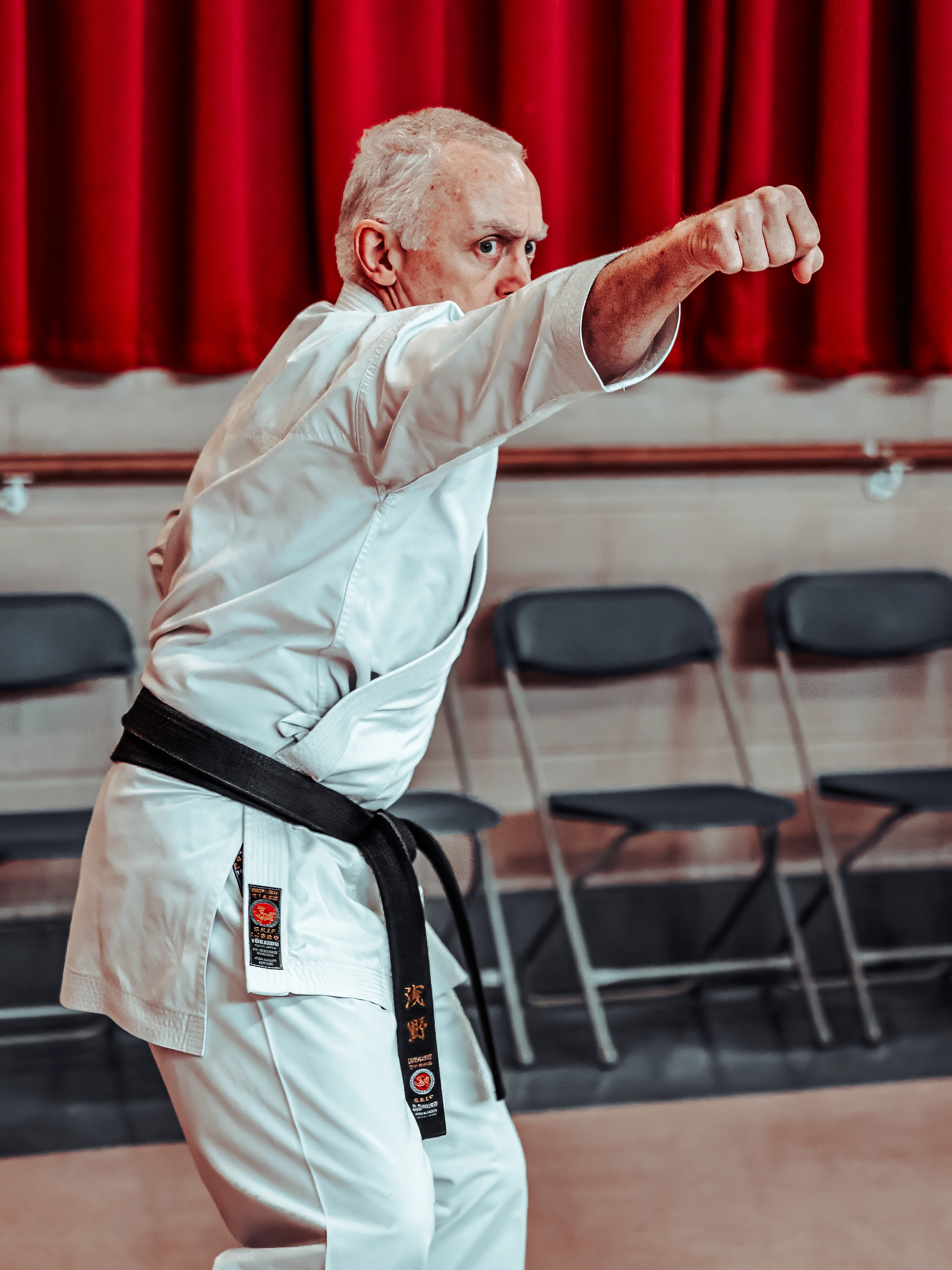 Training began with a warm-up before quickly moving into footwork drills, with everyone travelling forwards and backwards across the hall practising yori-ashi movement before adding gyaku-zuki into the exercise.
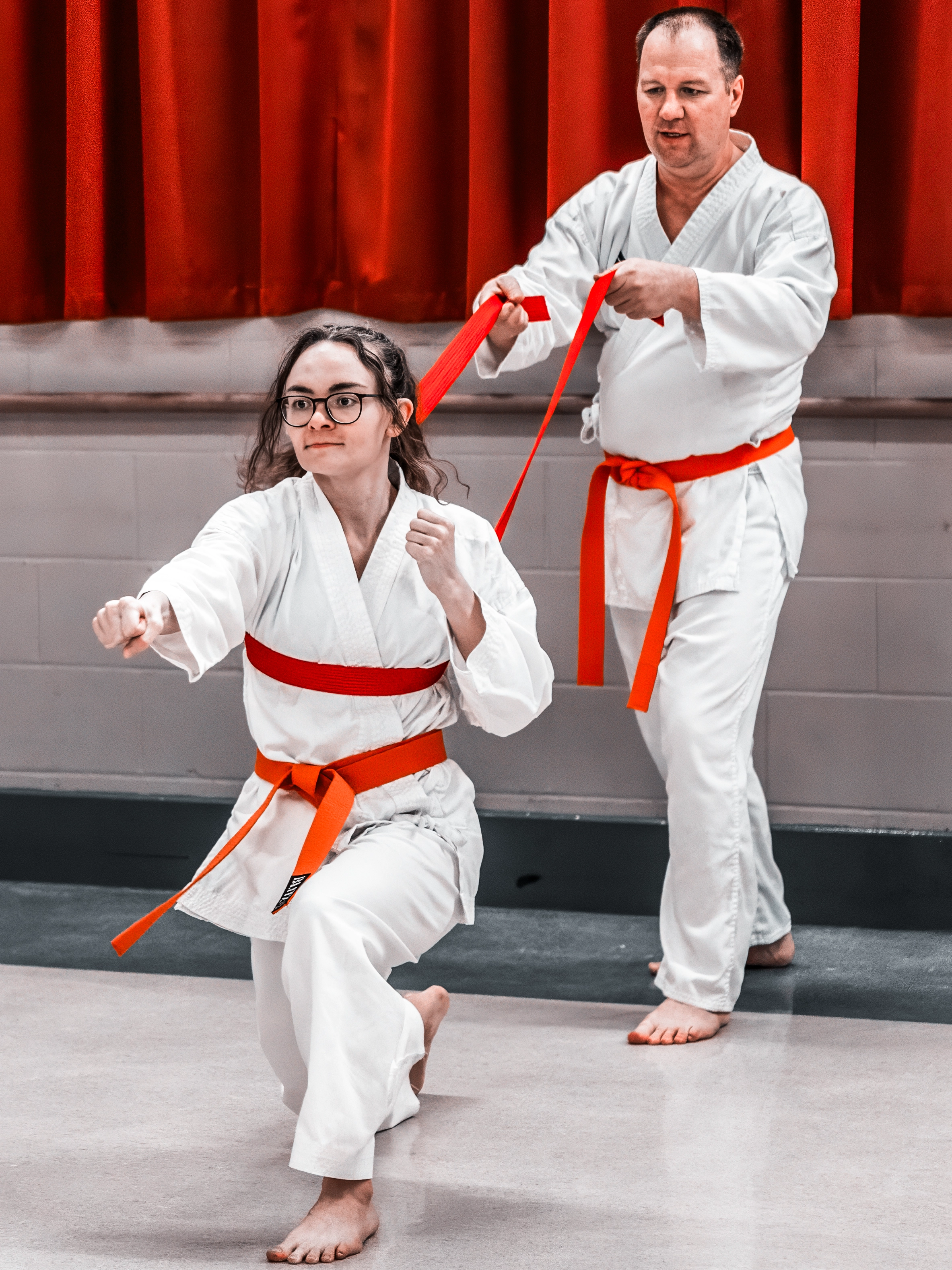 From there, students partnered up for resistance work. Using an obi (belt) wrapped around the chest to create resistance, the aim was to execute strong gyaku-zuki without leaning head and shoulders into the technique — reinforcing posture, hip drive and correct body alignment.
The next drills focused heavily on reaction and timing. Starting back-to-back in yoi-dachi, partners reacted to a whistle by turning and delivering gyaku-zuki attacks toward each other. The same exercise was then repeated using kizami-zuki, with partners rotating after each round to ensure everyone worked with different timings and distances.
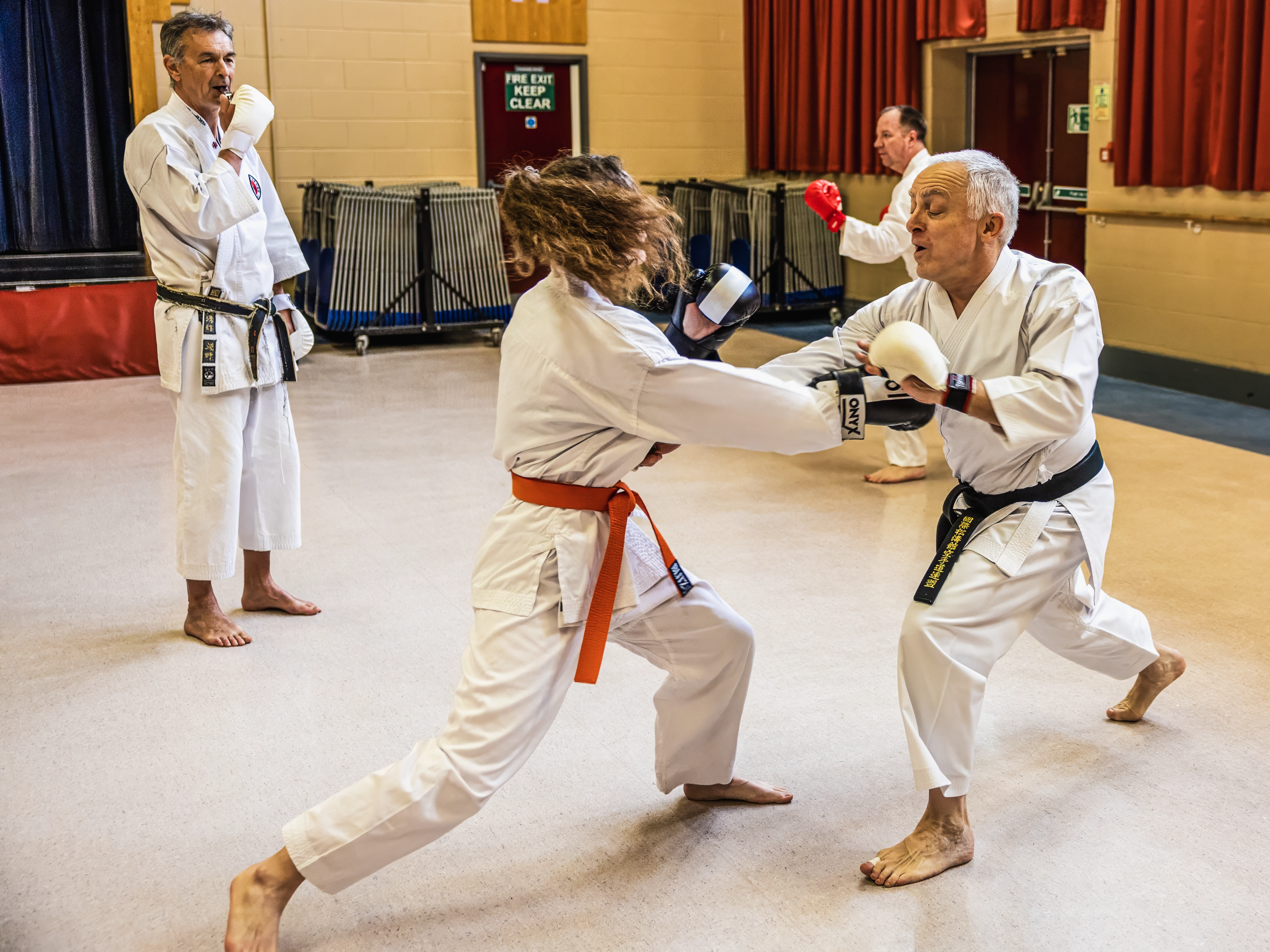 Another exercise introduced controlled pressure and defensive movement. One partner attacked continuously, driving the defender backwards several yards, whilst the defender was restricted to blocking only. The progression then allowed the defender to evade to the side before countering with uraken uchi (backfist strike). Again, regular partner changes ensured students adapted to different opponents and styles.
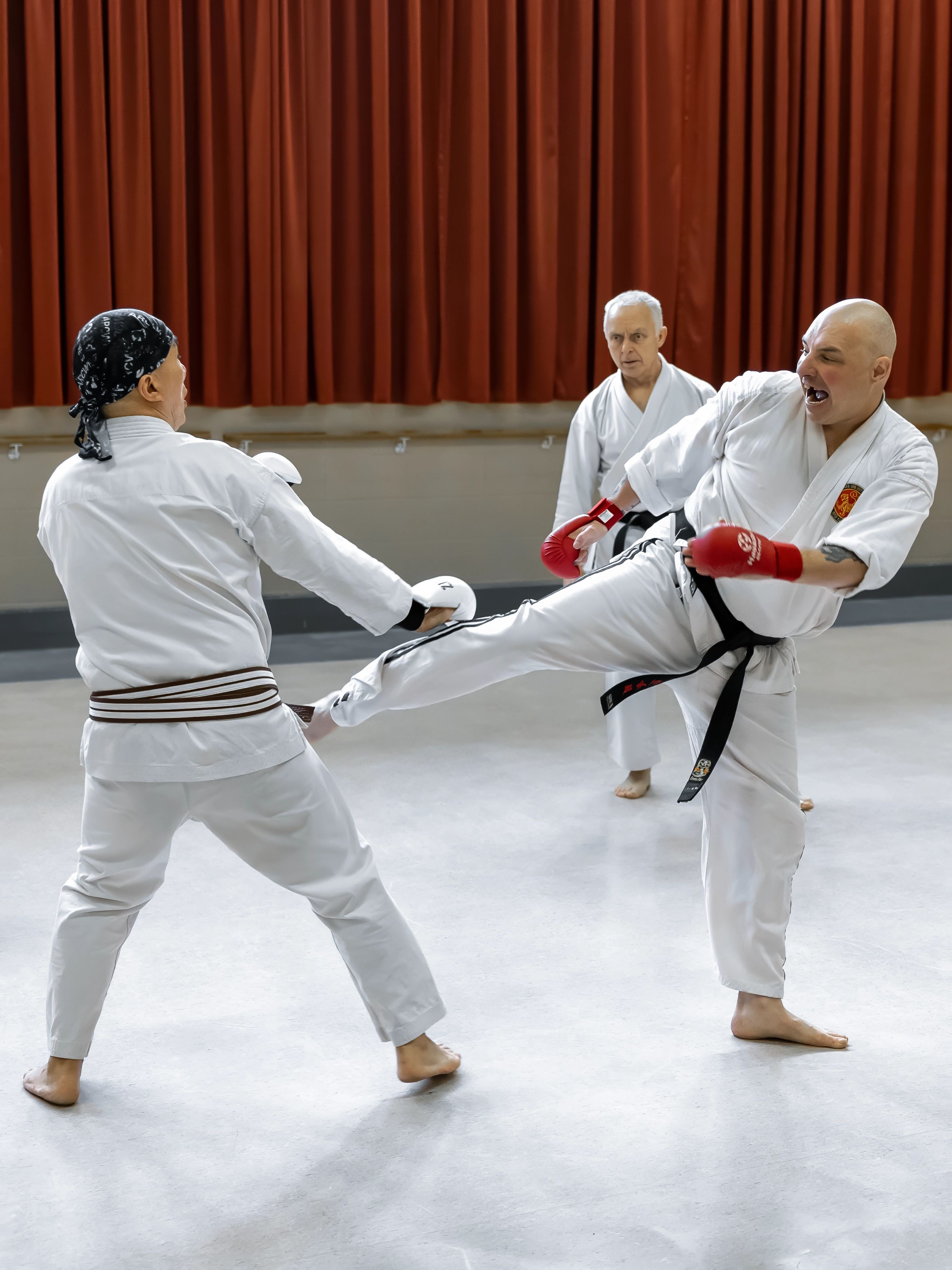 The final 45 minutes shifted into shobu ippon kumite, with Nick Sensei taking on refereeing duties. For the two orange belts this was an entirely new experience and provided an excellent introduction to structured competition-style sparring. Meanwhile, for John and fellow black belt Steve, it also proved valuable as neither had previously sparred together before.
The session concluded with a fast-paced reaction drill involving four karateka lined up opposite each other. The two outer pairs exchanged gyaku-zuki, followed immediately by the inner pair turning and attacking each other before the sequence repeated continuously, regularly changing the order and timing to maintain pressure and concentration right until the end of training.
Whilst smaller in attendance than some previous regional sessions, the atmosphere remained positive and focused throughout, with a strong mix of experienced squad members and newer karateka taking their first steps into regional-level training.
Regional squad sessions continue to play an important role in developing timing, distance, reaction, and confidence — while also helping karateka from different dojos across Wales and the Southwest train together in a supportive and challenging environment.