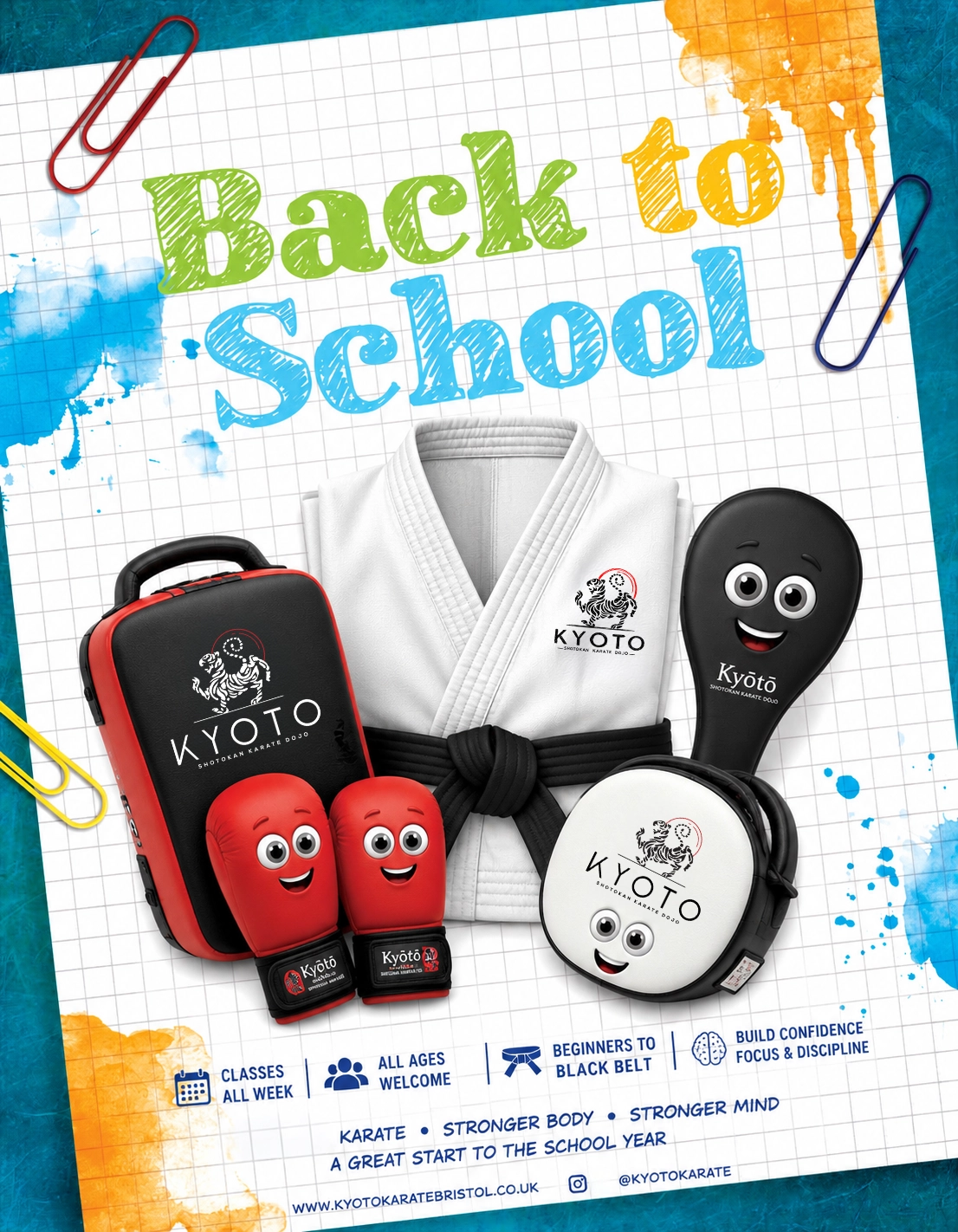
As the summer holidays draw to a close and children across the UK prepare to head back to school, attention naturally turns to new classrooms, new teachers, new routines — and, for some, entirely new schools.
It can be an exciting time, but it can also bring challenges. After several weeks away from the classroom, children have to readjust to structure, concentrate for longer periods and manage the social and emotional demands of school life.
While karate might seem a world away from reading, writing and maths, many of the skills children develop in the dojo can complement those they need at school.
At Kyōtō Shotokan Karate Dōjō, we don’t just teach children how to kick and punch. Karate provides an environment in which they can learn to focus, persevere, work with others and gradually become more confident in their own abilities.
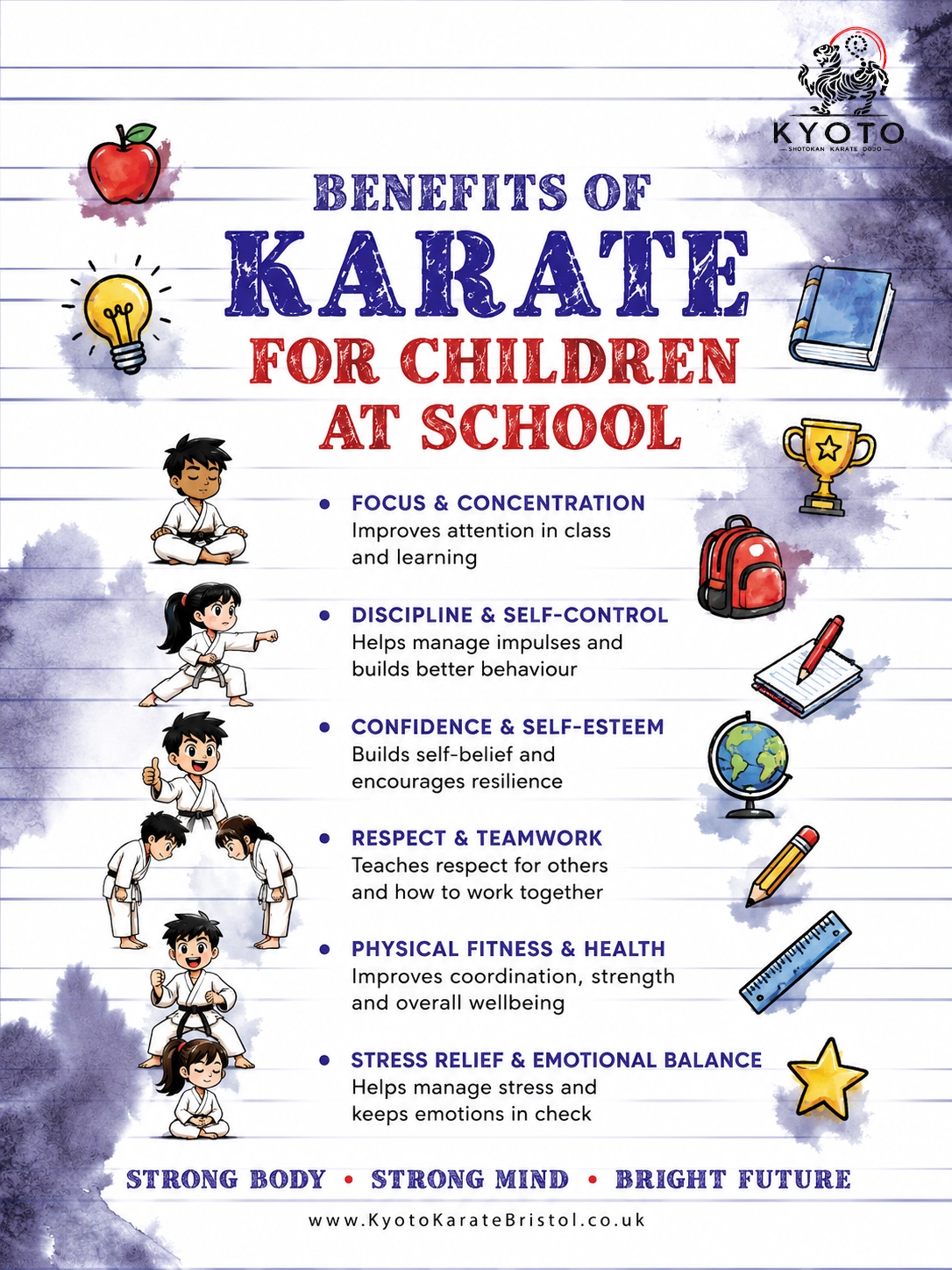
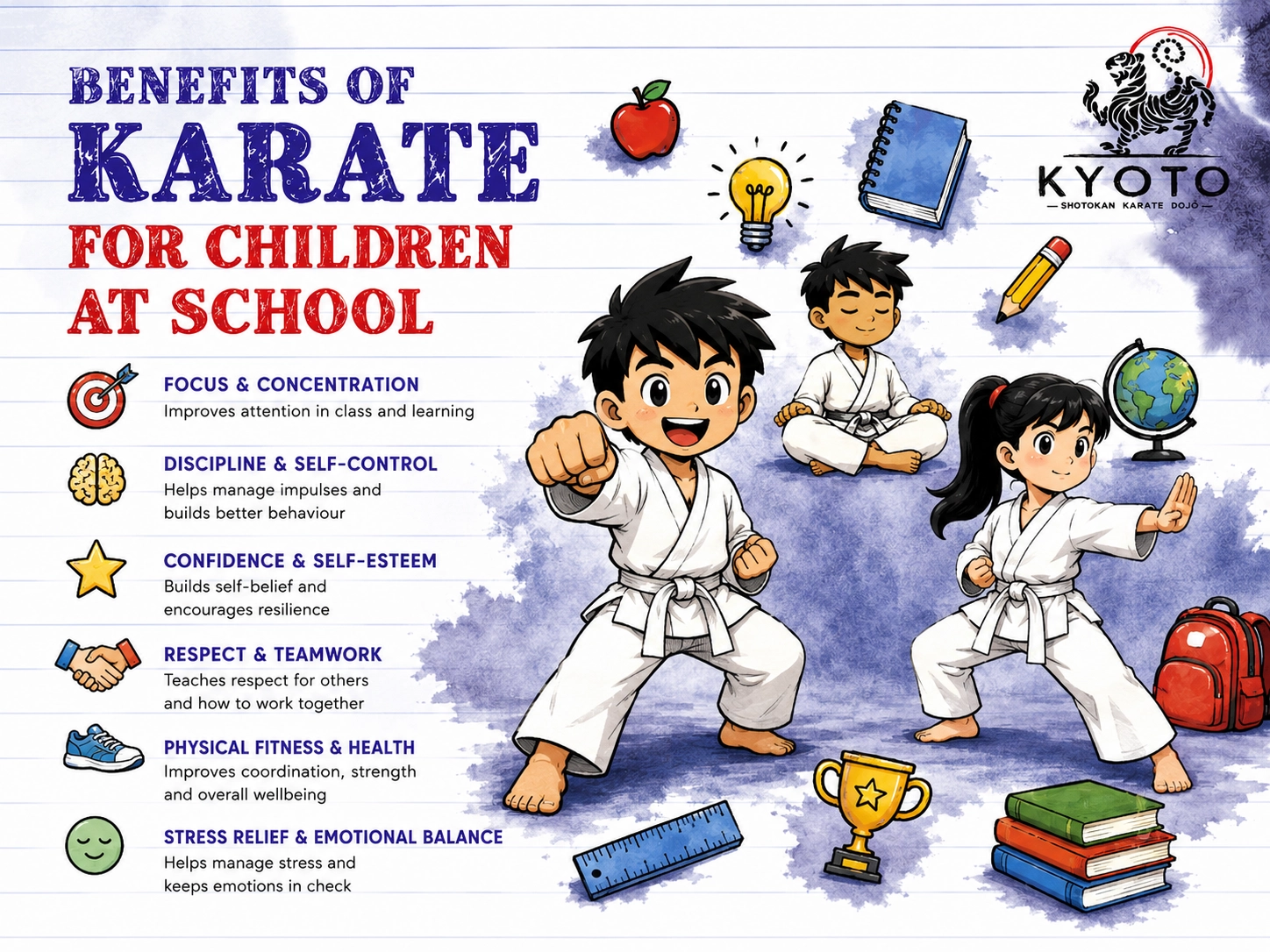
Focus and concentration 🎯
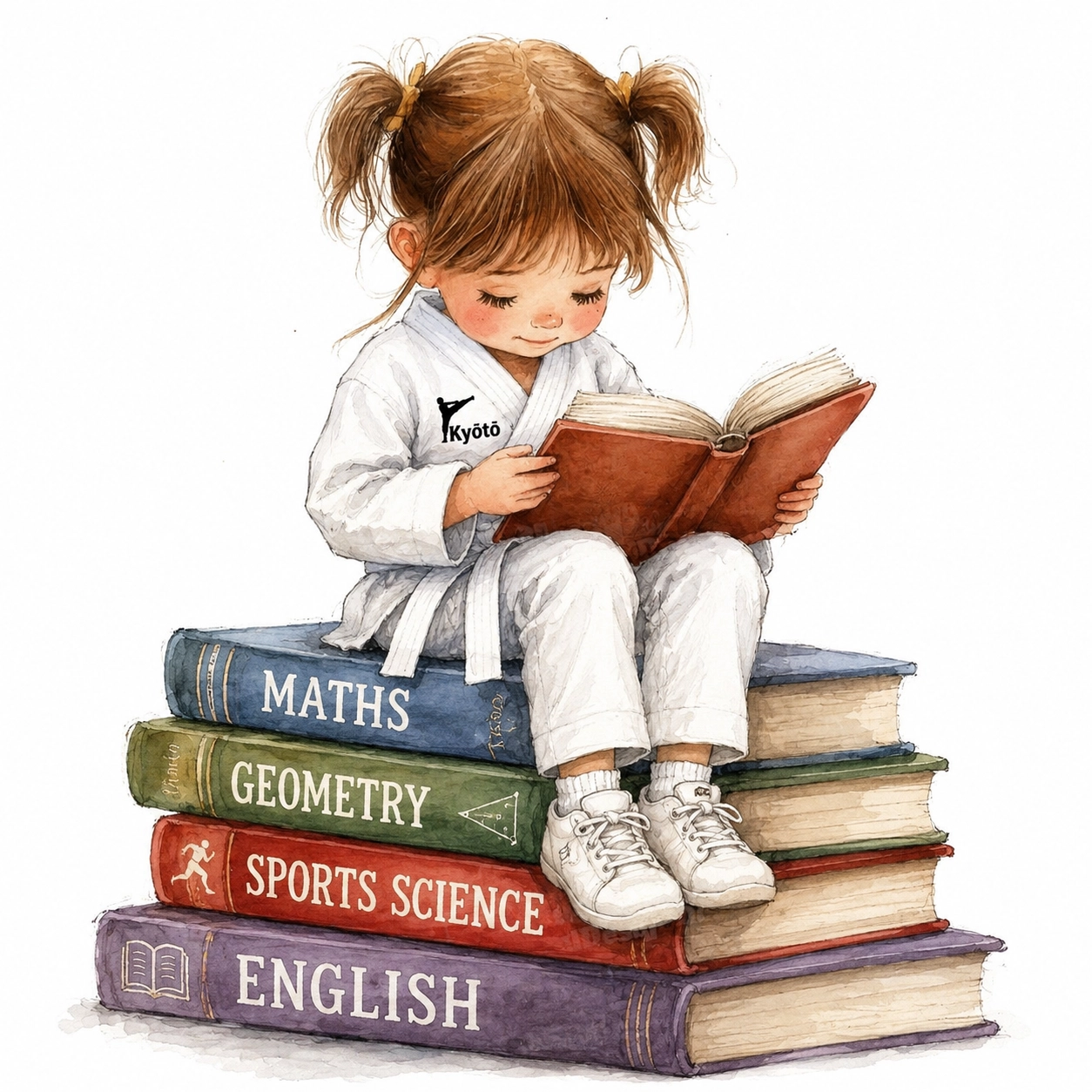 A karate class requires children to listen, watch and then try to reproduce what they have been shown.
Sometimes that means remembering a sequence of movements in a kata. At other times it might mean listening carefully to instructions before practising with a partner.
Their attention will inevitably wander occasionally — they’re children! Part of learning karate is recognising that and bringing their focus back to the task.
Over time, regularly practising this ability to listen, concentrate and remain engaged can become a useful skill far beyond the dojo.
Discipline and self-control 🧠
Karate has structure.
We bow when entering and leaving the dojo. We listen when somebody is teaching. We learn when it is appropriate to practise and when it is time to stop. We learn to control techniques when working with another person.
Perhaps most importantly, children discover that improvement usually doesn’t happen immediately.
A technique may take hundreds or even thousands of repetitions before it begins to feel natural.
That develops a different understanding of discipline: doing something because you want to improve, even when it is difficult or when you’d rather be doing something else.
That’s a valuable lesson for school — and for life.
Confidence and self-esteem ⭐
Confidence isn’t necessarily about being the loudest person in the room.
Karate can help children develop a quieter kind of confidence based upon achievement.
Learning their first kata, remembering a difficult combination, earning their next grade, entering a competition or simply managing something this week that they couldn’t do last week can all provide small milestones.
Those successes accumulate.
Just as importantly, children learn that making mistakes is normal. They don’t have to get everything right first time.
They can try, fail, learn, adjust and try again.
That resilience and willingness to keep trying can be particularly valuable when children encounter challenges at school.
Respect and teamwork 🤝
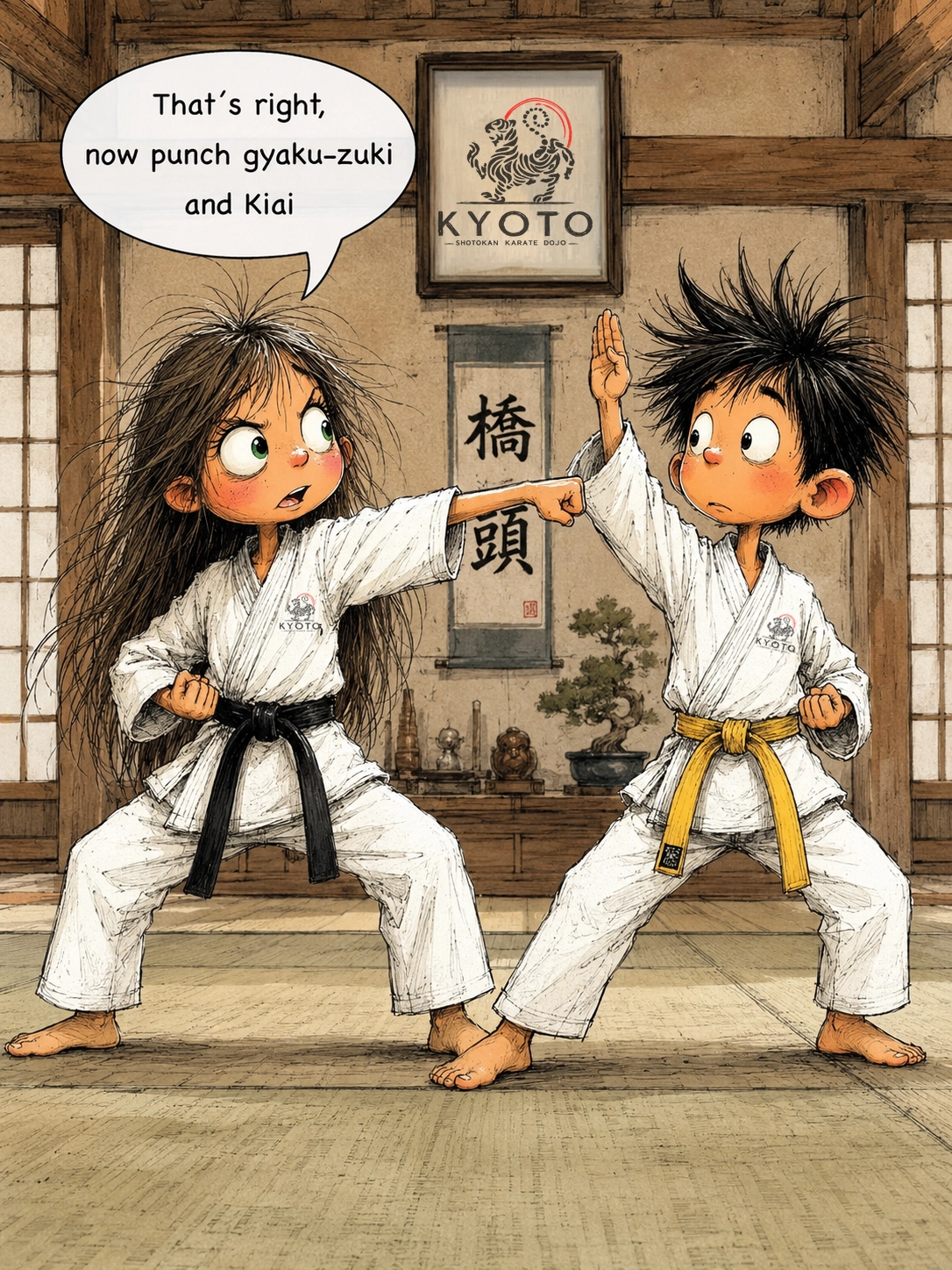
Although karate is often described as an individual martial art, very little training actually happens in isolation.
Children practise with people of different ages, abilities and personalities. They learn to take turns, help partners and adapt their techniques to the person standing opposite them.
They also learn that respect works both ways.
Karate etiquette encourages respect for instructors and senior students, but also for beginners, training partners and the dojo itself.
At Kyōtō, children and adults train alongside one another, creating a wider dojo community in which everyone has something to learn — and eventually something they can help somebody else to learn.
Physical fitness and coordination 💪
School can involve a lot of sitting down.
Karate provides an opportunity to move.
Running, jumping, punching, kicking, turning and changing direction all help children develop balance, coordination, flexibility, strength and general fitness.
There is also considerable coordination involved in learning to make different parts of the body work together.
Something as apparently simple as stepping forward and punching correctly requires coordination between the feet, legs, hips, torso and arms — while maintaining posture, balance and awareness of everything happening around you.
And because children are learning skills rather than simply exercising for the sake of exercise, they may not always realise quite how much physical work they’re doing!
Managing stress and emotions 😌
School isn’t only academically demanding.
Friendships, expectations, homework, tests and simply growing up can all create pressure.
Karate can’t remove those pressures, but the dojo can provide somewhere completely different for an hour.
Once training begins, attention turns to the immediate task: the next technique, the next combination, the next kata.
Physical activity can provide an outlet for energy and frustration, while the structured environment of karate encourages children to learn how to manage their emotions and remain composed when something doesn’t go their way.
Learning that progress takes time
Perhaps one of karate’s most useful lessons for children is also one of its simplest:
You don’t have to be good at something immediately.
Karate is a long journey.
Everyone begins as a beginner.
The black belts children see teaching or training today were once white belts who didn’t know how to make a fist, stand correctly or perform their first technique.
They improved by turning up, practising and making lots of mistakes along the way.
In a world where results can sometimes appear instant, karate offers a very different message:
Progress comes through practice, patience and perseverance.
Back to school — and perhaps into the dojo
As children return to school next week, it’s a natural time for families to settle back into routines and think about activities for the new academic year.
If your child has never tried karate before, September can be a great time to start.
At Kyōtō Shotokan Karate Dōjō in Bristol, beginners are welcome and children train as part of our wider dojo community.
They don’t need to be particularly sporty, flexible, confident or coordinated before they begin.
That’s what training is for.
Karate won’t do their homework for them — unfortunately! — but the focus, discipline, confidence, resilience, respect and perseverance they develop through regular training may prove every bit as useful outside the dojo as inside it.
Strong body. Strong mind. Bright future. 🥋