More Than Just Bowing
In traditional karate, etiquette is often one of the first things a beginner notices.
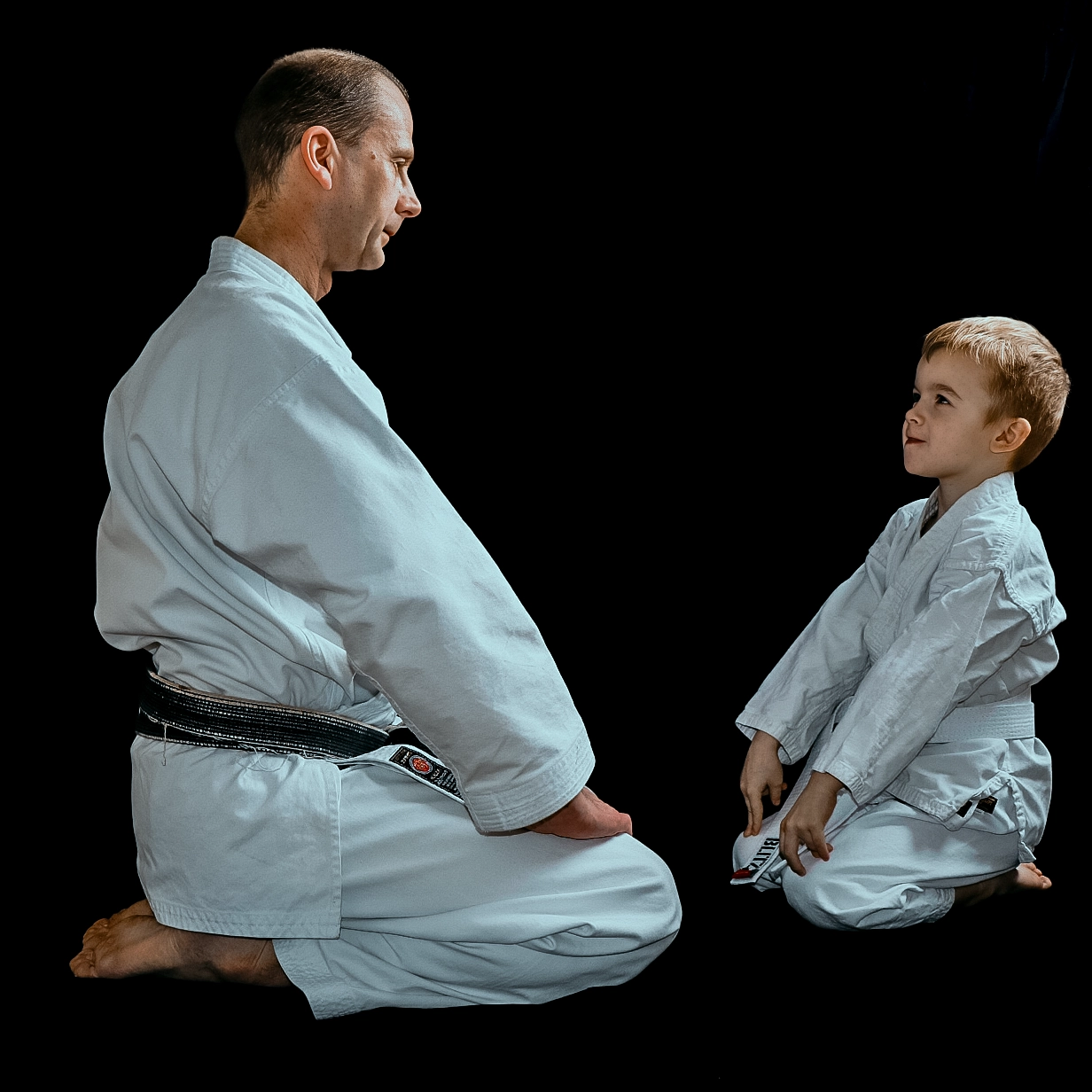 The line-up.
The bow.
The silence before training begins.
The formal commands.
The respect shown towards instructors and fellow students.
To an outsider, this can appear strict, old-fashioned, or even intimidating.
But dōjō etiquette is not about creating fear or blind obedience. It exists for a much deeper reason.
Etiquette creates the environment in which karate can be properly learned.
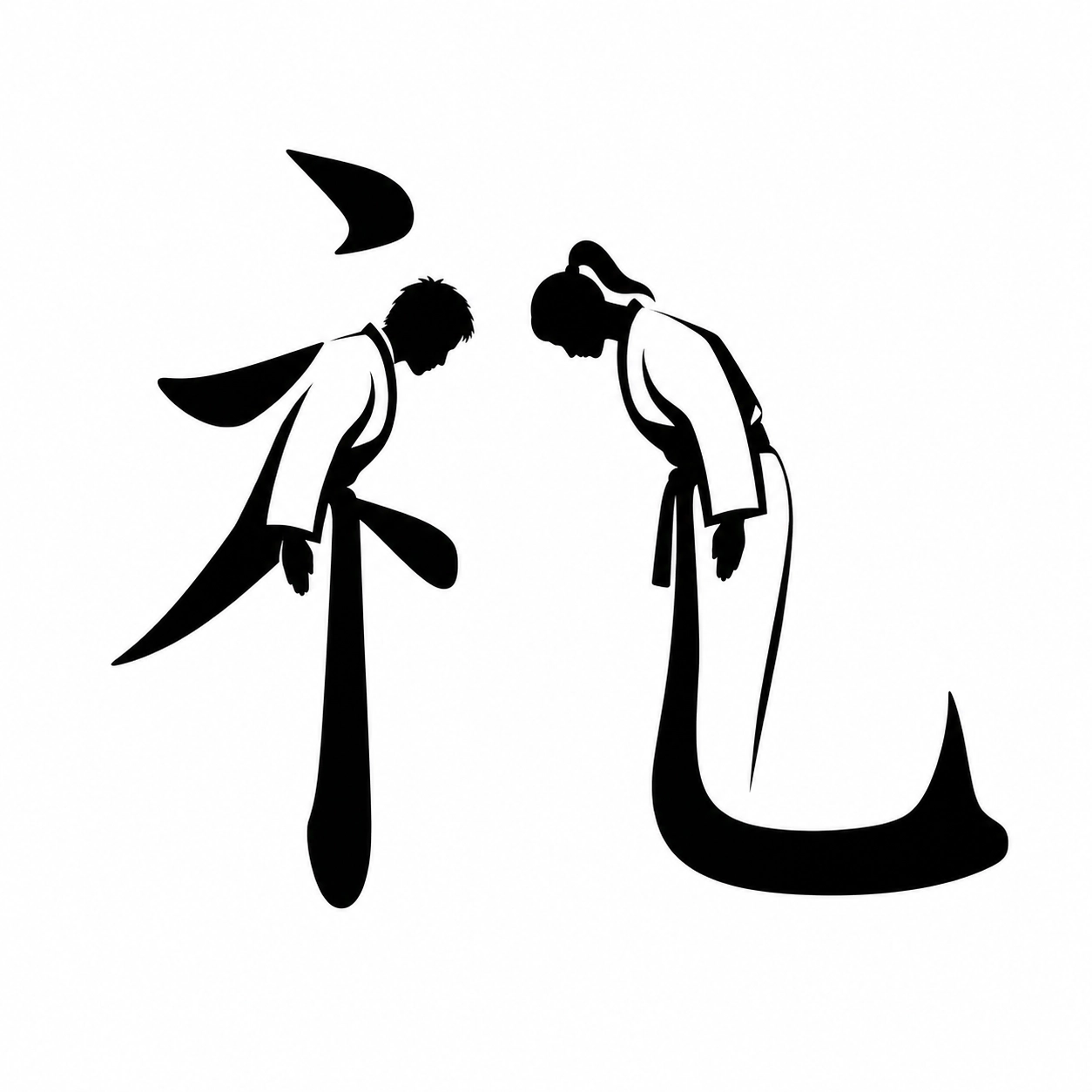 In Japanese, the word 礼 (Rei) is often translated simply as “bow” or “manners,” but its meaning is far broader than that. Rei represents respect, gratitude, humility, and consideration for others. In many ways, etiquette is the invisible framework that holds the dōjō together.
At Kyōtō Shotokan Karate Dojo, etiquette is not treated as separate from karate training — it is part of the training.
Why Etiquette Matters
Karate is unusual in that students spend much of their training deliberately placing themselves into vulnerable situations.
You stand in front of someone while they punch towards your face.
You allow someone to throw you, sweep you, or pressure you.
You train with people larger, stronger, faster, or more experienced than yourself.
Without trust, this simply would not work.
Etiquette helps build that trust.
When students bow before kumite, they are acknowledging one another.
When they help tidy equipment away, they show respect for the dōjō.
When they arrive on time and listen properly, they show respect for everyone else’s training time.
These things may appear small, but together they create the culture of the dōjō.
A strong dōjō is not built purely on technical skill. It is built on mutual respect.
The Bow Is Not Submission
One of the biggest misconceptions in martial arts is that bowing represents submission.
In reality, the karate bow is much closer to a handshake.
It says:
- “Thank you for training with me.”
- “I respect your effort.”
- “Let us train sincerely and safely.”
You bow when entering the dōjō because the training space matters.
You bow to your partner because without them you cannot improve.
You bow at the end of training because gratitude is part of karate.
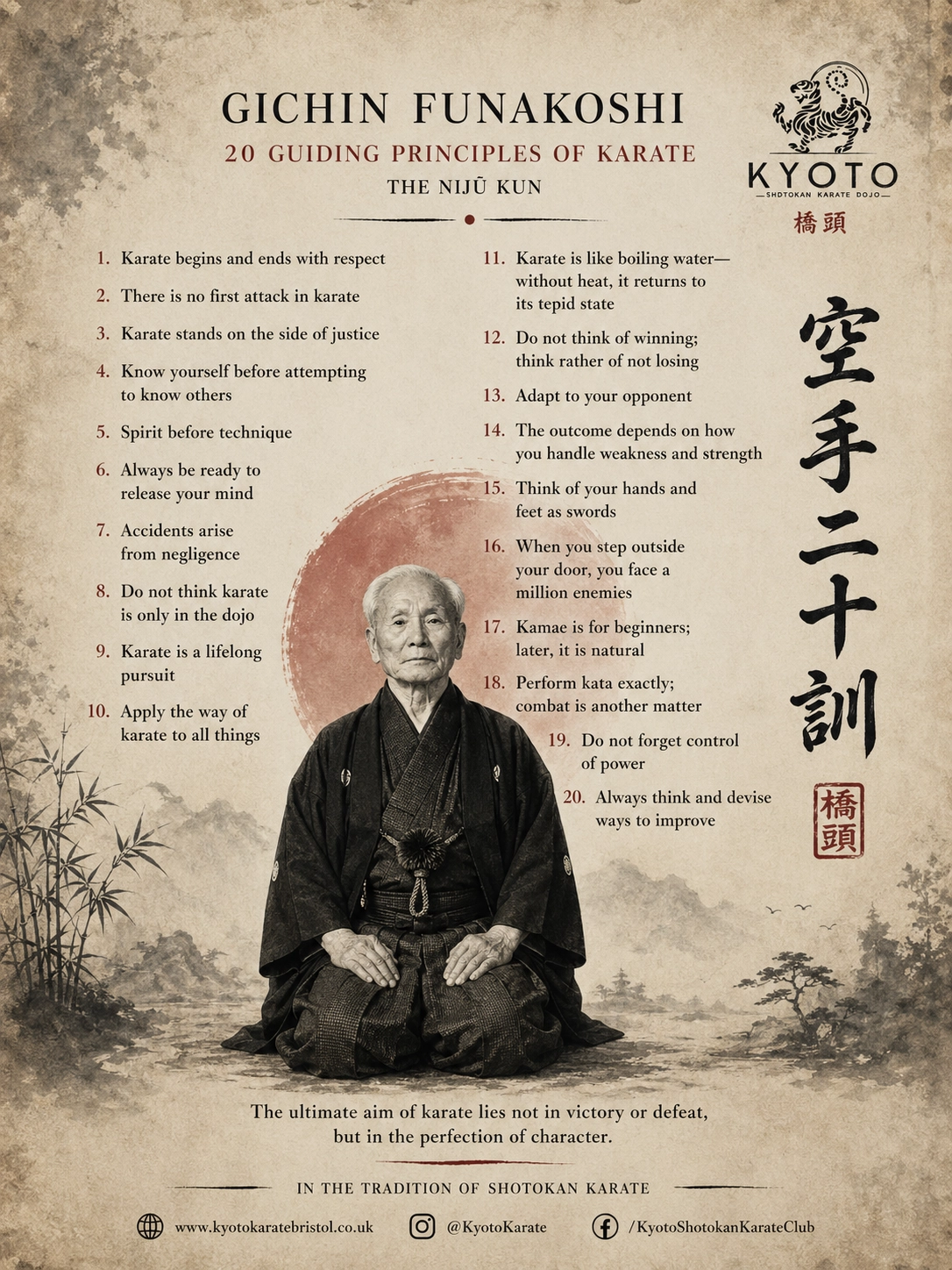
Funakoshi-sensei famously stated:
“Karate begins and ends with Rei.”
Not because karate is about politeness alone, but because without respect, karate quickly becomes ego.
Etiquette Creates the Right State of Mind
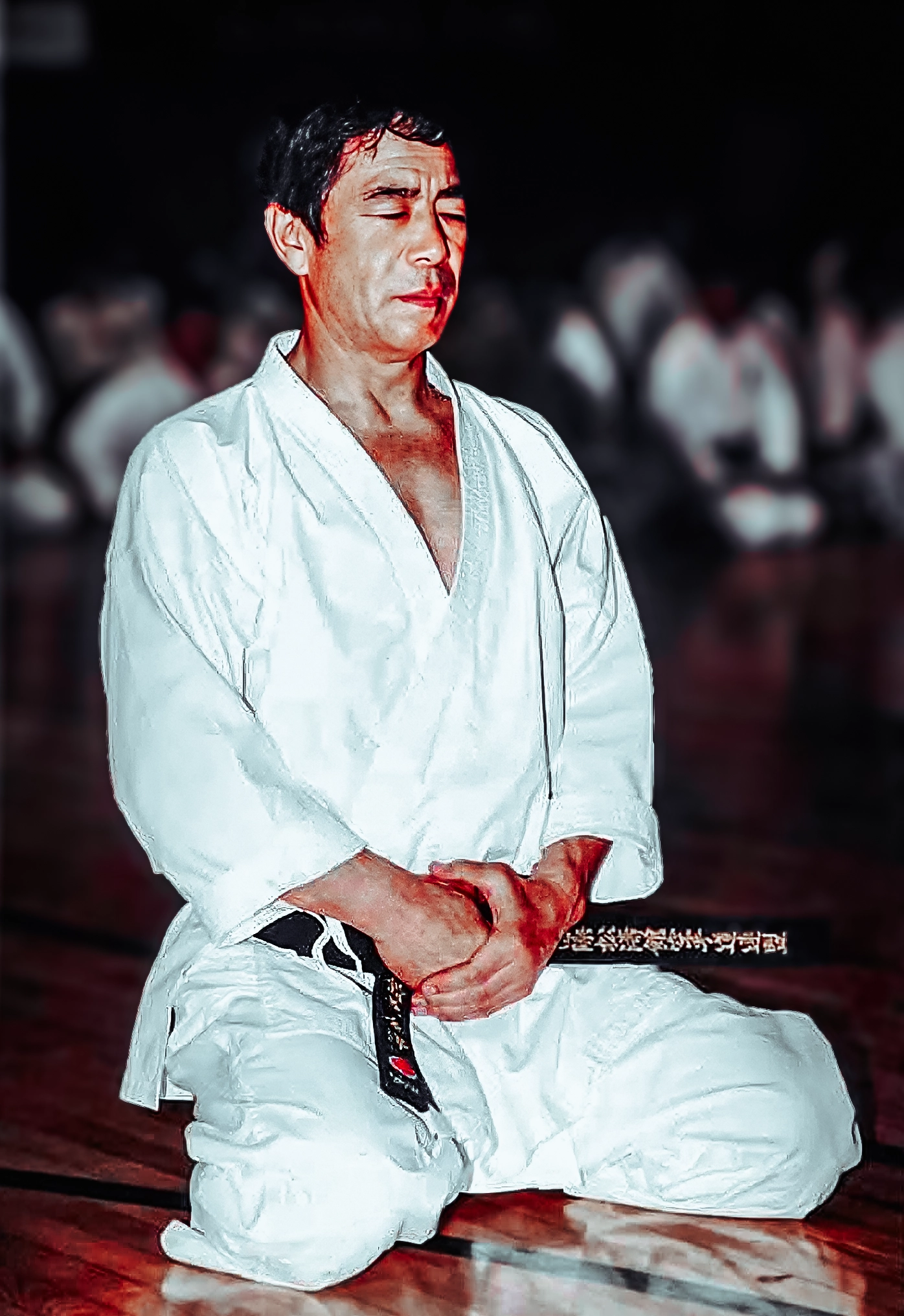 A noisy, chaotic room produces a noisy, chaotic mind.
The structure and etiquette of traditional karate help students transition from everyday life into training.
Removing shoes.
Lining up properly.
Standing in musubi-dachi.
Closing the eyes during mokuso.
Listening quietly to instruction.
These are small rituals, but rituals shape mindset.
A student may arrive stressed from work, frustrated from school, or distracted by life outside the dōjō. Etiquette helps settle the mind and focus attention on training.
This is one reason why experienced karateka often value the atmosphere of the dōjō just as much as the techniques themselves.
Respect Flows in All Directions
Good etiquette is not only for students.
A good instructor should also embody Rei.
An instructor who humiliates students, mocks beginners, or teaches through fear alone may appear “traditional,” but often misses the true spirit of karate-dō.
Respect flows both ways.
The instructor respects the effort of the student.
The senior respects the beginner.
The stronger student controls their technique with care.
The beginner respects the experience of the senior.
This reflects the Japanese concept of omoiyari (思いやり) — consideration for others.
Sometimes this is seen in simple actions:
- Helping a junior tie their belt.
- Adjusting intensity during partner work.
- Encouraging nervous beginners.
- Cleaning the floor together after training.
- Staying behind to help tidy equipment.
These moments are often where the true culture of a dōjō is revealed.
Discipline Without Ego
Etiquette also helps keep ego under control.
In modern life we are encouraged to constantly promote ourselves, prove ourselves, and compete for recognition. The dōjō can become an escape from that.
Everyone wears the same uniform.
Everyone trains basics.
Everyone makes mistakes.
Everyone continues learning.
The belt may show experience, but etiquette reminds us that nobody is above the training itself.
A black belt who refuses to bow properly, arrives late without apology, talks through instruction, or treats juniors poorly demonstrates that rank alone means little.
True seniority is shown through behaviour.
The Little Things Matter
Many aspects of dōjō etiquette seem minor until they disappear.
A student rushing onto the floor late without acknowledgement disrupts concentration.
Talking while the instructor explains wastes everyone’s training time.
Careless partner work destroys trust.
An untidy gi reflects an untidy mindset.
None of these things are catastrophic individually, but together they slowly weaken the atmosphere of the dōjō.
Likewise, small positive habits strengthen it:
- A sincere bow.
- A quick “oss.”
- Helping a new student feel welcome.
- Training with focus.
- Thanking your partner afterwards.
Karate is often described as polishing the self. Etiquette is part of that polishing process.
Beyond the Dōjō
Ultimately, dōjō etiquette is not supposed to stay inside the dōjō.
The aim is not merely to produce students who bow correctly in karate class. The aim is to develop qualities that carry into everyday life:
- Respect.
- Patience.
- Humility.
- Self-control.
- Awareness of others.
A student who learns discipline in training may later apply it to work, study, family life, or difficult situations outside karate.
This is why traditional karate is often described as karate-dō — “the way of karate.”
The techniques matter.
The fighting ability matters.
But character matters too.
Final Thoughts
At first, etiquette can feel unfamiliar to beginners.
Over time however, most students begin to understand that the rituals of the dōjō are not empty tradition. They exist because generations of karateka discovered that they help create better training, safer practice, and stronger people.
The bow is not the important part.
The respect behind it is.