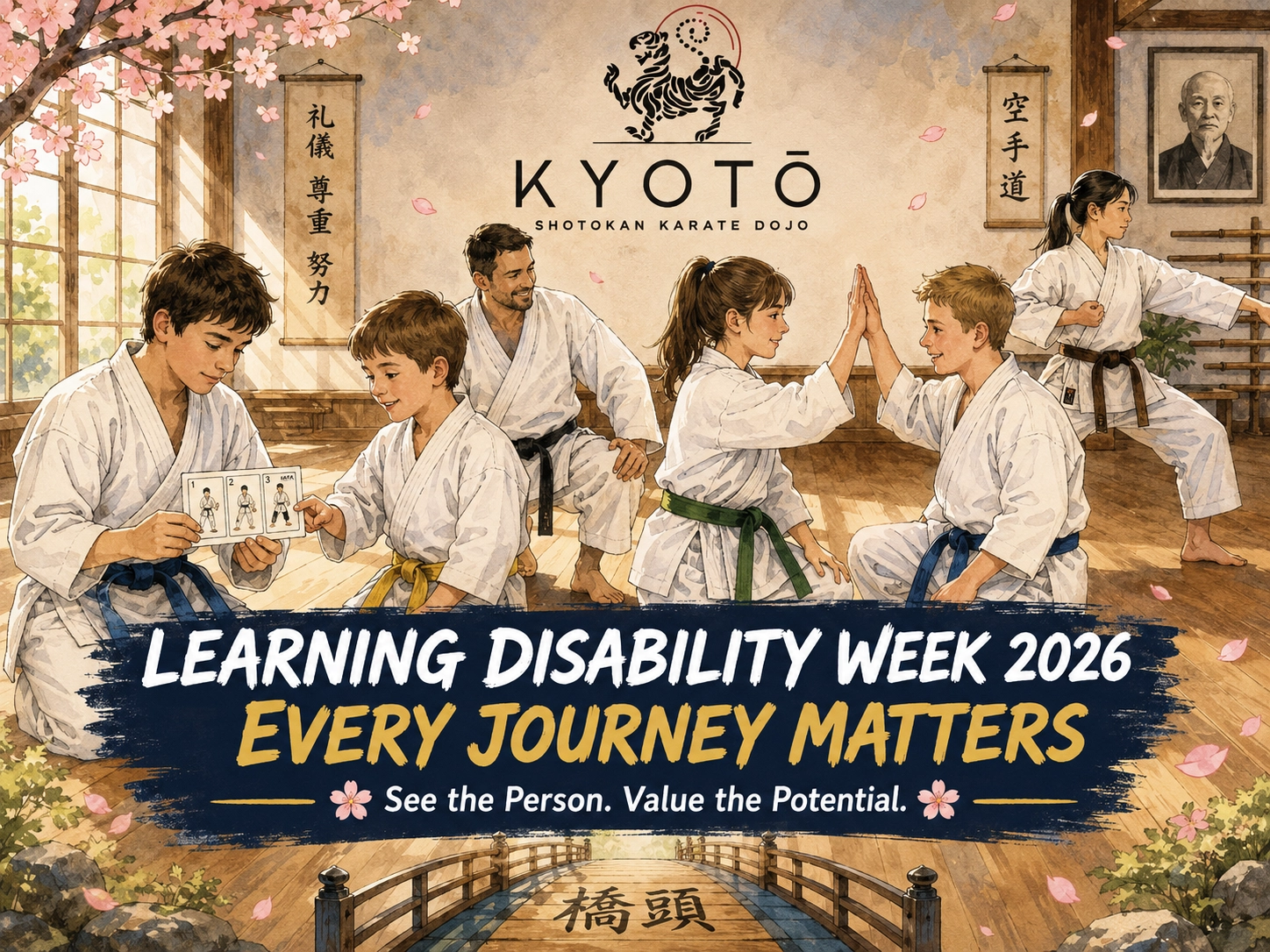
15–21 June 2026
This week is Learning Disability Week 2026, organised by Mencap, with the theme “Do You See Me?”
The campaign encourages us to look beyond labels and recognise the individual—their strengths, aspirations and potential.
At Kyōtō Shotokan Karate Dōjō, this is something we see every week.
While some people may immediately think of profound learning disabilities, many of the children and adults who come to karate have challenges that are far less visible. Difficulties with concentration, confidence, coordination, sensory processing, reading, communication or social interaction can all affect daily life, school, work and sport.
Yet these challenges rarely define the person.
Looking Beyond Labels
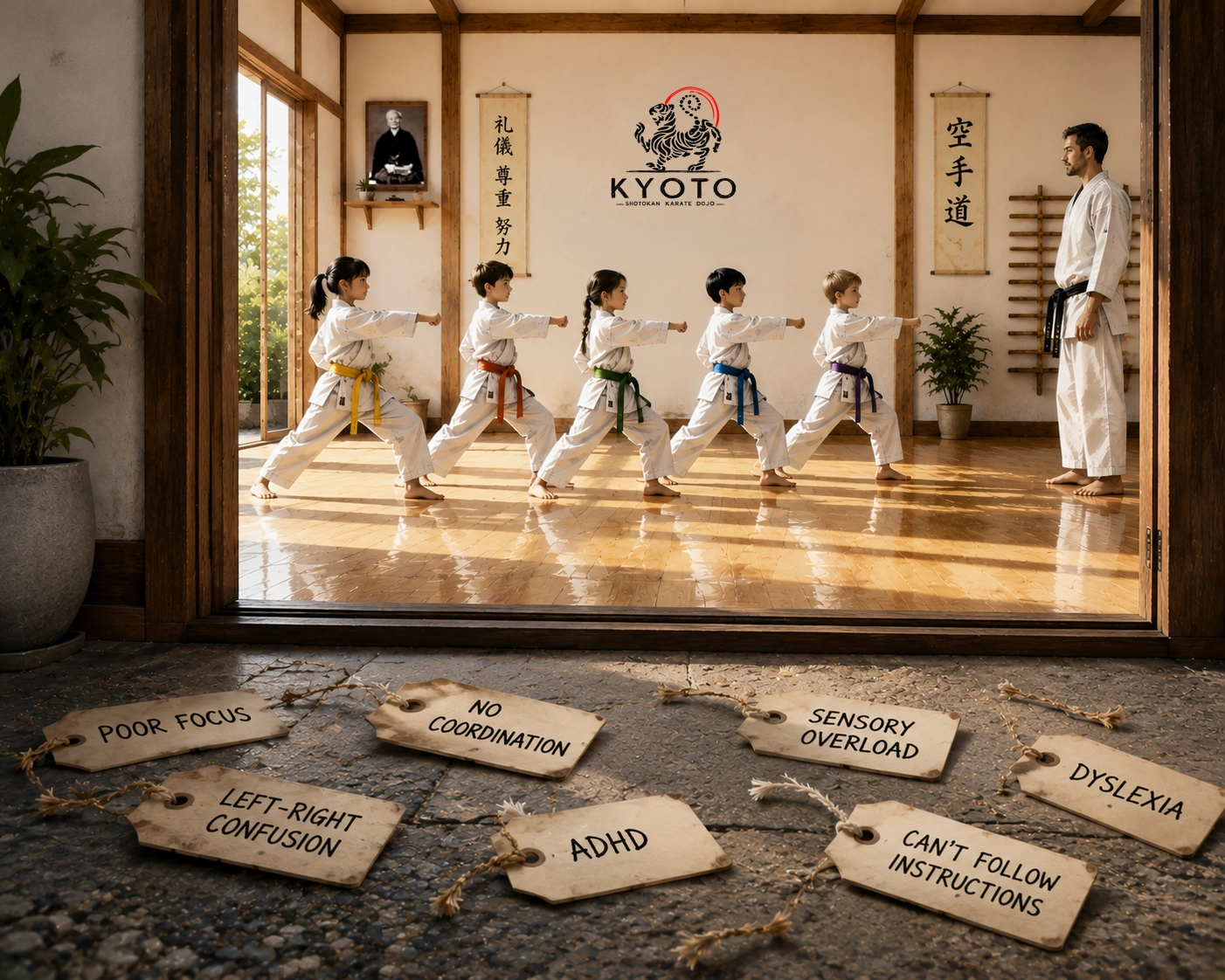 Every student who walks into the dōjō brings their own unique strengths and challenges.
Some may struggle to sit still and focus for long periods.
Some may find reading and written instructions difficult.
Others may have challenges with balance, coordination, left-right awareness or social confidence.
Many students are somewhere on the neurodiverse spectrum, including those with ADHD, autism, dyslexia, dyspraxia or sensory processing differences.
Most look exactly like everyone else.
What matters is not the label, but how we help each individual develop and succeed.
Why Karate Can Help
Traditional karate provides a structured environment that many students find beneficial.
Classes follow familiar routines. There is a clear beginning, middle and end. Expectations are consistent and progress is measured through regular practice and grading opportunities.
For many students this structure provides a framework that helps them thrive.
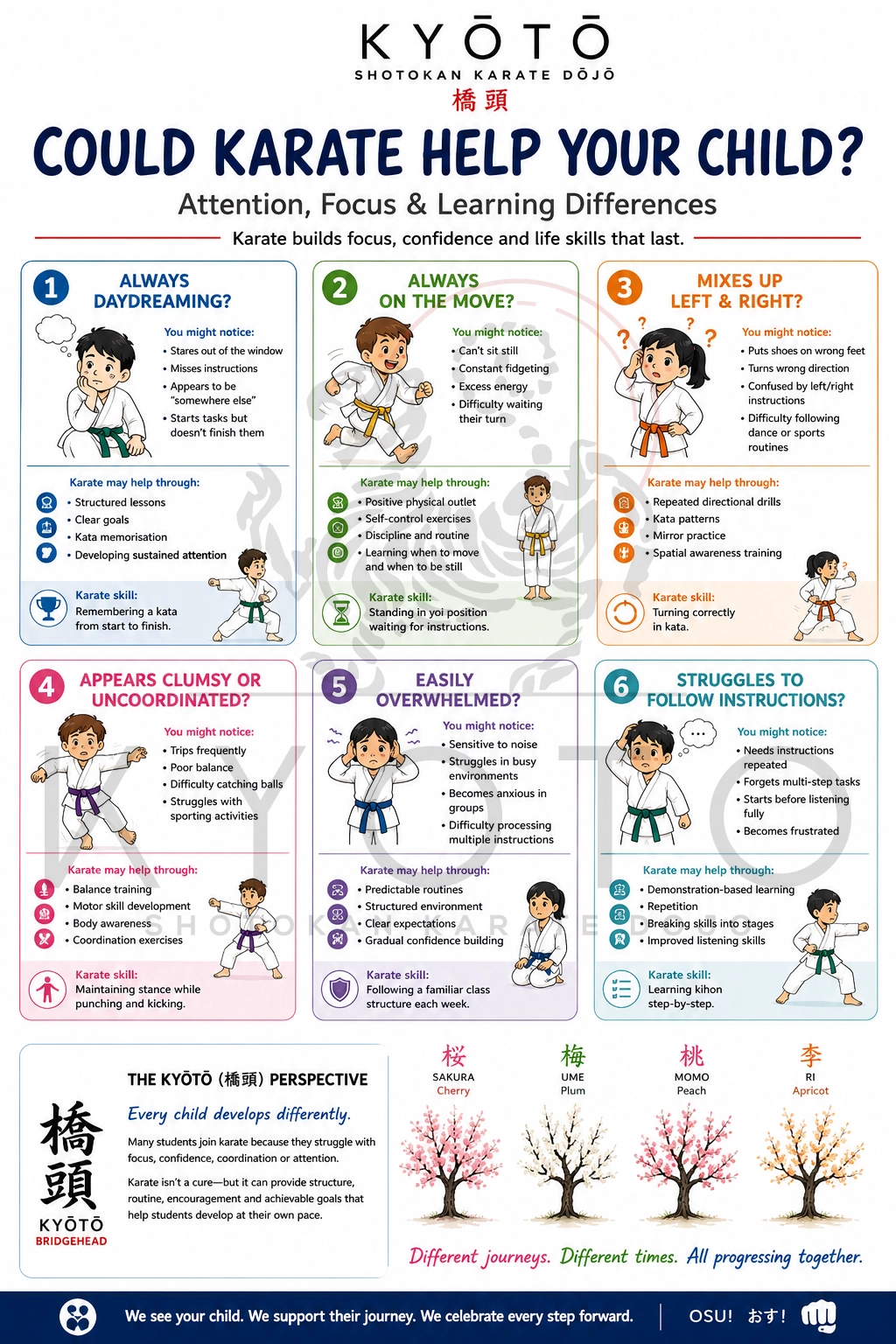
Focus and Attention
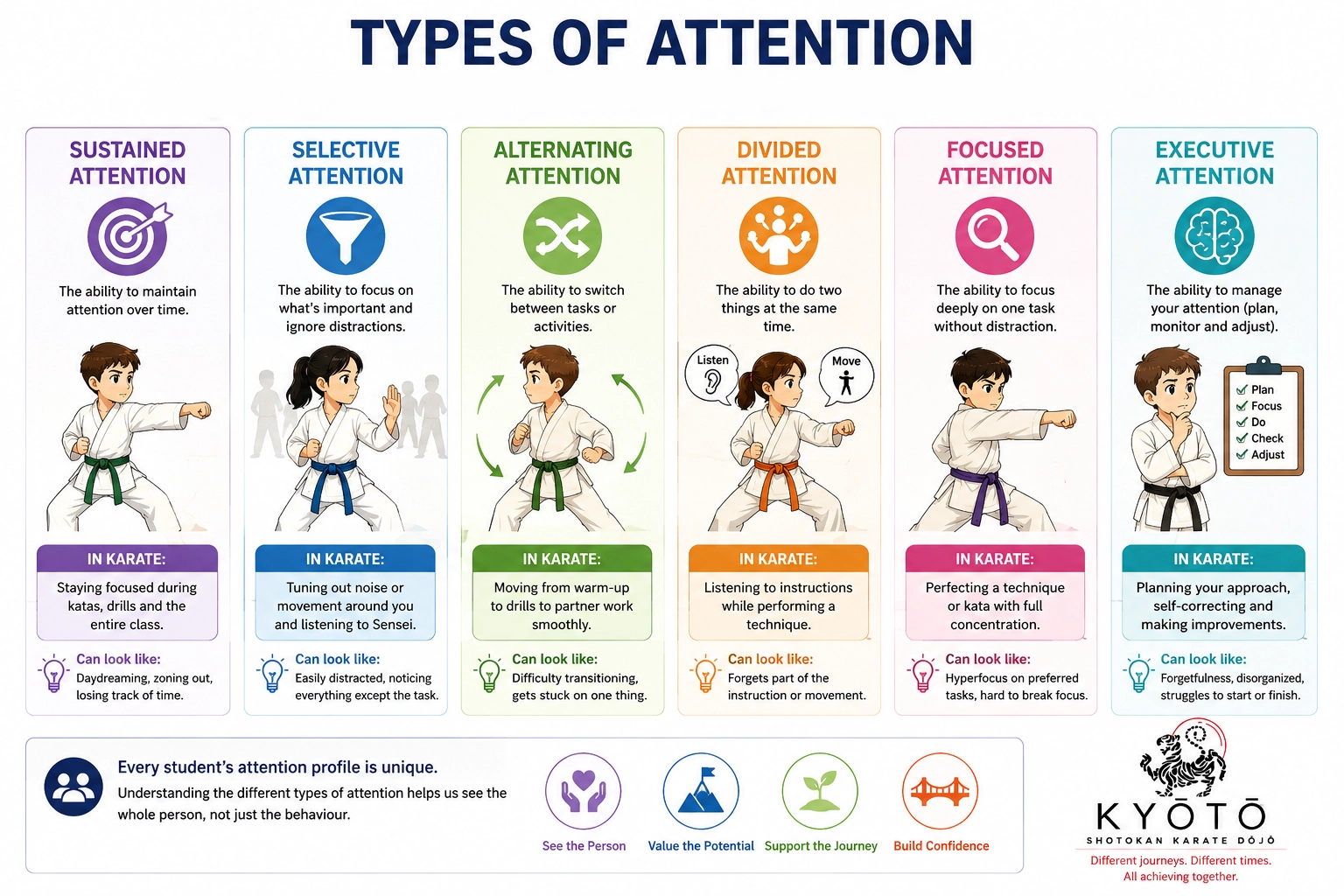 Karate encourages students to concentrate on one task at a time.
Whether learning a punch, practising a kata or listening to instructions, students are continually developing their ability to focus and remain engaged.
For some children and adults, this may be one of the few activities where sustained concentration feels natural rather than forced.
Coordination and Body Awareness
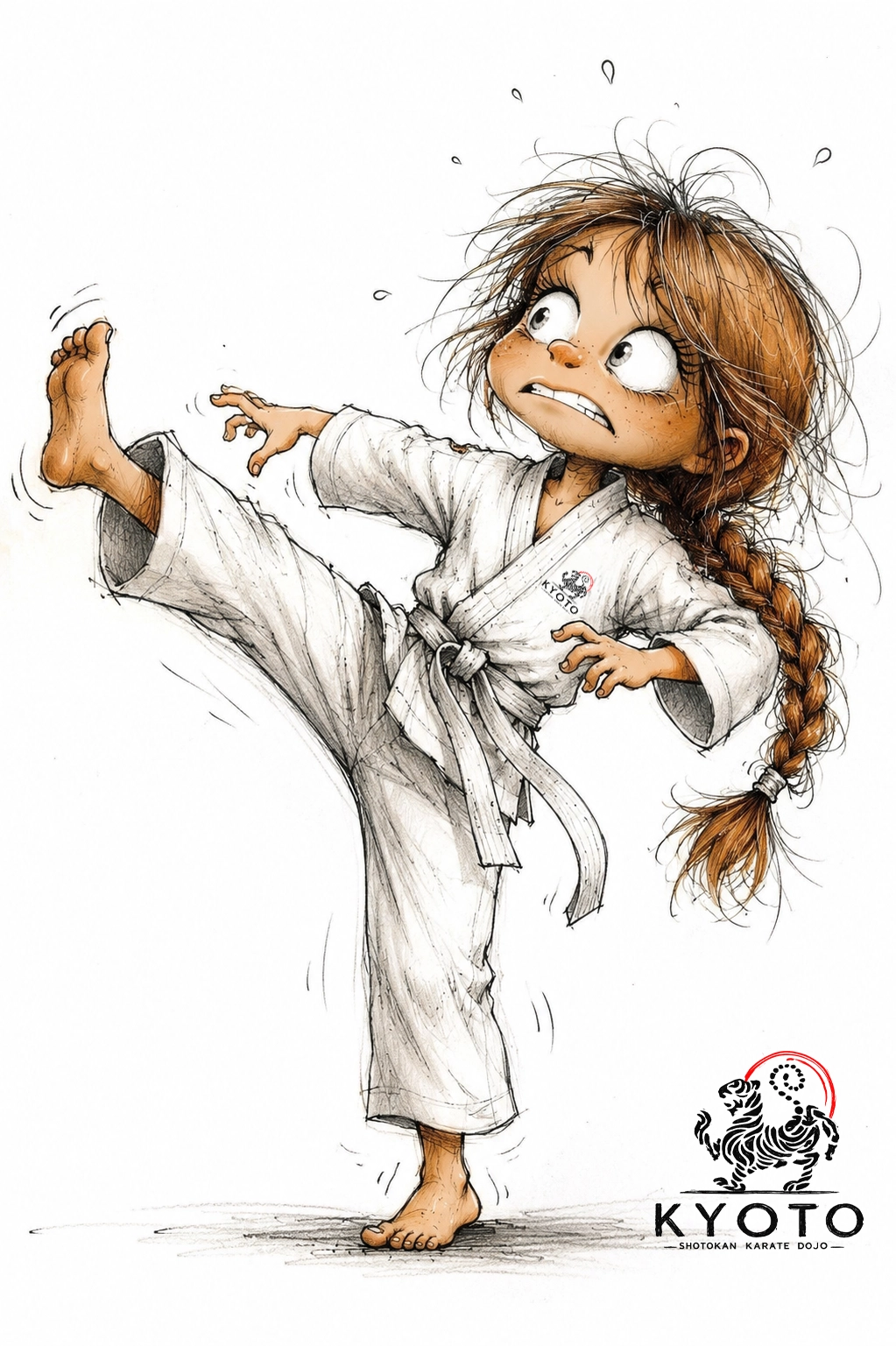
Many karate techniques involve balance, timing and coordinated movement.
Repeated practice helps students become more aware of how their bodies move and how different actions fit together.
Over time, improvements in coordination, posture and movement confidence can often be seen both inside and outside the dōjō.
Following Instructions
Karate teaches students to listen, observe and then perform.
Often techniques are demonstrated visually rather than explained through lengthy verbal instruction. This can be particularly helpful for those who learn best through watching and doing rather than reading or listening alone.
Managing Sensory Challenges
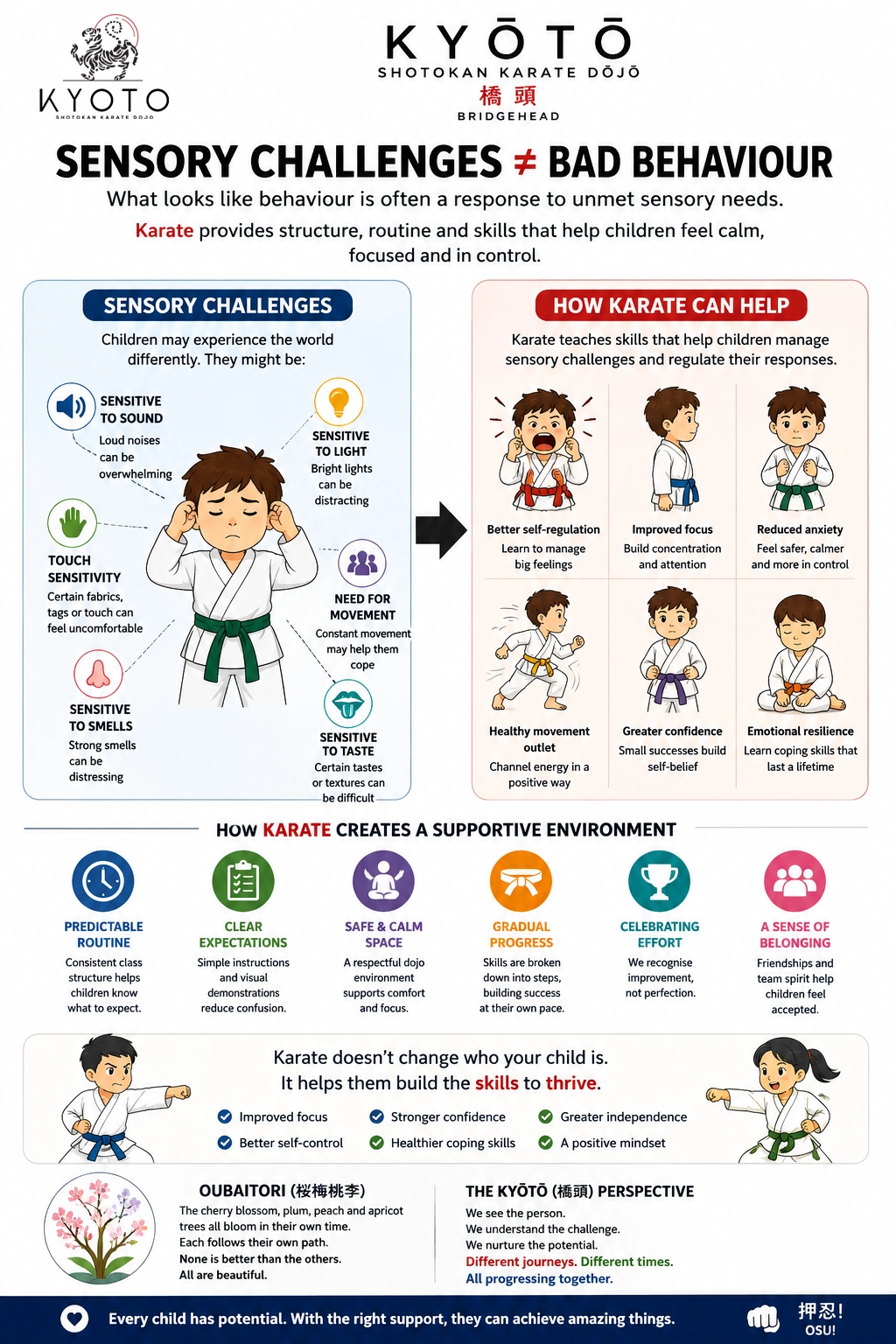
Unlike many team sports, karate training is generally structured and predictable.
Students know where they stand, what they are practising and what comes next.
For those who sometimes experience sensory overload, this consistency can create a more comfortable learning environment.
Building Confidence
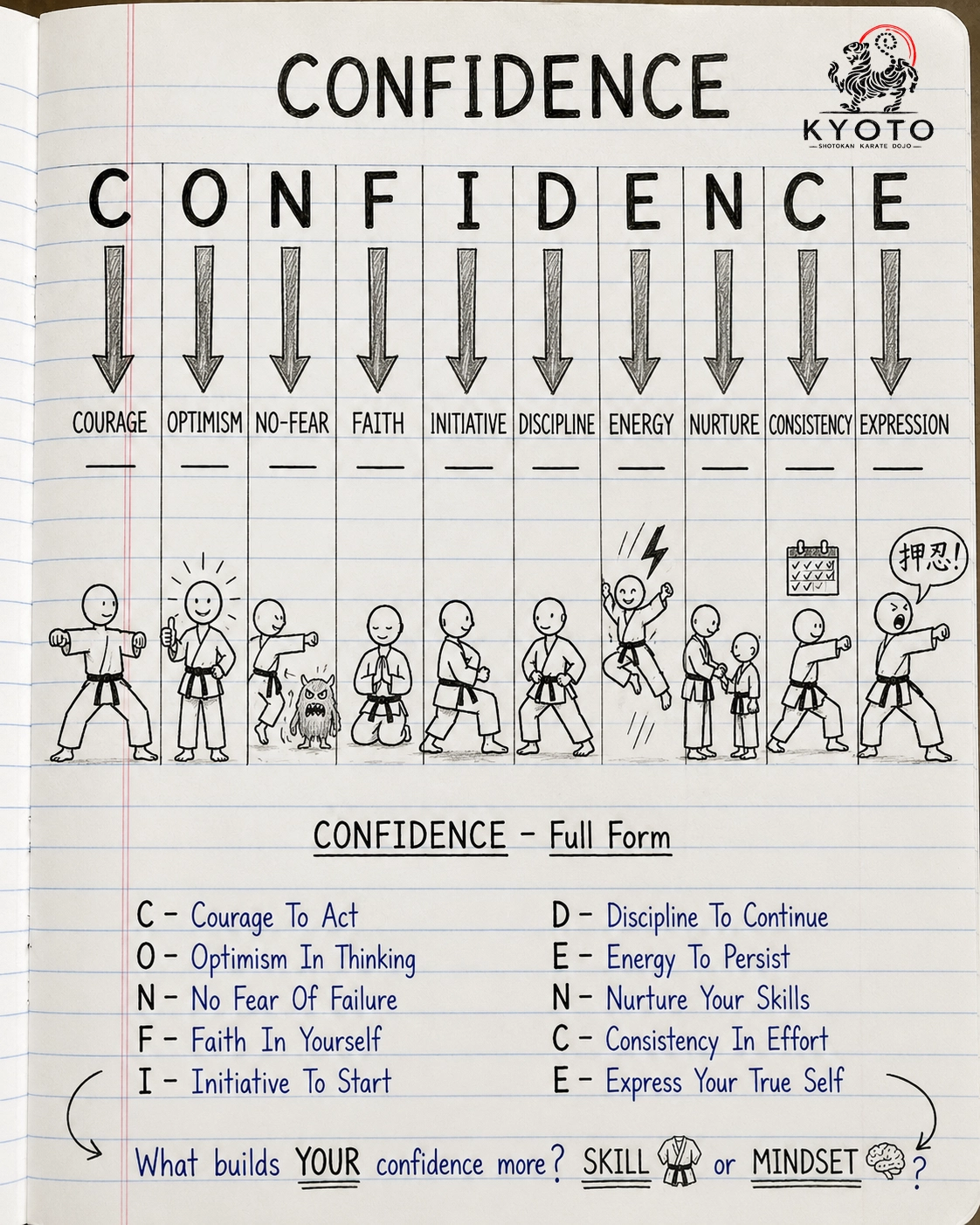
Perhaps the greatest benefit of all is confidence.
Every new technique learned, every kata remembered and every grading passed reinforces the message that progress is possible.
Success does not happen overnight, but small achievements accumulate into something much bigger.
Progress at Your Own Pace
One of the principles we often discuss at Kyōtō is Oubaitori (桜梅桃李).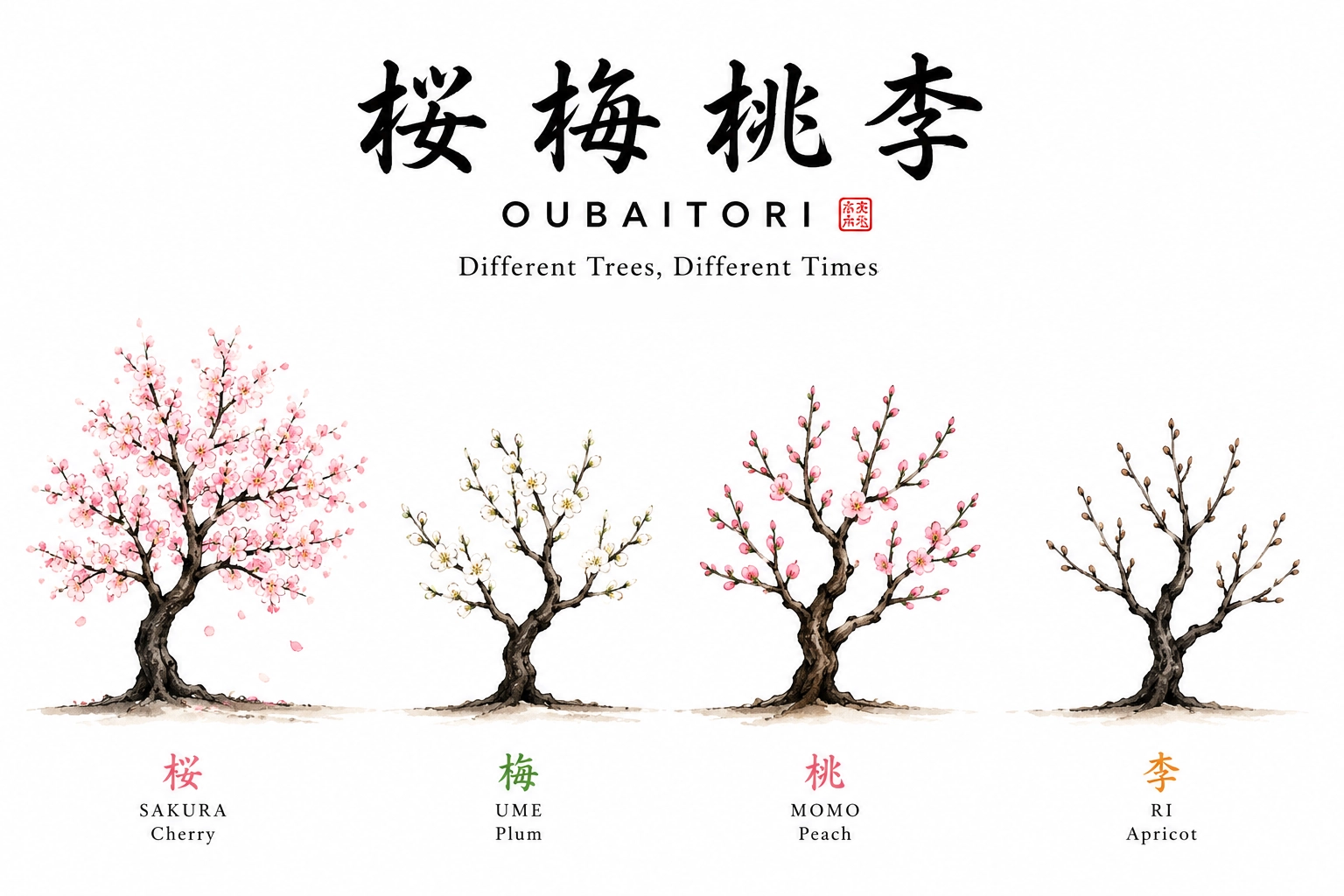
The cherry blossom, plum, peach and apricot trees all bloom differently and at different times. None is better than the others. Each follows its own path.
Karate is much the same.
Some students learn techniques quickly.
Others need more repetition and more time.
Both approaches are perfectly acceptable.
The goal is not to be better than somebody else.
The goal is to become better than you were yesterday.
The Kyōtō Experience
Over the years, many students have joined Kyōtō because they struggled with concentration, confidence, coordination, social interaction or aspects of learning.
In most cases, these challenges are not immediately visible.
Karate provides a structured environment where students can develop focus, body awareness, self-discipline and confidence at their own pace.
While karate is not a treatment or a cure, many parents and adult students report improvements in attention, resilience, coordination and self-belief as their training progresses.
Most importantly, students discover that they are capable of achieving far more than they may have believed.
Do You See Me?
The theme of Learning Disability Week asks us to see the person rather than the label.
In the dōjō we do not see a diagnosis.
We see a student learning their first kata.
We see a child who is becoming more confident.
We see an adult overcoming self-doubt.
We see effort, perseverance and achievement.
We see a karateka.
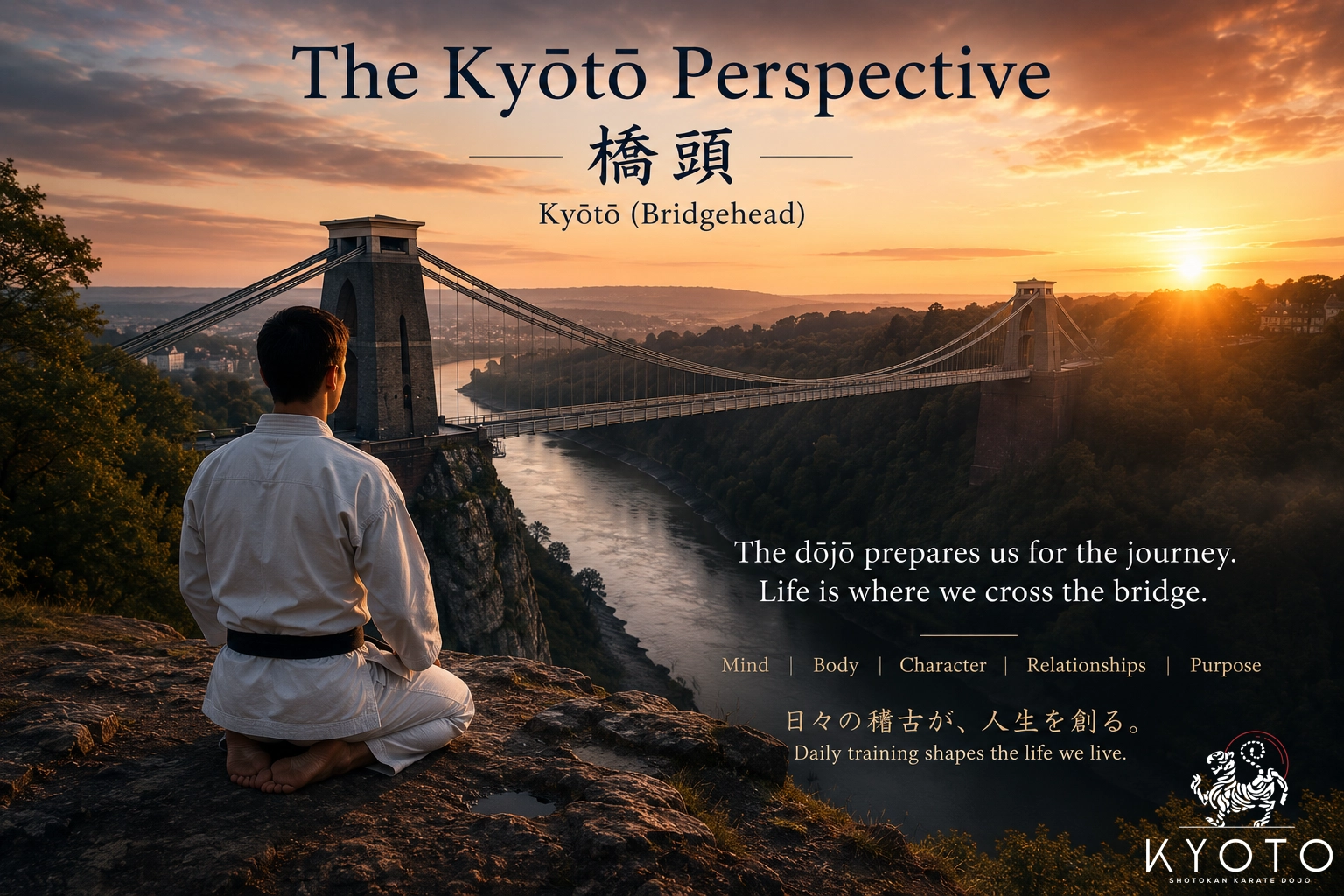
The Kyōtō (橋頭) Perspective
Our name, Kyōtō, means “bridgehead”—a place from which a journey begins.
For some students that journey leads to competition success.
For others it leads to improved fitness, self-defence or lifelong friendships.
For many, it becomes a bridge towards greater confidence, better focus, improved coordination and a stronger belief in themselves.
This Learning Disability Week, we support the message:
See the person. Recognise the potential. Celebrate the journey.
Because every karateka crosses their own bridge in their own way.
Topics