
In many traditional Japanese dōjō, training does not begin with punching or kicking.
It begins with cleaning.
 Before the bows, before the kihon, and before the first kiai echoes across the floor, students may be seen sweeping, wiping, polishing or preparing the training area. In some dōjō this is known as sōji (cleaning), and in a deeper cultural sense it reflects the Japanese concept of Ōsōji (大掃除) — the “great cleaning.”
While Ōsōji is often associated with the large year-end cleaning carried out in Japanese homes, schools, shrines and workplaces, its spirit exists throughout traditional martial arts culture. It is not simply about hygiene. It is about mindset.
In karate, the condition of the dōjō often reflects the condition of the mind.
Why Do Karateka Clean the Dōjō?
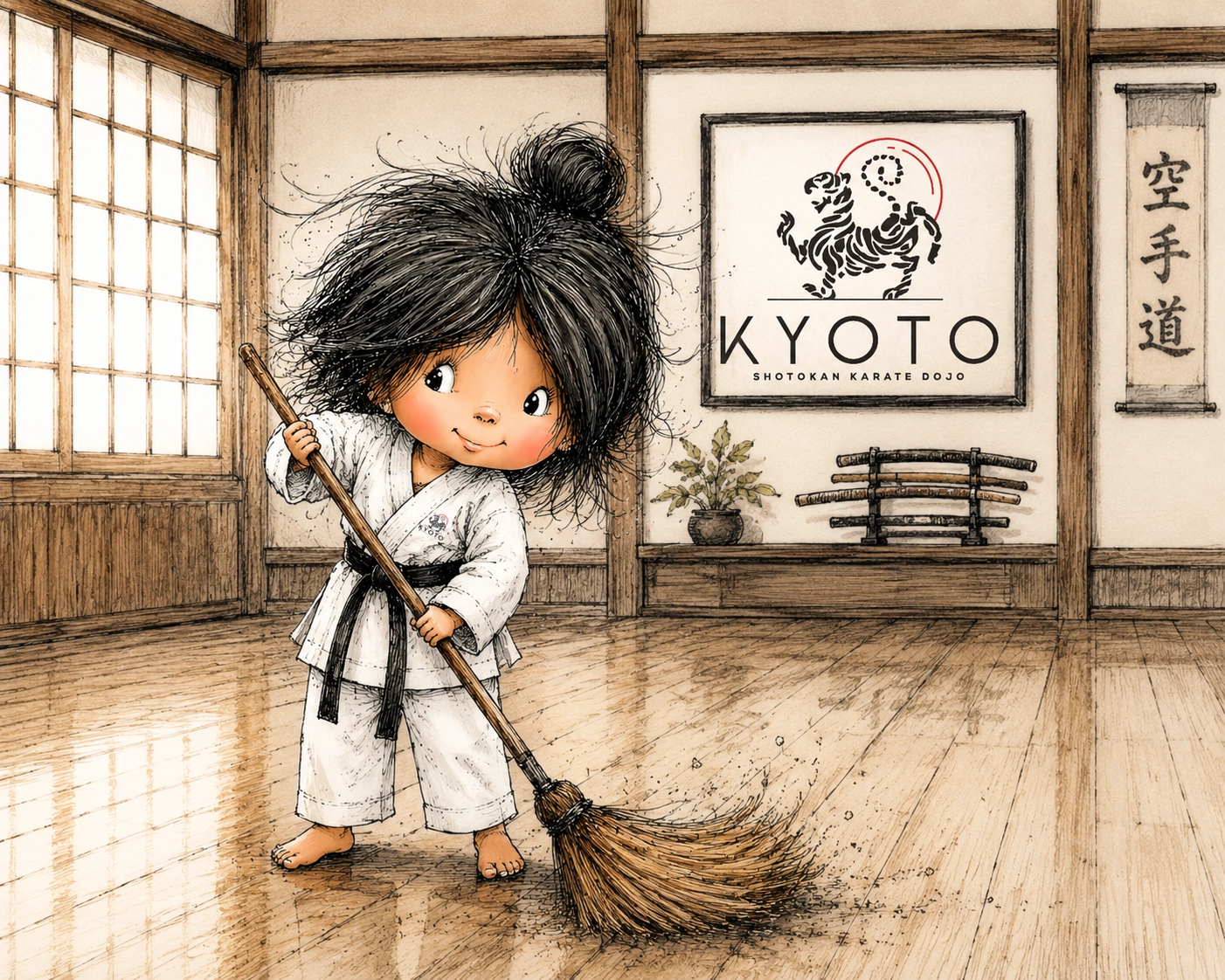 To outsiders, it can sometimes seem unusual that students — especially junior students — clean the floor before training. In modern Western culture, cleaning is often viewed as somebody else’s responsibility.
Traditional budō takes a different view.
The dōjō is not a hired sports hall or merely a room for exercise. It is a place of learning, discipline, character development and mutual respect. Cleaning it is therefore considered part of training itself.
When juniors sweep the floor or help lay mats, they are not being punished or used for labour. They are learning:
- humility
- responsibility
- awareness
- pride in their environment
- respect for others
A karateka who refuses to clean the dōjō may struggle to truly understand rei (礼 – etiquette and respect).
The Tradition in Japanese Dōjō
In many Japanese schools and dōjō, students clean together daily. Teachers often clean too.
This is important.
The act removes hierarchy from the task itself. Senior grades are not “above” cleaning. In fact, the more senior the karateka, the more they should understand its value.
Cleaning together also reinforces the idea that the dōjō belongs to everyone.
No one is simply a customer.
Everyone contributes.
This spirit can still be found in many traditional Shotokan dōjō today. Mats are carried out together. Floors are wiped together. Equipment is put away together. Even a simple task like lining up shoes neatly at the edge of the hall reflects discipline and awareness.
These small details shape attitude.
Cleaning as Mental Preparation
There is also a psychological aspect to sōji.
Cleaning creates transition.
Students arrive from school, work, traffic, phones and daily stress. The act of preparing the dōjō helps prepare the mind. Attention shifts from the outside world toward training.
A hurried, cluttered environment often produces hurried, cluttered practice.
A clean dōjō encourages:
- focus
- calmness
- readiness
- discipline
- mindfulness
In this sense, cleaning becomes a form of mokusō in motion.
The repetitive act of sweeping or wiping can quiet the mind before keiko begins.
Why Juniors Often Clean First
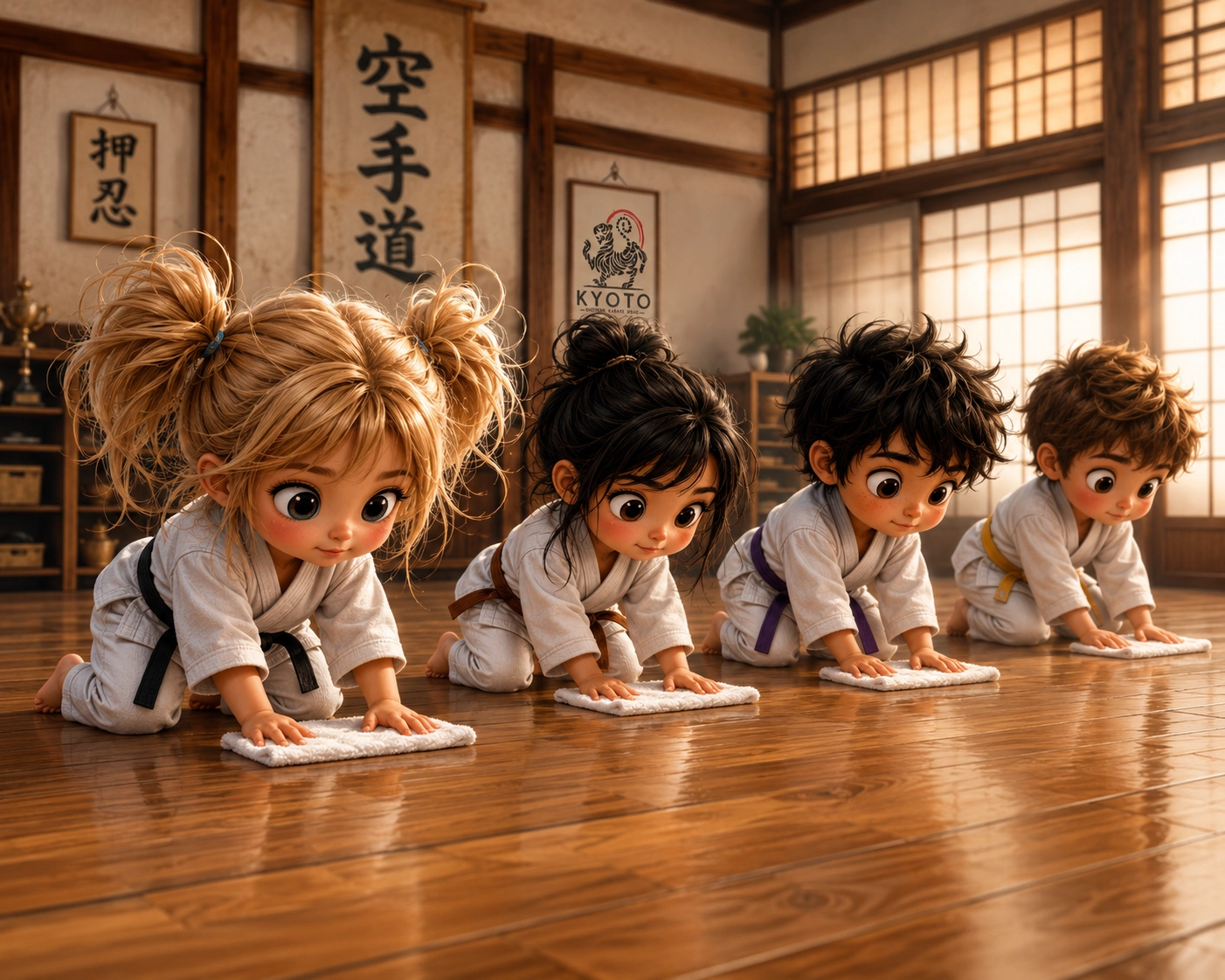
In many traditional dōjō, junior grades are expected to help clean or prepare the floor before training starts.
This is not about status in a negative sense. It reflects the sempai–kōhai relationship found throughout Japanese culture. Junior students learn by serving the dōjō community and observing senior students. Over time, they mature into the seniors who guide the next generation.
 This creates continuity and culture.
A white belt who carefully wipes the floor today may become the black belt who quietly teaches the same lesson to others twenty years later.
Importantly, seniors should never abuse this tradition. Good instructors explain why cleaning matters. The goal is not obedience for its own sake, but understanding.
Done properly, juniors begin to realise:
“This is our dōjō. We look after it together.”
That lesson extends far beyond karate.
The Floor Matters
In traditional karate, the training floor itself has significance.
Historically, karate was often practised on wooden floors, rough surfaces, courtyards or simple training spaces. There was no expectation of luxury. Students respected the place regardless of how basic it was.
At Kyōtō, we often train in practical community venues where the floor is simply what it is. But that does not reduce the importance of respecting the training space. For squad sessions at St Bede’s, we lay down a full 12m × 12m competition mat area together before training begins. That process itself becomes part of dōjō culture.
Students learn:
- preparation
- teamwork
- care for equipment
- responsibility for the training environment
The dōjō does not magically appear ready for us.
Karateka make it ready.
Beyond Physical Cleaning
Ultimately, Ōsōji in karate is symbolic.
We are not only cleaning dust from the floor.
We are trying to clean:
- laziness from attitude
- ego from behaviour
- distraction from the mind
- carelessness from technique
A clean dōjō cannot create good karate on its own.
But good karate rarely grows in an environment of disorder, disrespect and indifference.
That is why even the simple act of juniors sweeping the floor before training carries meaning within traditional budō.
Because in karate, everything is training.