
A Masterclass in the Principles Behind Shotokan Karate
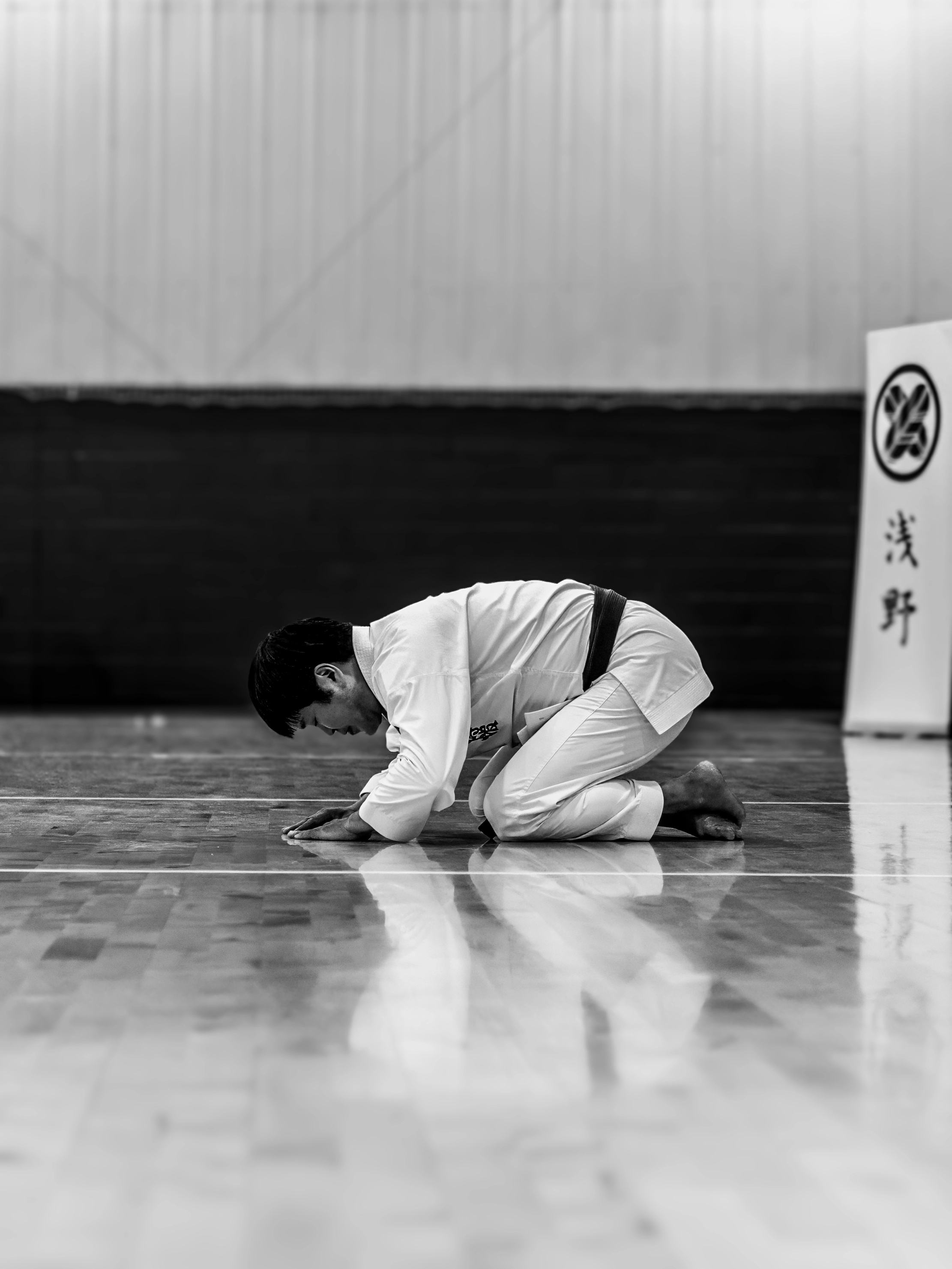
On Saturday 16th May 2026, karateka from across Great Britain gathered at the Nottingham Wildcats Arena for the SKIF-GB Spring Course under the instruction of Murakami Shuseki (8th Dan), Technical Director of SKIF and one of the most respected Shotokan instructors in the world.
For many of us, this annual course is one of the highlights of the SKIF-GB calendar, providing an opportunity to train under one of the closest students of Kanazawa Sōke while also catching up with friends from across the country.
An Early Start
The day began with an early(ish) morning start as Nick Bruce-Jones collected Phoenix and myself from Bristol on his journey north from Exeter.
Arriving as one of the first at the venue once the sports hall became available, Nick and I helped prepare everything for the day ahead, setting up the SKIF-GB backdrop and pop-up banners before students began arriving from around the country.
The Wales & South West region was well represented, with Nick Bruce-Jones (SKIF Devon), Sharon Joseph, Matthew Joseph, Neil Bishop, Annabel Bishop, Phoenix and myself all making the journey to Nottingham.
Alongside the many SKIF-GB dōjō represented, it was also encouraging to see karateka from several other associations and federations attending. Opportunities to train under an instructor of Murakami Shuseki’s calibre transcend organisational boundaries, with everyone sharing the same goal—to learn, improve and deepen their understanding of traditional Shotokan karate.
More Than Learning Techniques
One thing became immediately apparent throughout the day: this was an exceptionally technical course.
Rather than simply leading the class through kihon combinations and kata, Murakami Shuseki repeatedly gathered everyone together to explain why techniques should be performed in particular ways. Every exercise became an opportunity to explore the principles that underpin effective karate.
Rather than viewing techniques in isolation, the day revolved around several recurring themes:
- Understanding the meaning behind Japanese terminology rather than simply copying positions.
- Generating power through the whole body, not individual limbs.
- Maintaining the body’s centre line and embusen throughout movement.
- Using gravity, breathing and bodyweight transfer effectively.
- Appreciating timing and distance over raw speed.
- Developing relaxed, efficient movement instead of muscular effort.
The kihon and kata were simply the vehicles through which these principles were explored.
Returning to the Fundamentals
Murakami Shuseki demonstrated that even the simplest techniques still have much to teach experienced karateka.
A seemingly straightforward discussion on Musubi-dachi and Hachiji-dachi became an explanation of why those stances carry their names, reinforcing that understanding the language often leads to understanding the technique itself.
Likewise, Mae Geri was broken down into its individual components, explaining how correct use of the hips, knee, ankle and toes not only generates more effective technique but also reduces unnecessary stress on the hip joints.
Perhaps one of the most fascinating discussions centred on the body’s three axes and the role of the Tanden. Rather than relying solely on muscular strength, Murakami explained how breathing, posture and the body’s centre of gravity work together to produce efficient movement.
His distinction between speed and being fast was particularly memorable. Younger karateka may naturally possess greater speed, but efficient body mechanics, timing and intent allow experienced practitioners to arrive first with less effort.
The Importance of Centre Line
A concept that repeatedly resurfaced throughout both sessions was maintaining the body’s centre line.
Whether practising kihon, kata or kumite, Murakami emphasised that advanced karate is not simply about moving from one stance to another but preserving alignment while transferring bodyweight correctly. He described embusen as far more than a floor pattern—it represents the relationship between you and your opponent.
Similarly, his explanation of the differences between Zenkutsu-dachi and Kokutsu-dachi went beyond the traditional “attacking” and “defensive” descriptions. Instead, he explained how each stance manipulates time and distance, allowing either more opportunity to defend or reducing the opponent’s time to react.
Kata, Kumite and Universal Principles
Throughout the afternoon, the technical discussions continued.
Circular techniques such as Tatemawashi and Yokomawashi strikes became lessons in geometry and efficiency, with Murakami explaining that circles are effectively created from many tiny straight-line movements, allowing techniques to travel more directly and efficiently.
During partner work, the emphasis remained firmly on body movement rather than simply blocking. Students were encouraged to move outside the attack, maintain mobility and never become physically or mentally “stuck” in one position.
One particularly pleasing aspect of the course was Murakami’s reminder of traditional dōjō etiquette. Senior grades were encouraged to demonstrate new drills first, helping junior students understand the movement before attempting it themselves—a simple reminder that karate is built upon mutual learning and respect.
A Changing Style of Teaching?
Reflecting on the day afterwards, I couldn’t help noticing how different this style of instruction feels compared with many of the courses I attended during the 1980s and 1990s under instructors such as Asano Hanshi.
Those earlier seminars certainly contained technical instruction, but there was often a much greater emphasis on developing spirit (seishin), endurance and determination through physically demanding training.
Murakami Shuseki’s approach places far greater emphasis on understanding the underlying principles behind every movement. Every explanation seemed designed not merely to improve the karate of those attending, but to equip instructors with a deeper understanding that they can take back to their own dōjō.
Perhaps this reflects the modern international Shotokan community. While there were plenty of enthusiastic kyu grades training on the course, a significant proportion of those attending were instructors and senior dan grades. Developing a shared understanding of these principles helps ensure that students across the world continue to receive consistent, high-quality instruction while remaining true to the technical foundations established by Kanazawa Sōke.
Friendship Beyond the Dōjō
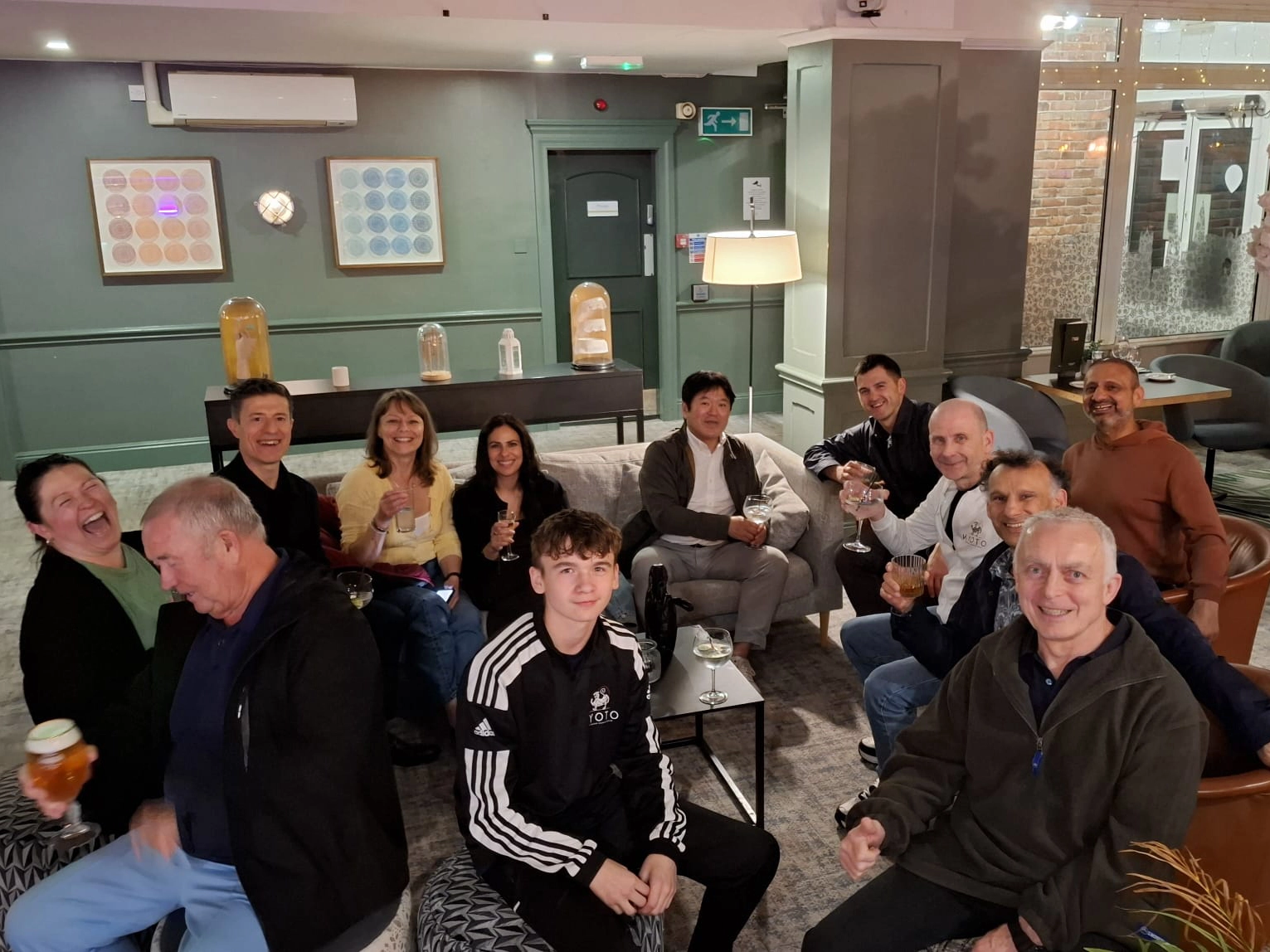
As the training concluded and everyone had the opportunity to freshen up, several senior dan grades joined Murakami Shuseki for a relaxed drink at Copper Mapperley.
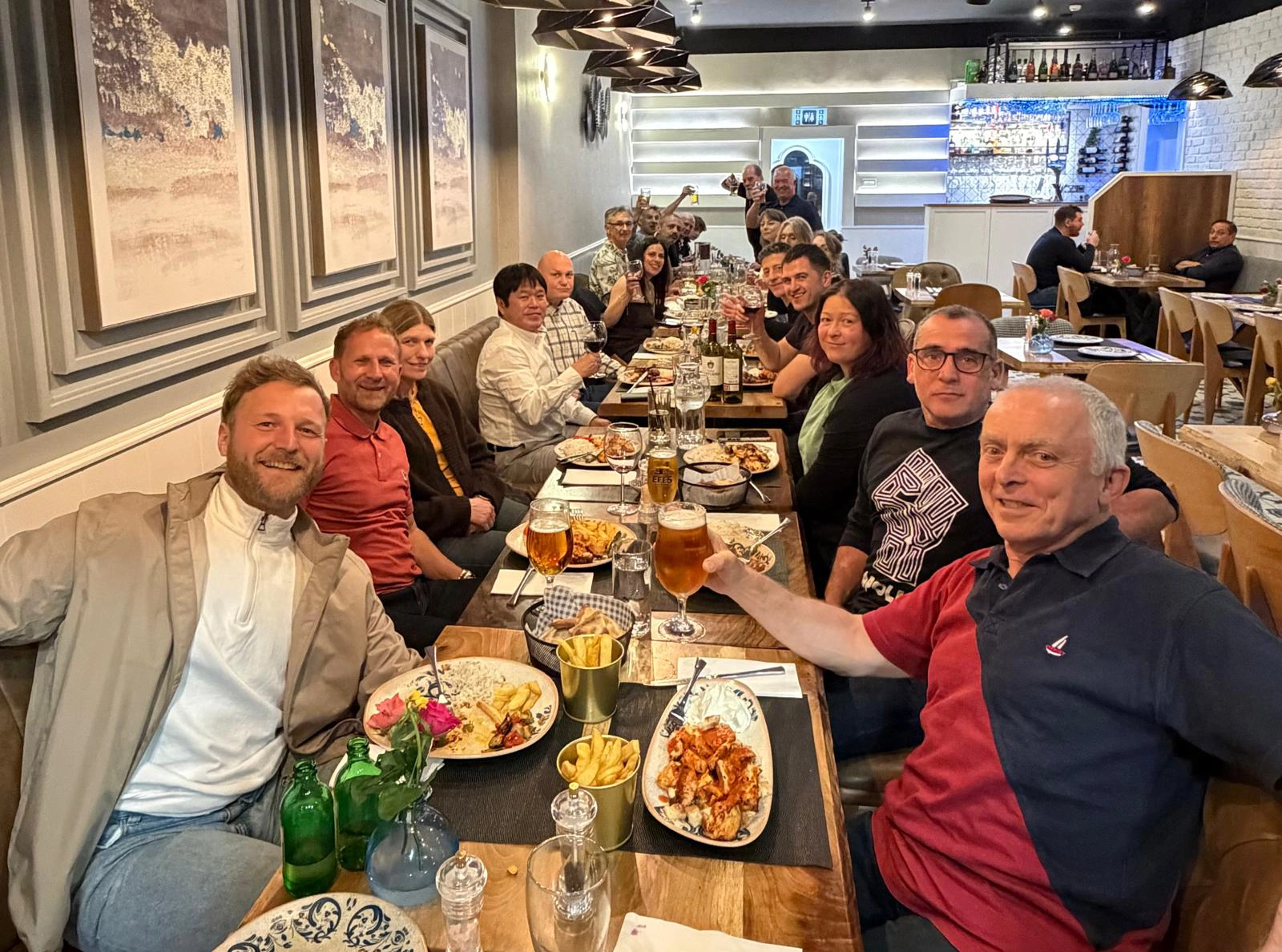
From there, the group headed to Mezza Turkish Restaurant & Bar for an excellent evening meal. As always, conversation naturally flowed between karate, memories of previous seminars and plenty of laughter.
A final few of us rounded off the evening with Murakami Shuseki back at his hotel for a last nightcap before saying our goodbyes.
It was the perfect end to a superb day—one that combined exceptional technical instruction with the friendships and camaraderie that continue to make the SKIF family so special.
Oss
Murakami Shuseki’s courses are never simply about learning new techniques.
Instead, they encourage us to revisit familiar movements with fresh eyes, reminding us that mastery in karate is found not in collecting techniques, but in continually refining the principles that lie beneath them.
After more than forty years of training, it’s reassuring to discover that even the most familiar kihon still has something new to teach.
Looking Ahead
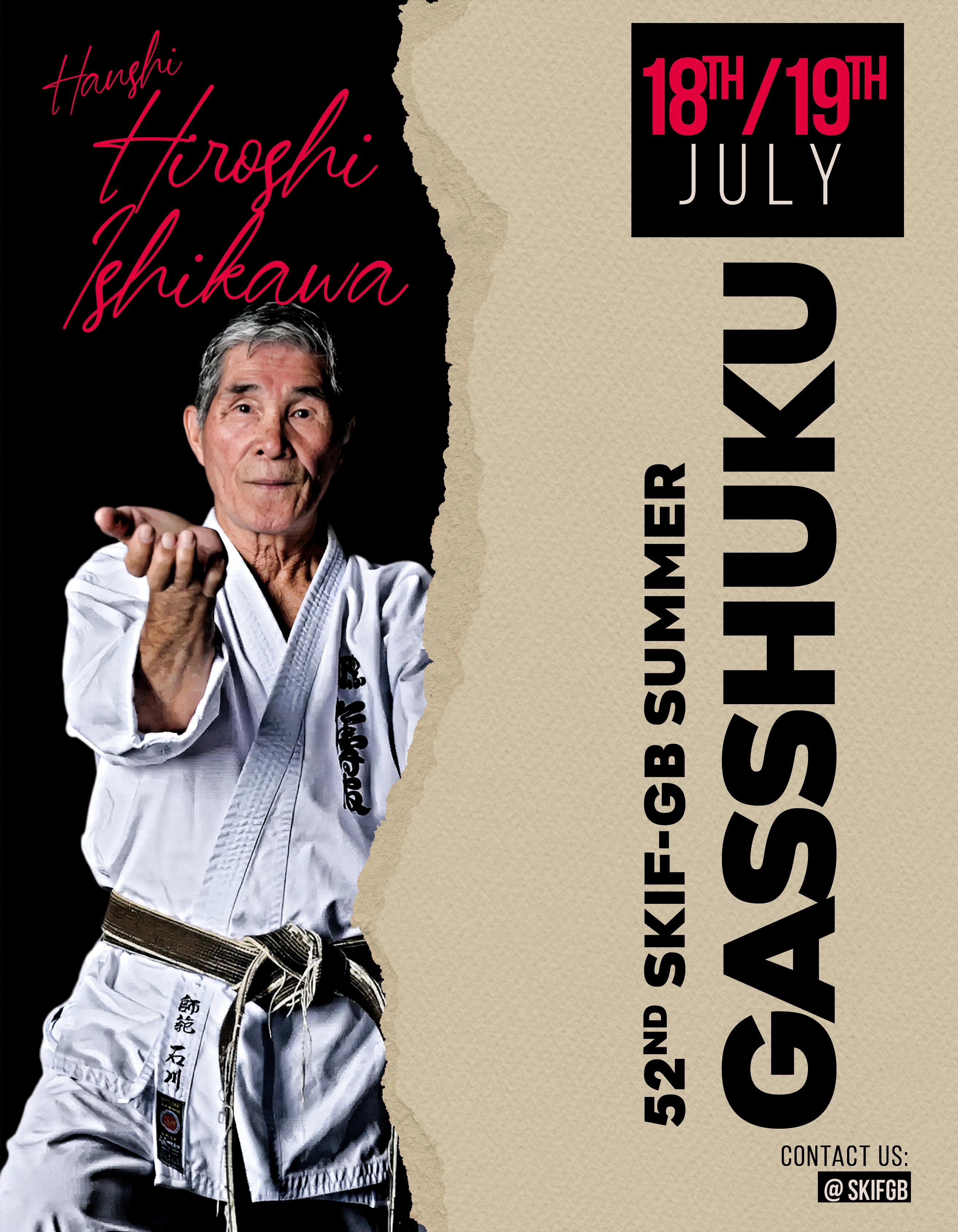
If Murakami Shuseki’s seminar demonstrated the depth of technical understanding that exists within SKIF today, we’re now looking forward to another unique opportunity later this month as Hanshi Hiroshi Ishikawa (9th Dan) visits England for the very first time to lead the 52nd SKIF-GB Summer Gasshuku. After such an insightful day in Nottingham, we’re excited to experience another world-class instructor with his own distinctive teaching style. We hope to see a strong Kyōtō turnout for what promises to be another memorable weekend of training. You can read more about the event in our earlier article: Hanshi Hiroshi Ishikawa to Headline the 52nd SKIF-GB Summer Gasshuku
Topics