
There is a common misconception that traditional karate training is all about standing in lines, repeating techniques and maintaining strict discipline.
Whilst these elements certainly have their place, effective coaching often looks quite different.
Sometimes, the best learning happens when students don’t even realise they’re learning.
At Kyōtō Shotokan Karate Dōjō, we regularly use activities that many children simply call “games”. In reality, each one has a specific coaching objective. Every activity is chosen because it develops an important attribute that supports karate, whether that be timing, coordination, balance, awareness or decision-making.
This approach reflects the idea of purposeful play – activities that are enjoyable whilst also providing meaningful learning.
More Than Just Fun
There is often only a subtle difference between a game and a kumite drill.
The intention is what matters.
A game played purely for entertainment may have little lasting value. A well-designed karate activity, however, is carefully constructed to develop a particular skill. If students happen to smile and laugh whilst learning, that is an added benefit rather than a distraction.
In many cases, the activities provide immediate feedback. Students quickly discover what works and what doesn’t without the instructor needing to stop the class every few seconds to explain.
Learning to React
One activity begins with two students facing each other. Between them sits a focus mitt or bean bag.
The instructor calls out a sequence such as “Head… Shoulders… Knees…” before finally saying “GO!!!!”
As soon as the correct signal is given, both students race to grab the object.
To the children, it’s a competition.
To the instructor, it’s developing concentration, reaction speed, visual processing and explosive movement.
Students learn to ignore distractions, wait for the correct cue and react decisively.
Thinking Before Acting
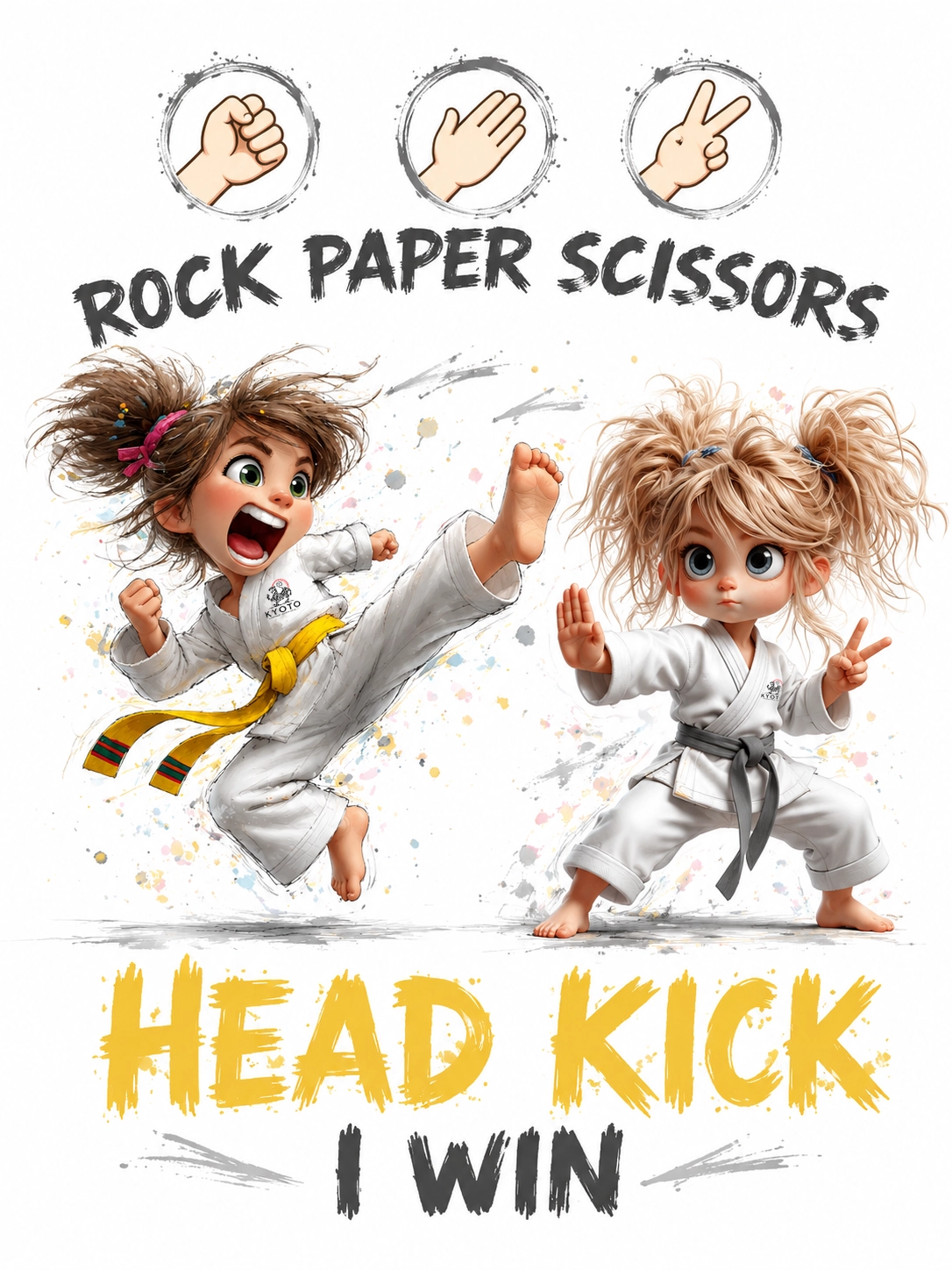
Another favourite of mine uses the familiar game of Rock, Paper, Scissors.
After revealing their hands, the winner immediately attempts to tap their opponent’s outstretched hand. The loser must recognise the result instantly and withdraw their hand using a sharp hikite.
The challenge is not simply speed.
Students must first recognise who has won, decide whether they are attacking or defending, and then react accordingly.
This mirrors one of karate’s most important principles: observe, decide, then act.
Waiting for the Right Moment
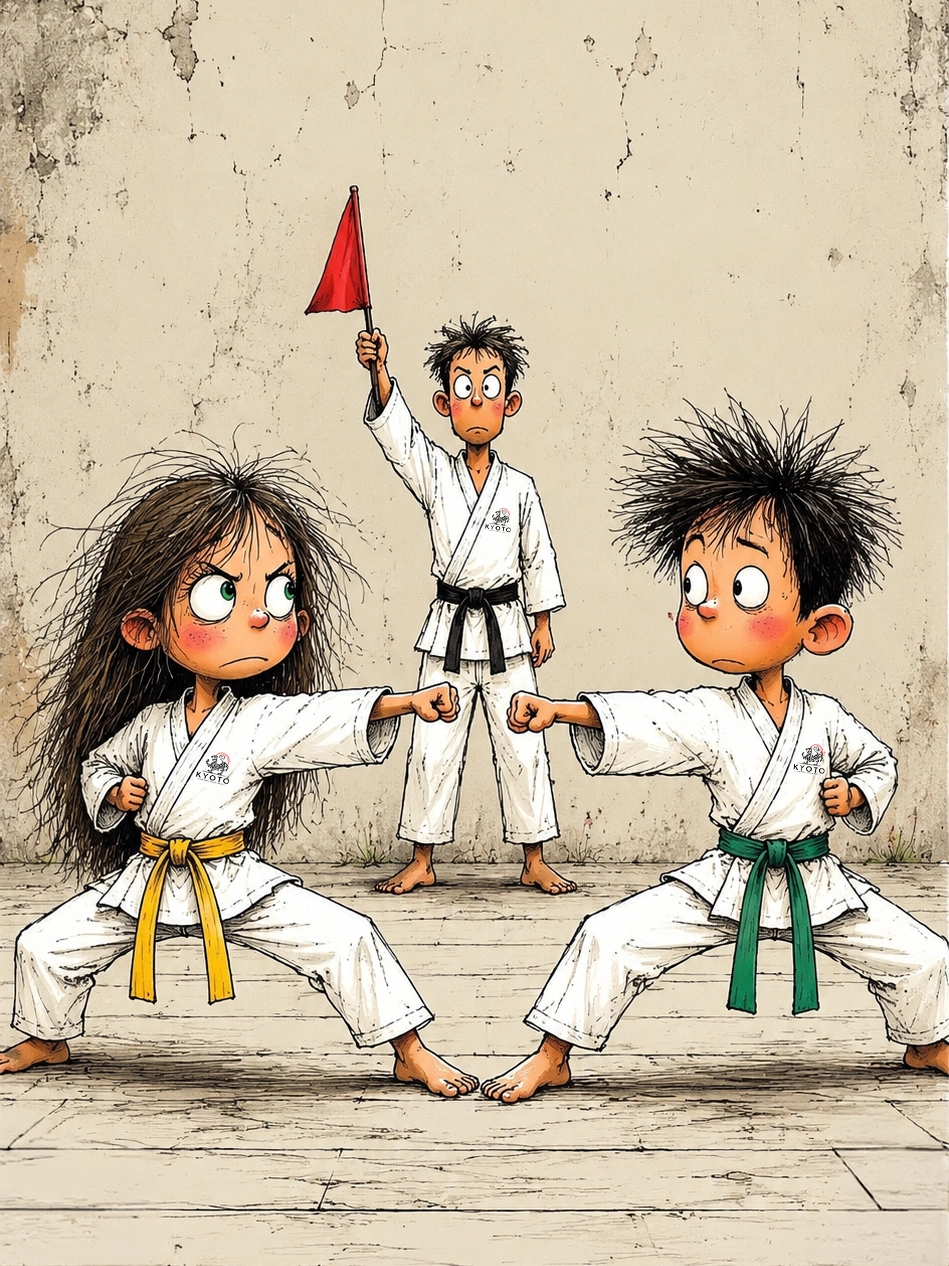
In another exercise, two students face each other in jū-dachi while a third student stands between them with an arm extended.
If the arm is raised, neither student should move.
If the arm is suddenly withdrawn, both students launch a gyaku-zuki.
Afterwards they acknowledge whether one student was clearly faster or whether both landed together (ai-uchi).
This simple activity develops timing, self-control and reaction speed. Perhaps more importantly, it teaches students not to anticipate. Reacting to the wrong signal is just as much a mistake as reacting too slowly.
Speed Through Coordination
A deceptively simple exercise involves holding a small bean bag or juggling ball in one hand whilst the other hand waits in hikite.
As soon as the object is released, the hikite hand must drive forward in a gyaku-zuki, catch the falling object and complete the movement before it reaches the floor.
Success depends on coordination rather than strength.
Students develop synchronisation between the eyes, hands and body whilst reinforcing the mechanics of an effective punch.
Finding Balance
Purposeful play isn’t limited to kumite.
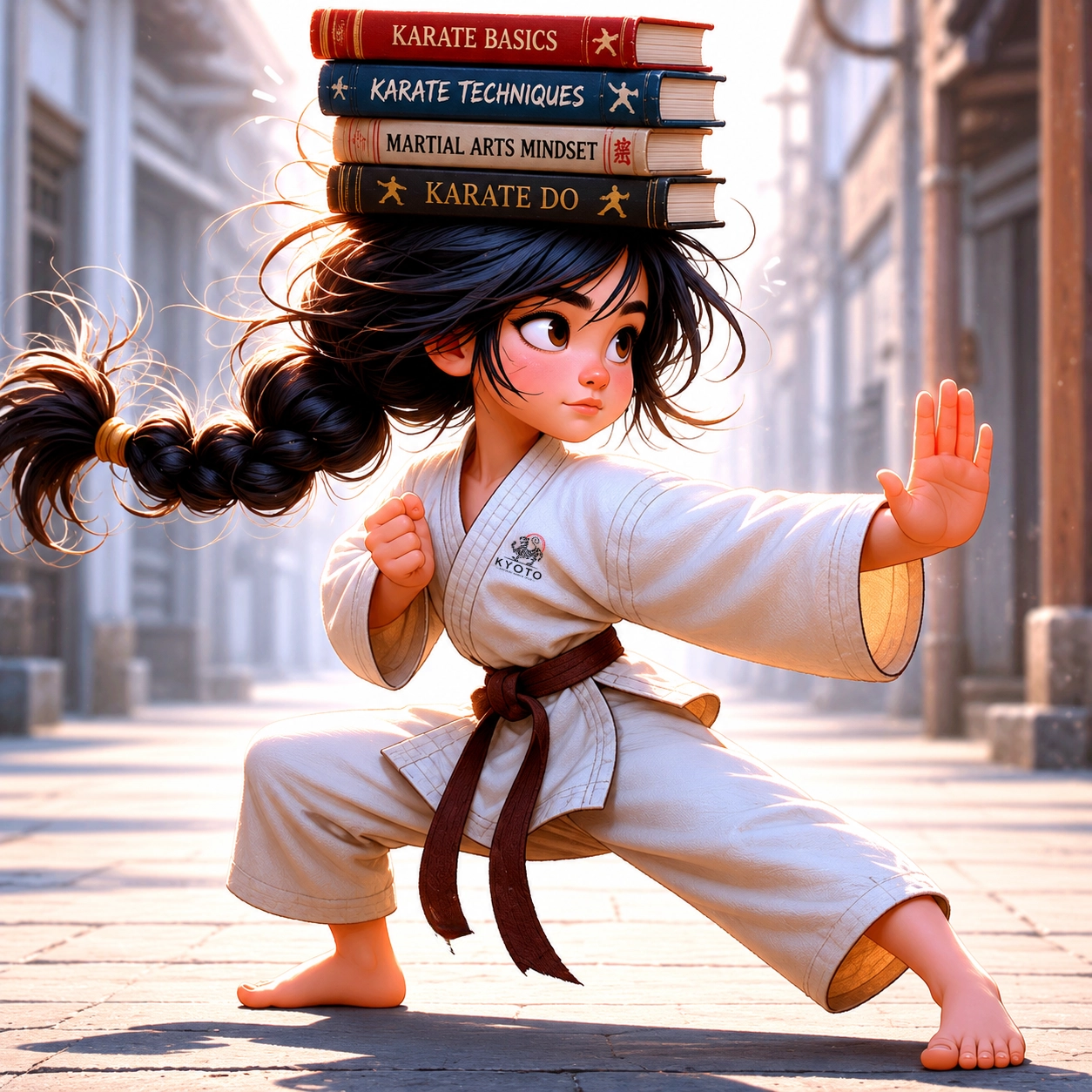
Sometimes students perform a simple kata, such as Heian Shodan, whilst balancing a focus pad or bean bag on their head.
The objective is obvious: don’t let it fall.
The lesson is less obvious.
Students naturally discover how smooth stance transitions, good posture and stable body movement allow the object to remain balanced. If it falls, they immediately know something in their movement has changed.
The exercise encourages students to become aware of their own movement rather than relying solely on instruction.
Beyond Winning and Losing
Purposeful activities don’t just develop physical skills—they also help children develop emotional ones.
Some children find losing difficult. Others become overconfident when they win. Both reactions are entirely natural, particularly at a young age.
The dōjō provides a safe environment in which children can experience these emotions, learn to manage them and understand that neither success nor disappointment defines them.
Students discover that every activity offers another opportunity to improve. Today’s winner may lose the next round. Today’s disappointment may become tomorrow’s success.
This is one reason why karate is about much more than learning punches and kicks. Through carefully designed activities, children develop resilience, humility, perseverance and respect—qualities that benefit them throughout life.
As we explore in our article Learning Through Failure, mistakes and setbacks are not obstacles to progress but an essential part of it. Every missed bean bag, every dropped balance pad and every lost challenge is simply another opportunity to learn.
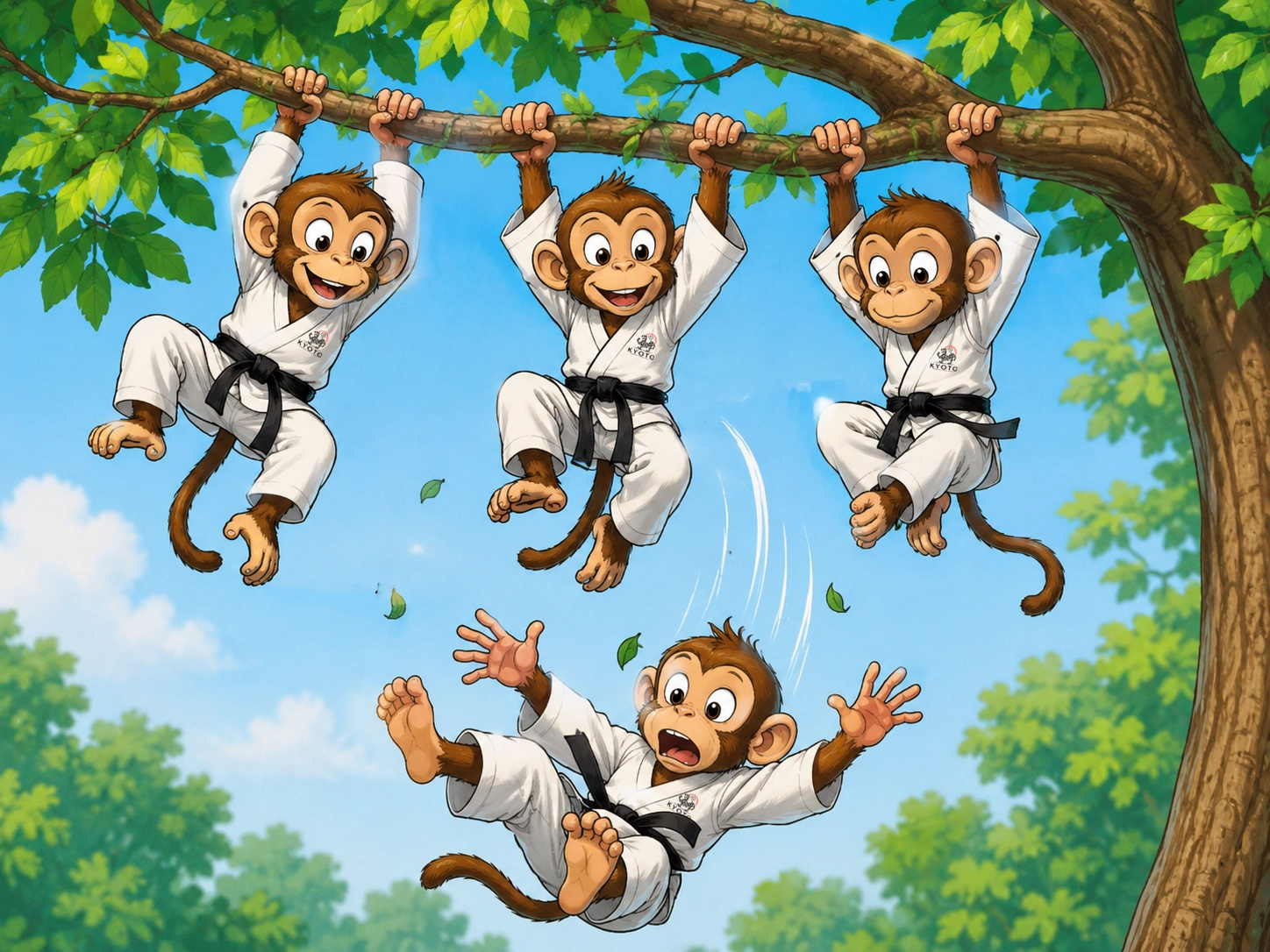
This idea reflects the Japanese saying Saru mo ki kara ochiru (“Even monkeys fall from trees”), reminding us that mistakes, setbacks and disappointment are all part of learning.
Learning That Lasts
Every activity described above has a clear purpose.
Some improve reaction time.
Others develop coordination, balance, tactical awareness or decision-making.
Each contributes towards better karate.
Purposeful play does not replace kihon, kata or kumite. Instead, it complements them by creating enjoyable learning experiences that encourage students to think, move, experiment and discover.
To an observer, these activities may simply look like games.
To a karate instructor, they are carefully designed lessons.
At Kyōtō, we believe that the best coaching doesn’t choose between discipline and enjoyment. The two can work together. When students are engaged, challenged and smiling, learning often happens naturally—and those lessons are the ones that stay with them long after training has finished.