
In traditional Japanese karate, there are many concepts that sit beneath the physical techniques.
We practise kihon, kata and kumite, but over time we also begin to develop qualities of character.
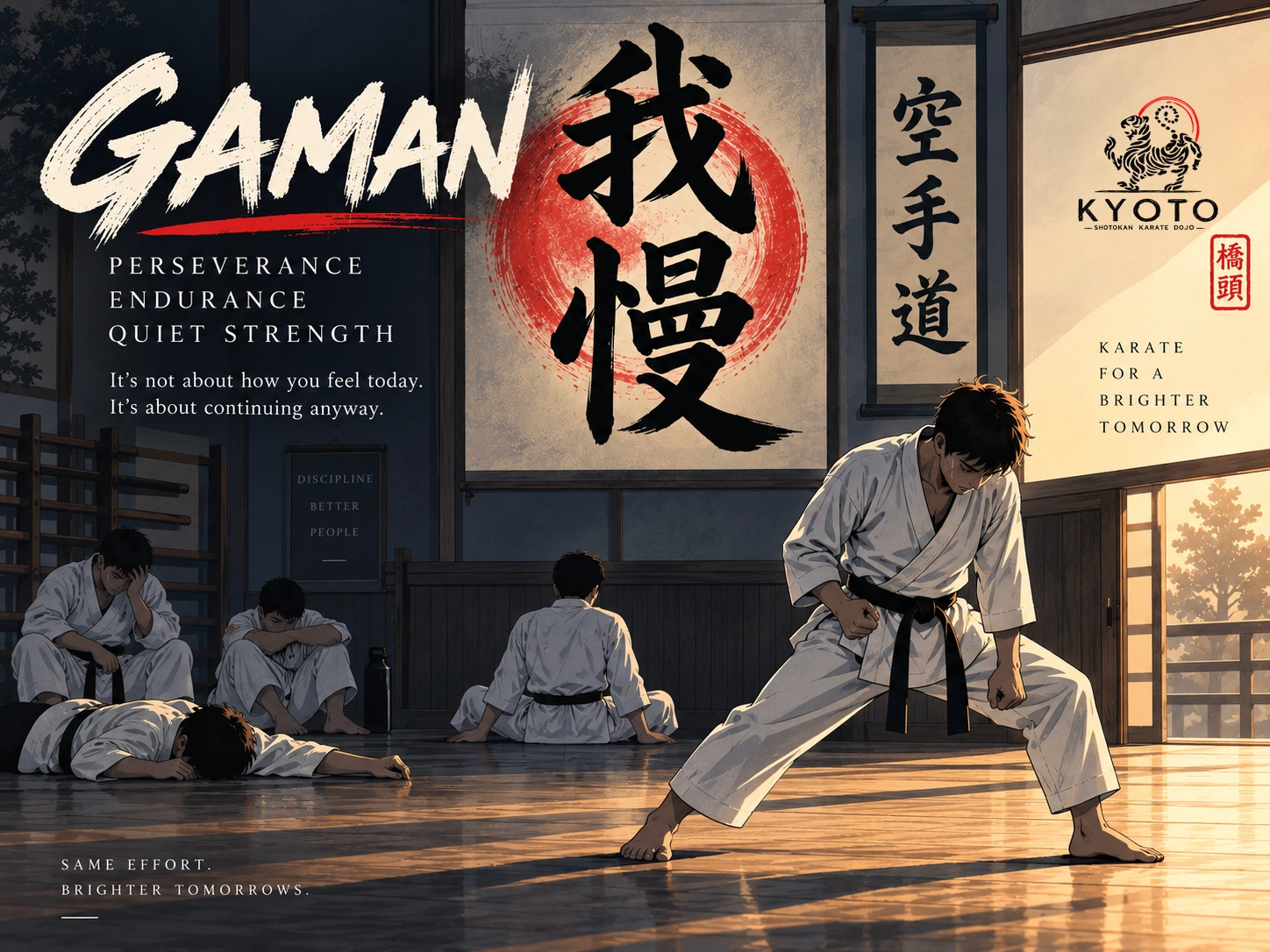
One of those important Japanese concepts is Gaman (我慢).
Gaman is often translated as:
- endurance
- perseverance
- patience
- self-control
- enduring the difficult with dignity
But like many Japanese ideas, the meaning runs deeper than a simple English translation.
In karate, gaman is not merely “putting up with hardship.”
It is the ability to remain composed, disciplined and respectful even when training, life or circumstances become difficult.
What Does Gaman Literally Mean?
The kanji are:
- 我 (ga) = self, ego, oneself
- 慢 (man) = patience, restraint, endurance
Together, gaman carries the idea of controlling oneself and enduring hardship without complaint.
Within Japanese culture, gaman is highly respected.
After earthquakes, disasters or difficult periods, Japanese society often speaks of gaman — quietly enduring, supporting others and continuing forward with dignity.
Traditional karate inherited much of this mindset through budō culture.
Gaman in the Dōjō
Karate training naturally develops gaman.
Sometimes this is obvious:
- tired legs during kiba dachi
- aching shoulders during repeated punches
- exhaustion during line work
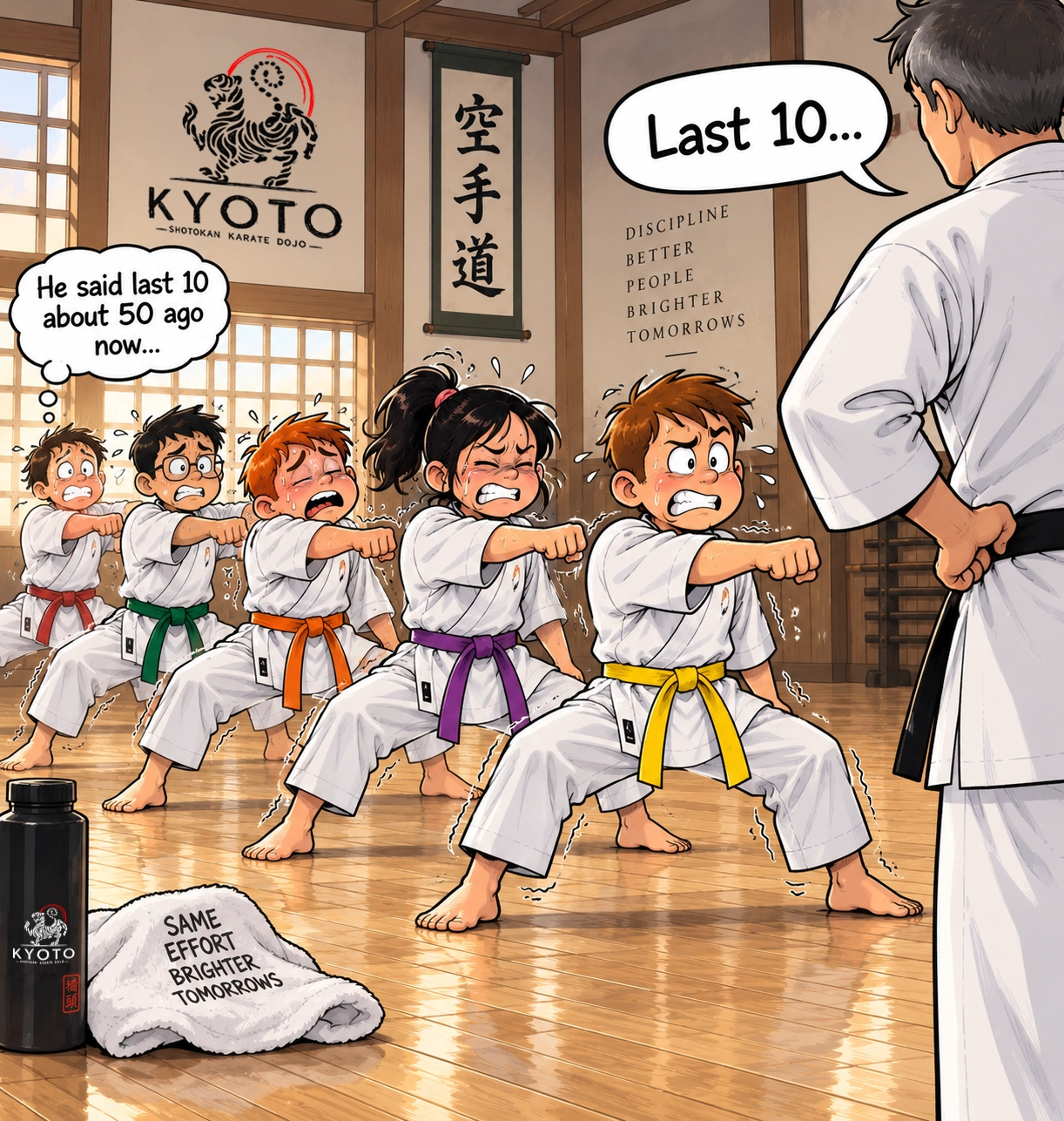
- continuing one more repetition when you want to stop
But often gaman appears in smaller, quieter ways.
It is:
- turning up to training after a difficult day
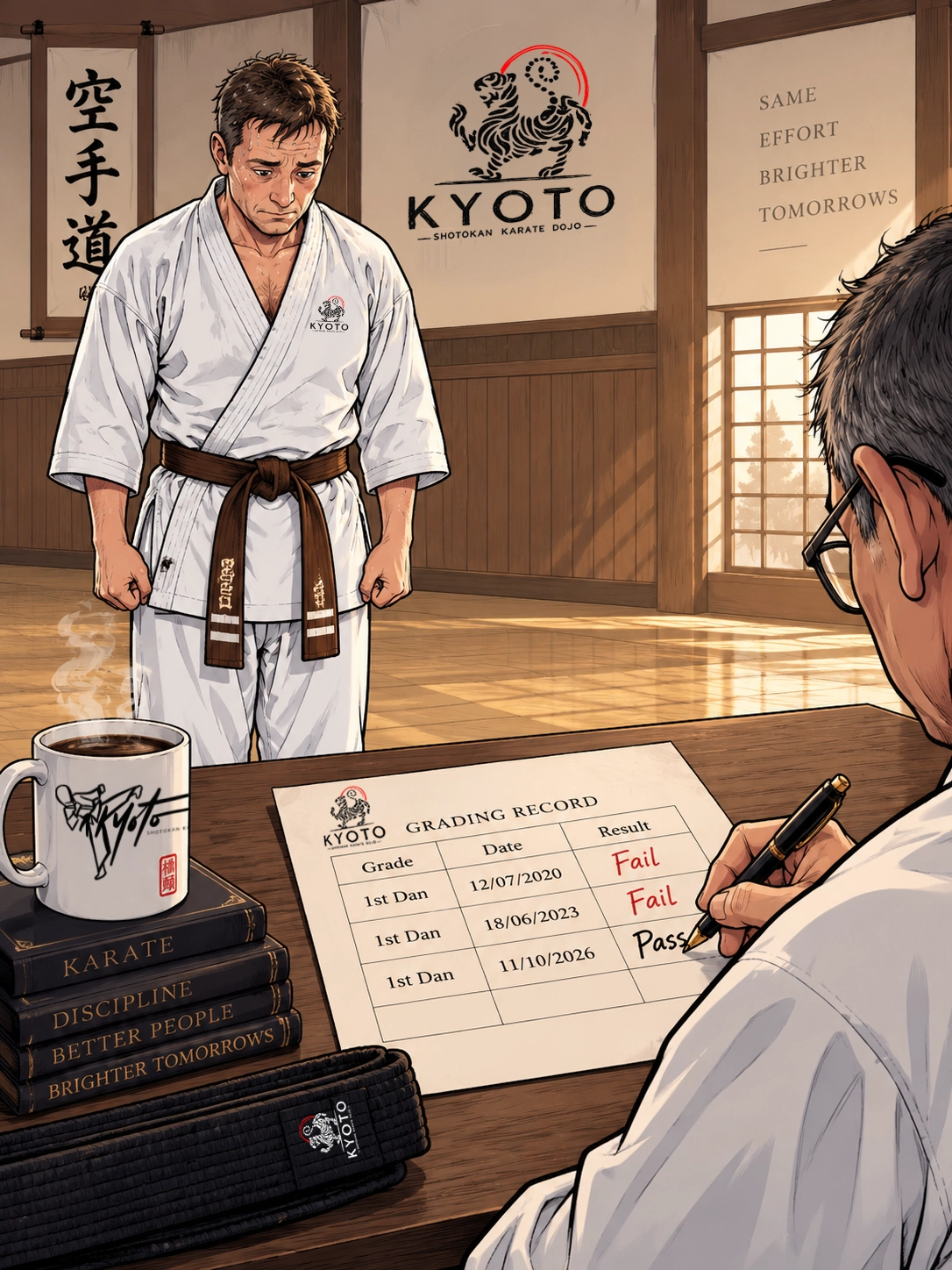
- continuing after failure at grading or competition
- accepting correction without ego
- training patiently through injury recovery
- persevering when progress feels slow
- repeating basics thousands of times
In many ways, karate itself is an exercise in gaman.
The Beginner and Gaman
Beginners often imagine karate progression to be quick and linear.
But traditional karate rarely works that way.
At first:
- techniques feel unnatural
- stances hurt
- coordination is difficult
- Japanese terminology feels confusing
- timing and distance seem impossible
The student who succeeds is rarely the naturally gifted athlete alone.
Usually, it is the student who keeps returning.
The student who quietly continues.
The student who develops gaman.
At Kyōtō, we often say that consistency is more important than intensity.
A student training steadily for years will usually surpass the student who burns brightly for only a few months.
Gaman and Kihon
Kihon training is perhaps where gaman is forged most strongly.
Repeating the same technique hundreds or thousands of times can appear monotonous from the outside.
Yet this repetition develops:
- patience
- discipline
- attention to detail
- resilience
- humility
Rome was not built in a day, as they say.
A strong gyaku-zuki is not built in a week.
Neither is strong character.
This is why traditional karate values repetition so highly.
Gaman in Kumite
In kumite, gaman is not simply absorbing pain or punishment.
True gaman means maintaining composure under pressure.
A karateka may feel:
- fear
- adrenaline
- frustration
- anger
- exhaustion
Yet they must still:
- maintain control
- think clearly
- show respect
- respond correctly
- avoid reckless emotion
This ability to remain calm and disciplined under pressure is one of karate’s greatest lessons.
Gaman and Gradings
Every karateka eventually encounters plateaus.
There are times where improvement feels slow.
Sometimes students fail a grading.
Sometimes progress stalls for months.
These moments are important.
A black belt is not simply someone technically skilled.
It is often someone who refused to quit.
Gaman is one of the hidden qualities behind yudansha.
Gaman Beyond Karate
The real value of gaman is how it transfers into everyday life.
Karate training helps people develop resilience outside the dōjō:
- coping with stress
- handling setbacks
- managing pressure at work or school
- remaining calm in difficult situations
- persevering through challenges
This is one reason traditional karate can be so valuable for both adults and children.
The lessons are not only physical.
Gaman Is Not Silence About Serious Problems
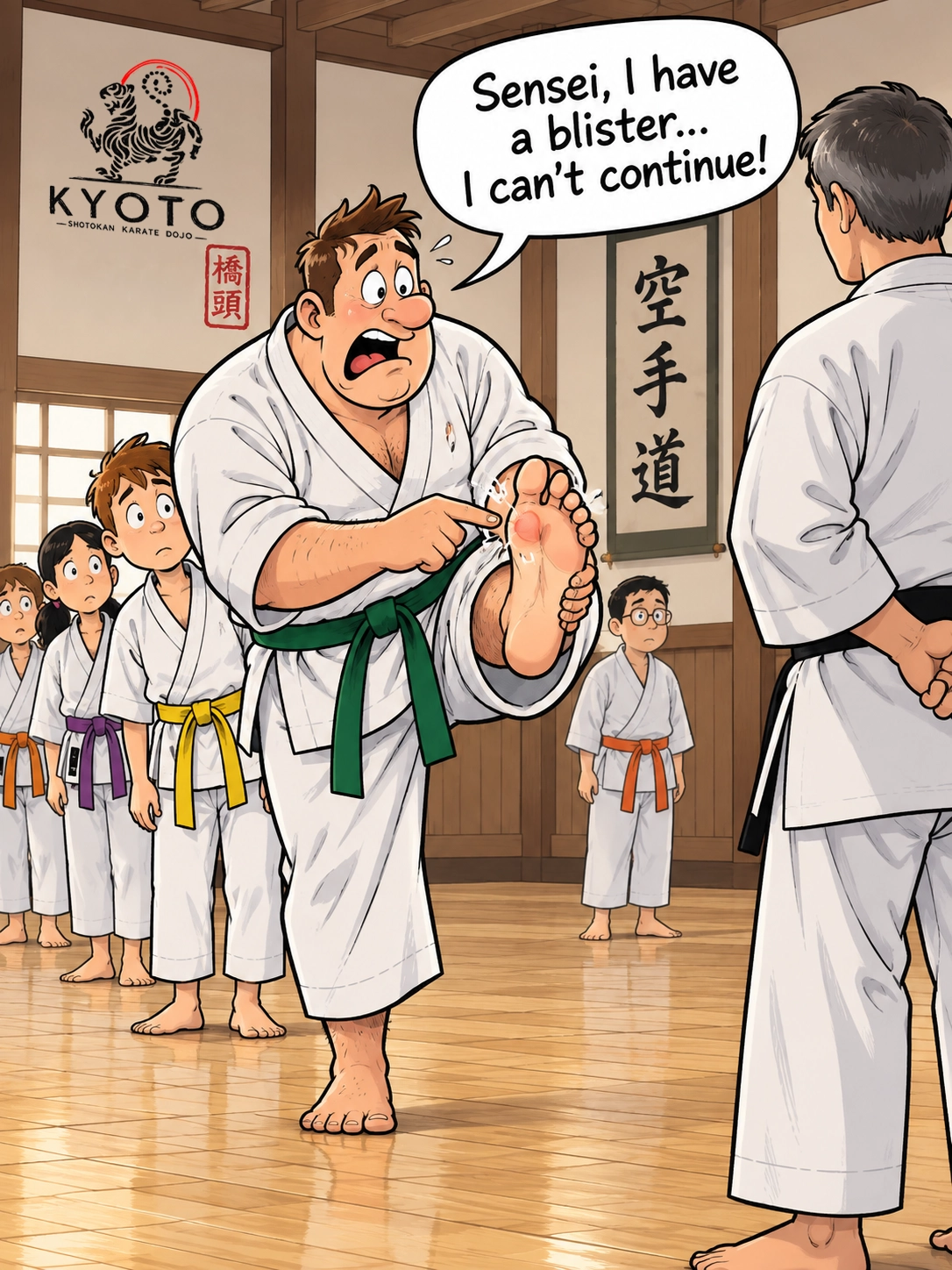
It is important to understand that gaman does not mean ignoring injury, bullying, abuse or genuine wellbeing concerns.
Traditional perseverance should never become unhealthy silence.
A good dojo culture encourages students to:
- communicate honestly
- support each other
- train safely
- ask for help when needed
True budō balances resilience with wisdom.
Gaman at Kyōtō
At Kyōtō, gaman can often be seen in ordinary moments:
- the beginner who keeps trying
- the adult returning after years away
- the nervous child gradually building confidence
- the senior student helping others despite their own fatigue
- the student training consistently through winter evenings and busy lives
These moments rarely attract attention.
But they are often where karate spirit is truly developed.
In many respects, gaman is quiet strength.
Not dramatic.
Not boastful.
Simply continuing forward.
Osu.