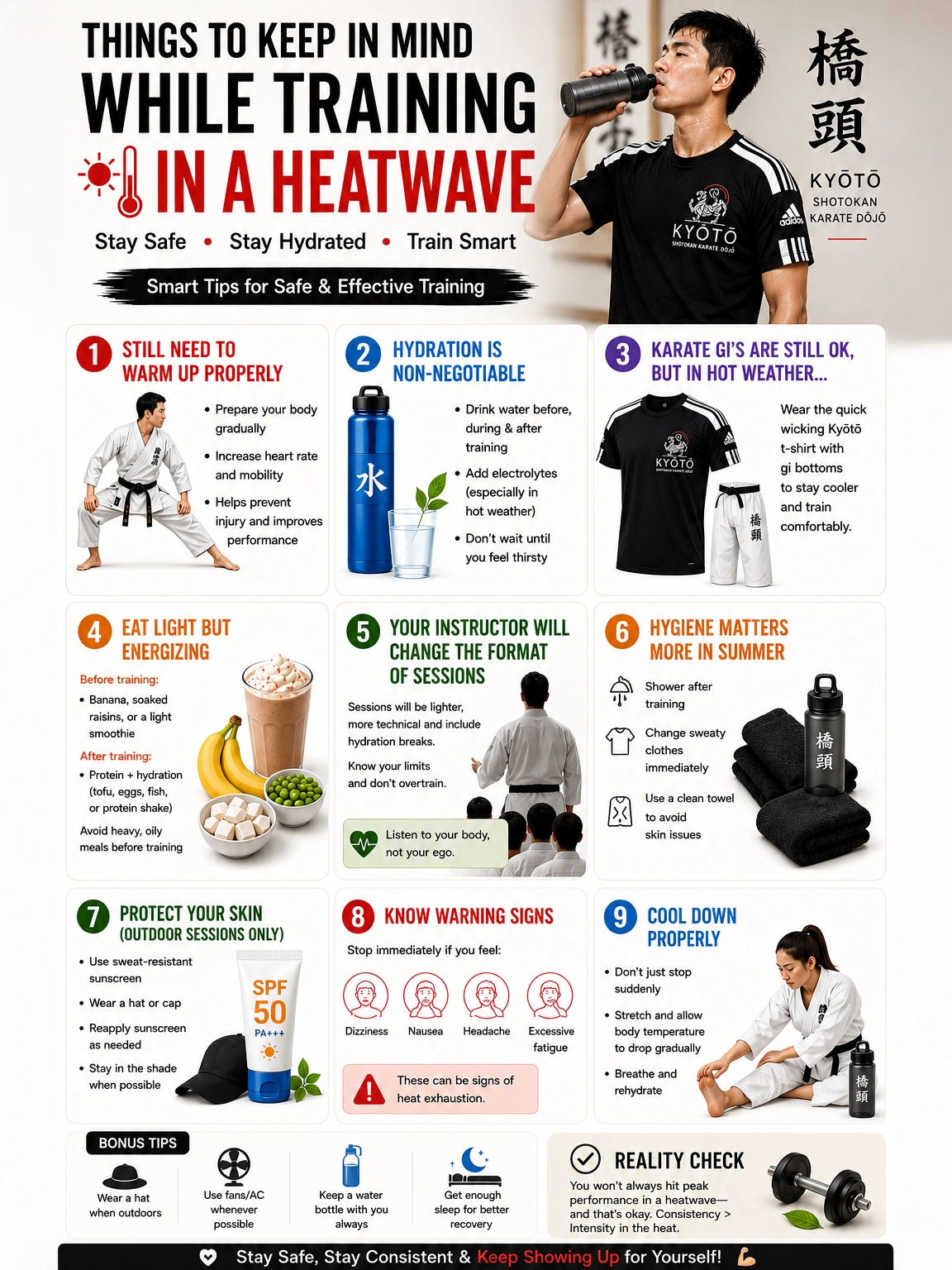
 As temperatures rise across Bristol and beyond, many people naturally wonder whether they should continue training during hot weather.
The answer is simple: yes—but train smart.
At Kyōtō Shotokan Karate Dōjō, safety has always come before intensity. Karate is a lifelong pursuit, and that means adapting our training to the conditions around us. During periods of hot weather or a summer heatwave, a few simple adjustments can help everyone continue to enjoy training safely and effectively.
Warm Up Properly – Even When It's Hot
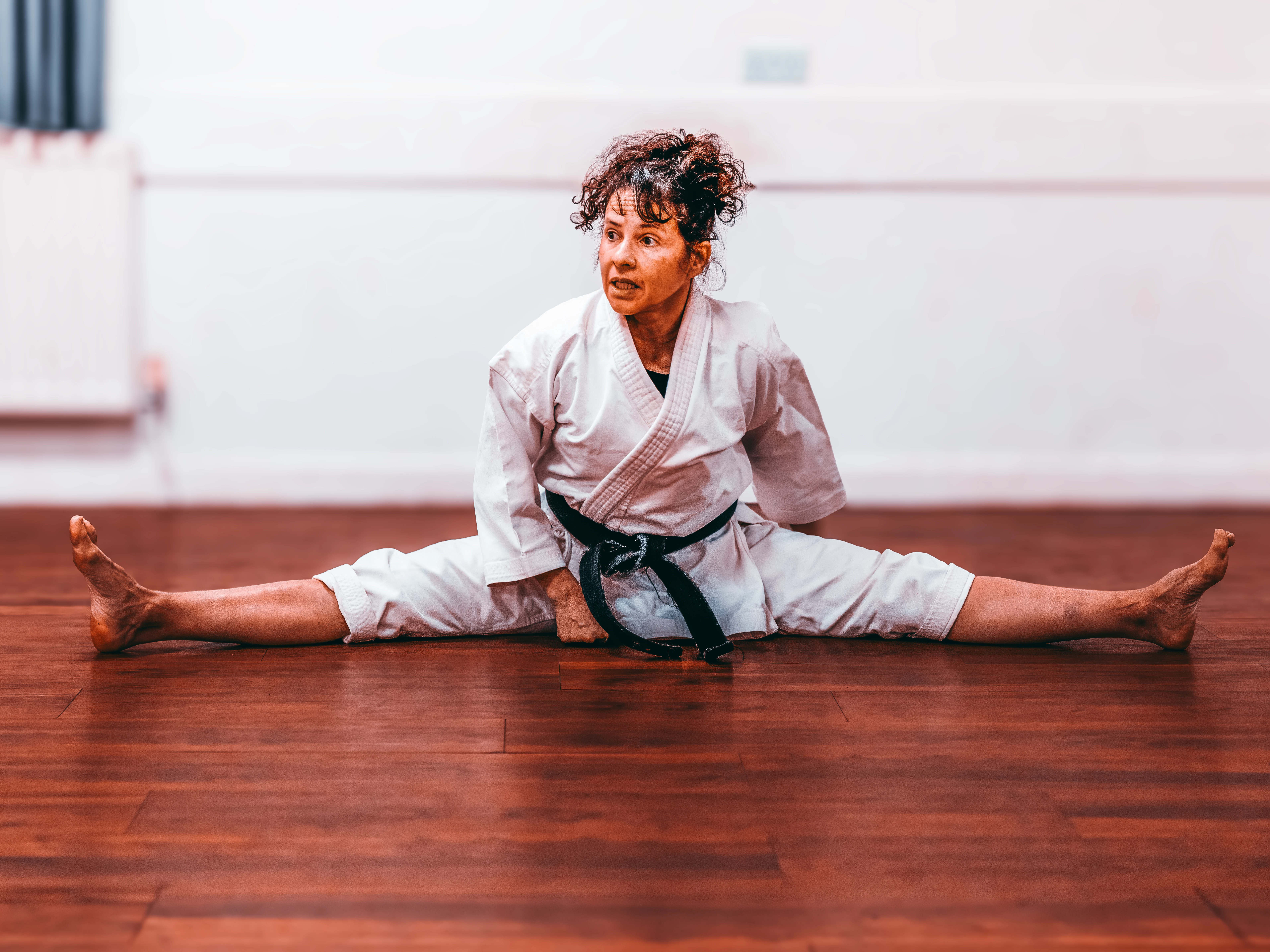 One of the biggest misconceptions about summer training is that a warm-up is no longer necessary.
While the body may feel warmer than usual, muscles, joints and connective tissues still need to be prepared for the demands of karate practice. A proper warm-up increases mobility, prepares the cardiovascular system and helps reduce the risk of injury.
Hot weather is not a substitute for good preparation.
Hydration Is Non-Negotiable
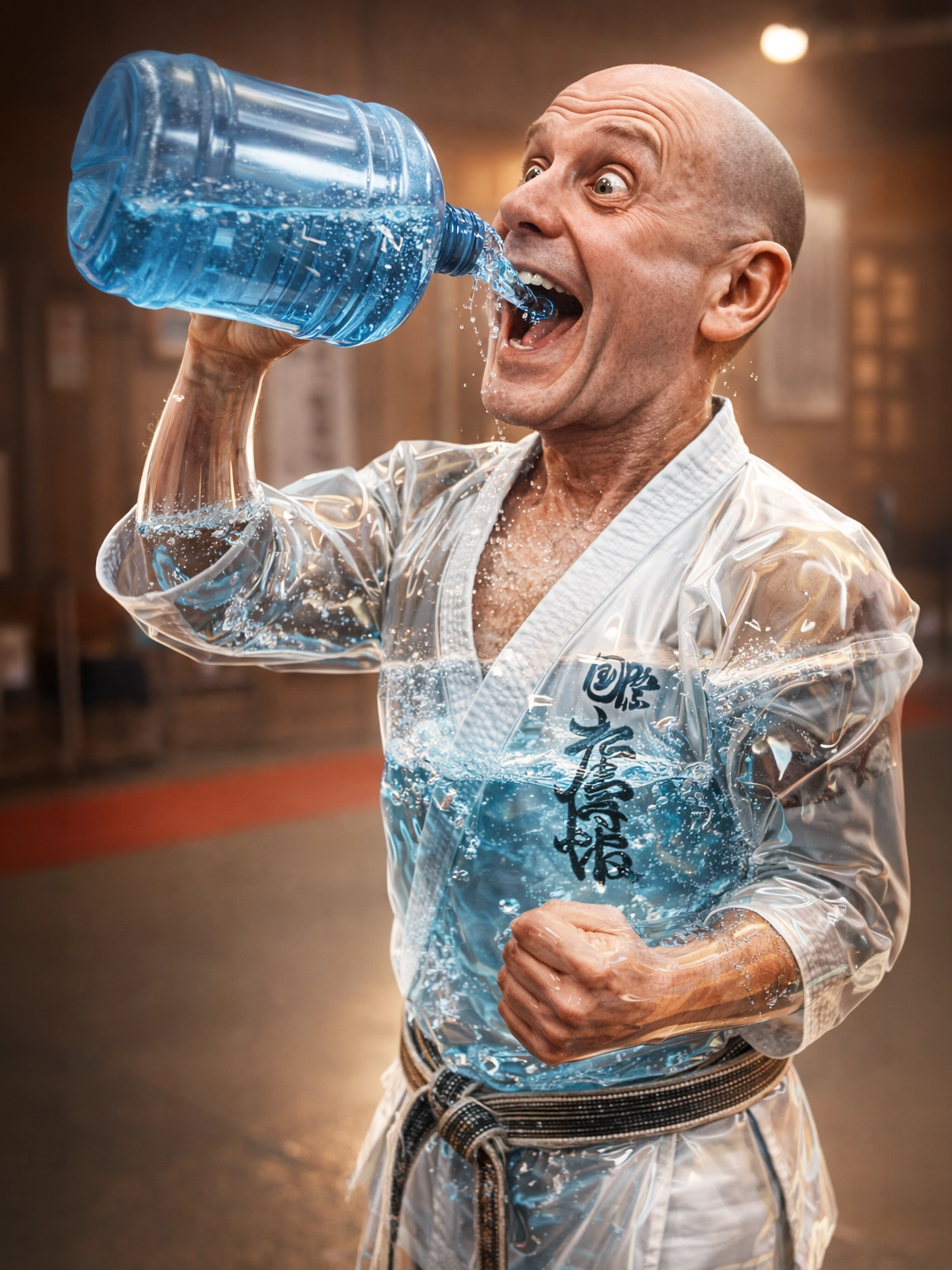 Hydration begins before you enter the dōjō.
By the time you feel thirsty, your body may already be becoming dehydrated. Students should aim to drink water throughout the day and bring a water bottle to every class.
During hotter sessions, additional hydration breaks may be introduced, and students should not hesitate to take advantage of them.
Good hydration supports concentration, reaction speed and recovery—all essential elements of karate training.
Adapting Your Training Clothing
Traditional karate training is normally conducted in a gi, and for most sessions this remains perfectly acceptable.
However, during particularly hot weather, students may choose to wear the Kyōtō quick-wicking training shirt with gi trousers. The lightweight material helps improve comfort while maintaining a smart and professional appearance within the dōjō.
The goal is not simply to stay cool—it is to train effectively and safely.
Fuel Your Training
Heavy meals and hot weather rarely make a good combination.
A lighter meal or snack before training can help maintain energy levels without leaving you feeling sluggish. After training, focus on hydration and recovery.
Your body works hard during karate practice. Giving it the fuel it needs is an important part of the training process.
Training Smarter, Not Harder
One advantage of training within an experienced dojo is that sessions can be adapted to suit the conditions.
During particularly warm periods, instructors may adjust the format of training by:
- Including additional hydration breaks
- Increasing technical content
- Reducing unnecessary physical intensity
- Allowing longer recovery periods between exercises
This does not mean training becomes easier. Technical practice often requires even greater concentration and precision than purely physical work.
At the same time, every student must understand their own limits. Karate encourages perseverance, but perseverance should never be confused with stubbornness.
Hygiene Matters
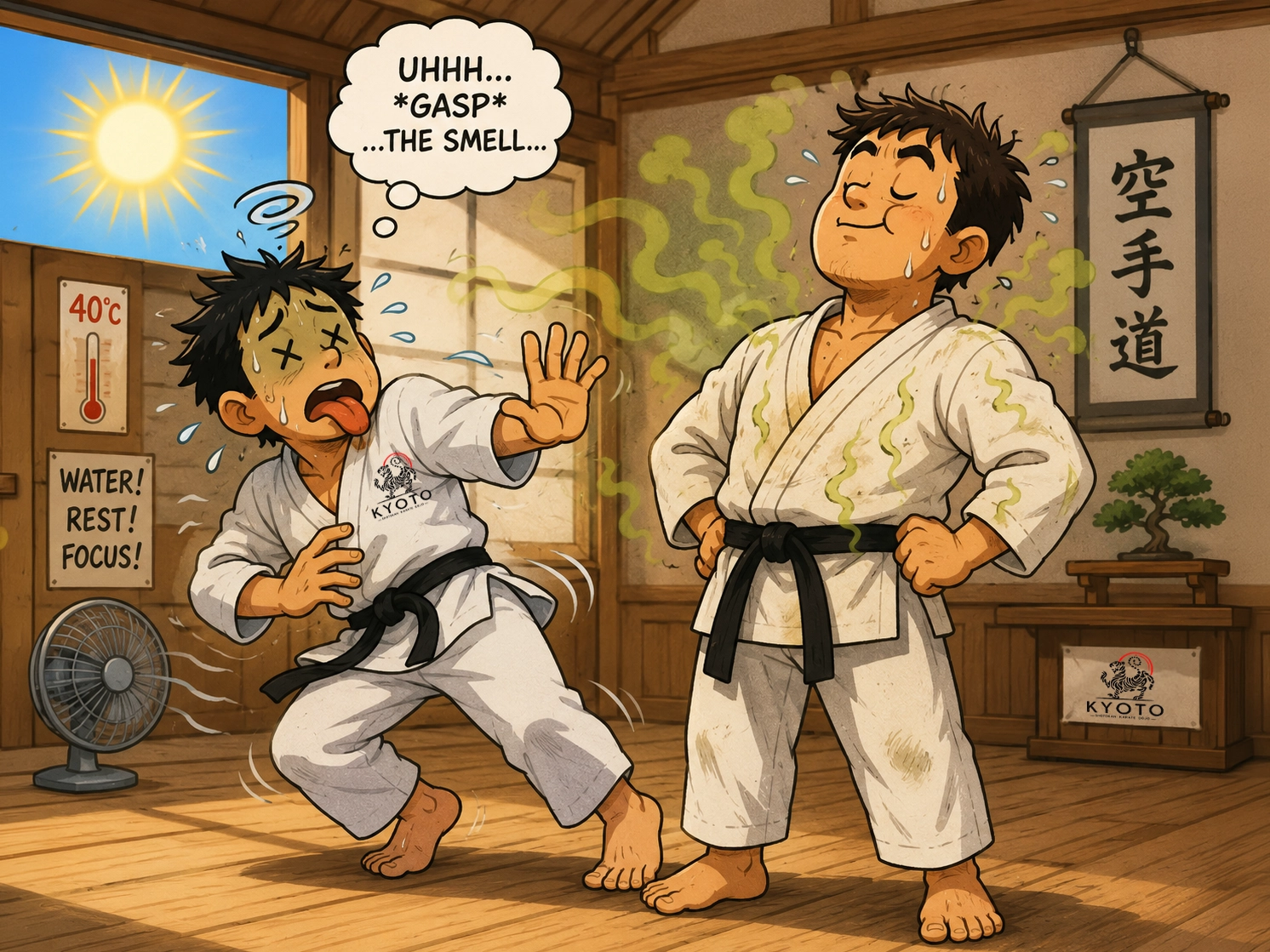 Hot weather means increased perspiration, making good hygiene even more important.
Students should ensure that training clothing is washed regularly, towels are kept clean and sweaty clothing is changed promptly after training.
These small habits help maintain a healthy training environment for everyone.
Recognising the Warning Signs
If you begin to experience symptoms such as:
- Dizziness
- Headaches
- Nausea
- Unusual fatigue
- Difficulty concentrating
you should stop training immediately and speak to an instructor.
There is no benefit in attempting to "push through" symptoms that may indicate dehydration or heat exhaustion.
Don't Forget the Cool Down
Just as a warm-up prepares the body for training, a cool-down helps the body recover afterwards.
Gentle stretching, controlled breathing and gradual recovery allow heart rate and body temperature to return to normal more effectively.
Many students find this final stage of training particularly valuable after a demanding summer session.
The Kyōtō Perspective
The Japanese concept of keizoku wa chikara nari—continuity becomes strength—reminds us that progress is built through consistent practice over time.
During a heatwave, the objective is not to train harder than everyone else. The objective is to continue training safely, intelligently and consistently.
Some days your performance may feel slightly reduced by the weather. That is perfectly normal.
What matters is that you keep showing up, keep learning and keep moving forward along your karate path.
Train smart. Stay hydrated. Look after each other.
We'll see you in the dōjō.
Topics