 Most students see a karate class lasting an hour.
What they do not see are the many hours of work that take place before the first bow and long after the final “oss”.
As part of Volunteers’ Week 2026, we are recognising some of the less visible contributions that help make clubs like Kyōtō Shotokan Karate Dōjō possible.
When people think about volunteering within a karate club, they often think of instructors teaching on the dojo floor. While instruction is certainly one important role, it is only one piece of a much larger picture.
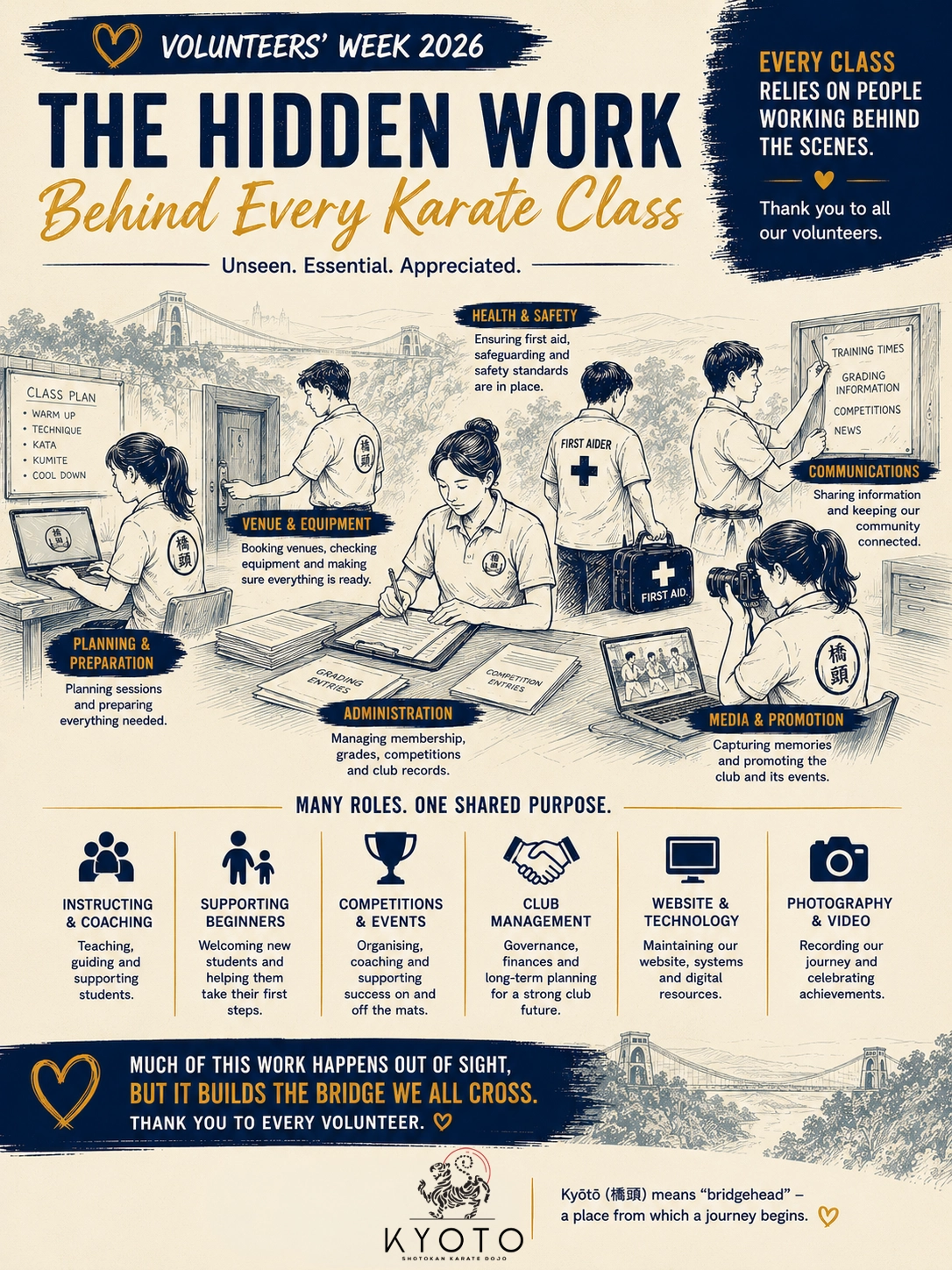
Every training session relies upon a network of people working behind the scenes.
Before a class even begins, venues must be booked and maintained. Equipment needs to be checked and replaced when necessary. Club finances must be managed. Membership records need updating. Insurance, safeguarding and health and safety requirements must be monitored and renewed.
Someone has usually spent time planning the session itself.
Someone has opened the hall.
Someone has ensured that first aid provision is available.
Someone has prepared grading paperwork, competition entries or club communications.
Much of this work goes completely unnoticed by the average student—and that is often the sign that it has been done well.
Beyond the Dōjō Floor
The modern karate club depends upon far more than training alone.
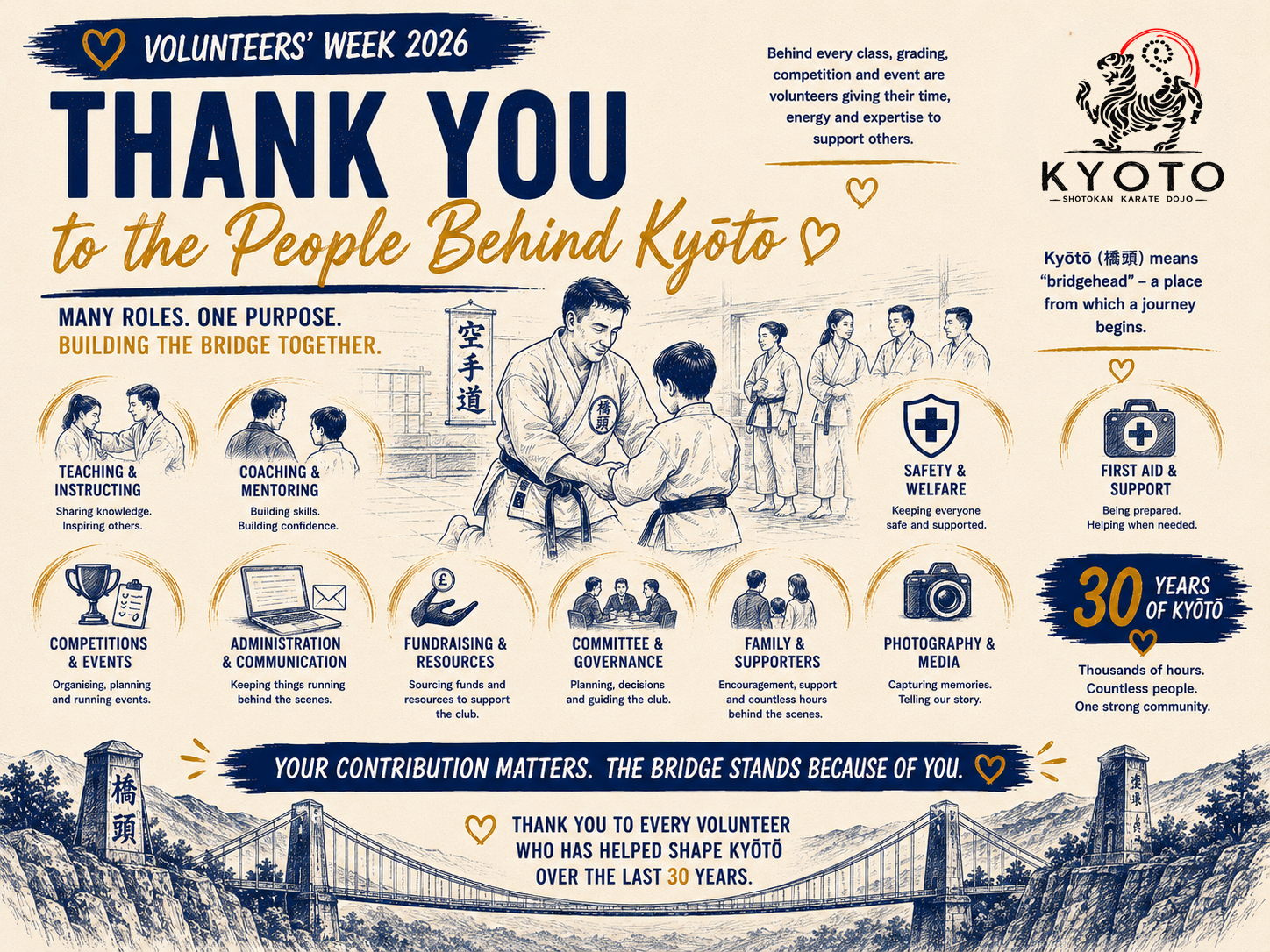
Today, volunteers often support areas such as:
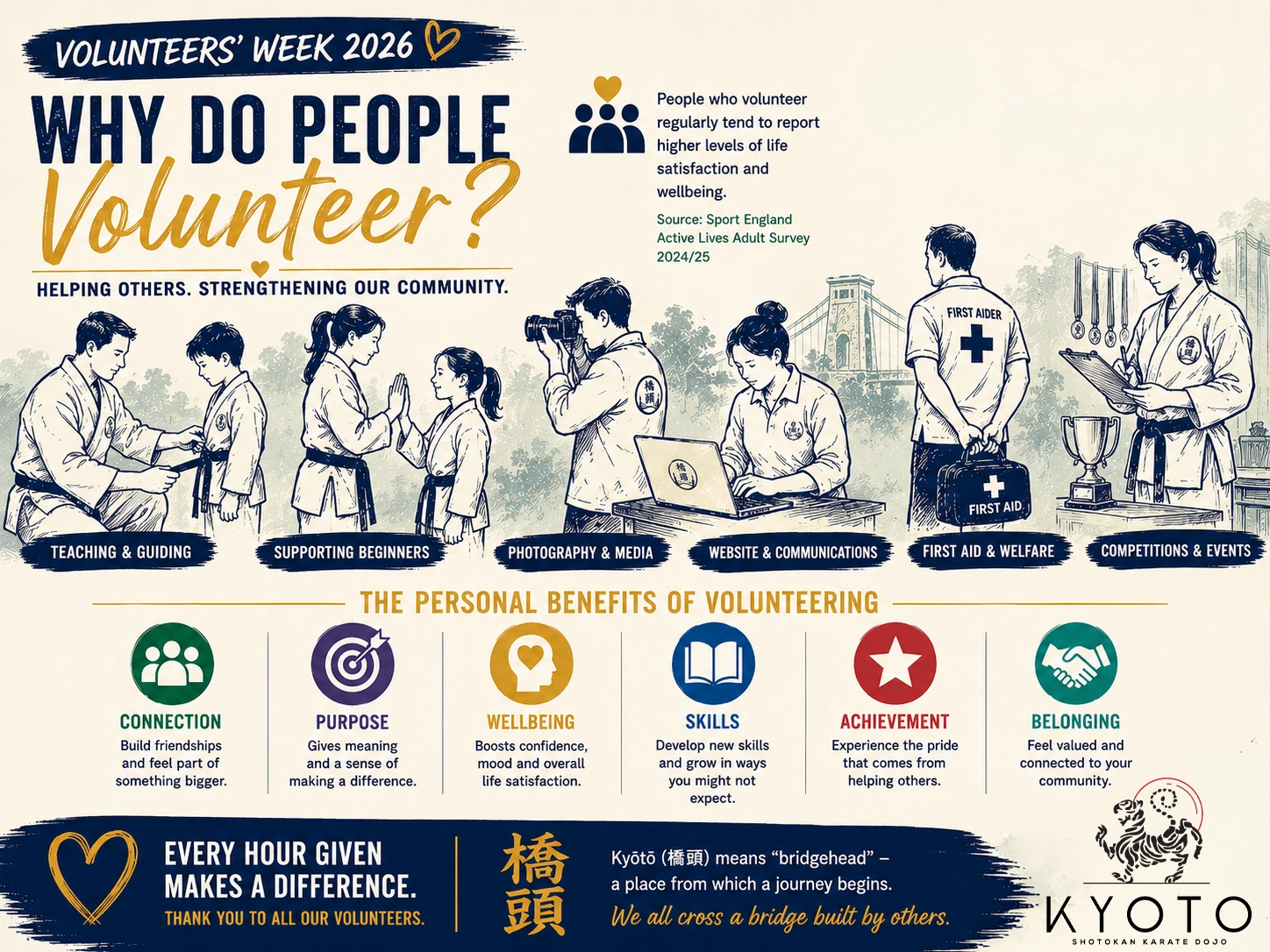
- Website management and updates
- Photography and video production
- Social media and communications
- Competition administration
- Grading administration
- Safeguarding and welfare
- First aid provision
- Equipment maintenance
- Venue liaison and bookings
- Club governance and committee responsibilities
These tasks may not involve throwing punches or practising kata, but they are essential to creating a safe, organised and welcoming environment for everyone who trains.
Why People Do It
Most volunteers are not looking for recognition.
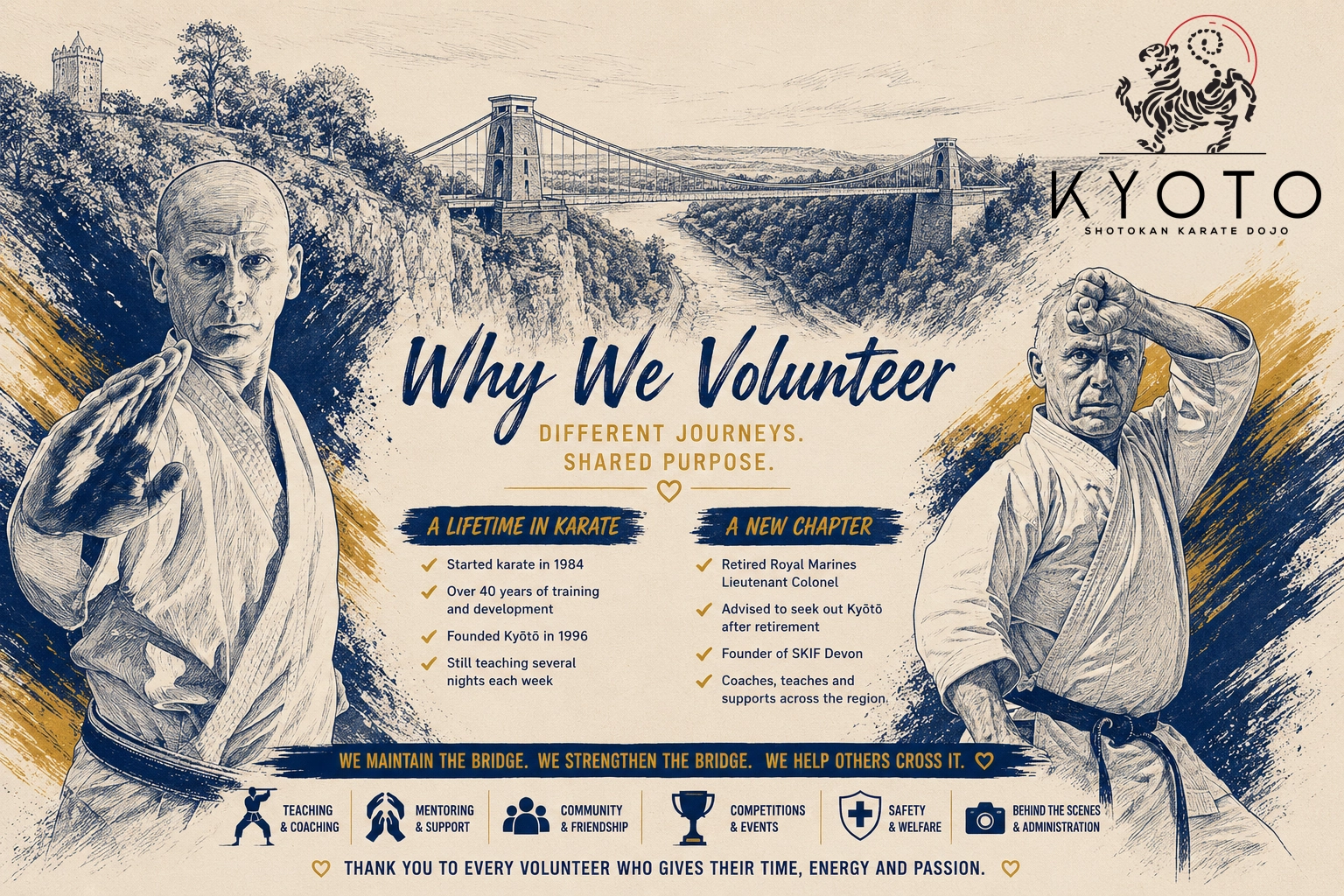
They volunteer because they care about the club, the students and the opportunities karate has provided for them.
Many remember the instructors, senior students and volunteers who supported them when they first started training. Volunteering becomes a way of giving something back.
Others enjoy the sense of purpose, friendship and community that comes from helping a shared organisation succeed.
The latest Sport England Active Lives survey suggests that people who volunteer regularly often report higher levels of life satisfaction and wellbeing than those who do not volunteer. For many volunteers, that sense of fulfilment comes from knowing they have made a positive difference to others.
Building Something Together
One of the strengths of community karate clubs is that they are rarely built by one person alone.
Over the years, countless individuals have contributed their time, knowledge, energy and enthusiasm to help Kyōtō develop and grow.
Some teach.
Some coach.
Some organise.
Some support.
Some simply help whenever they can.
Each contribution, no matter how large or small, helps create the experience that students enjoy every week.
The Kyōtō Perspective
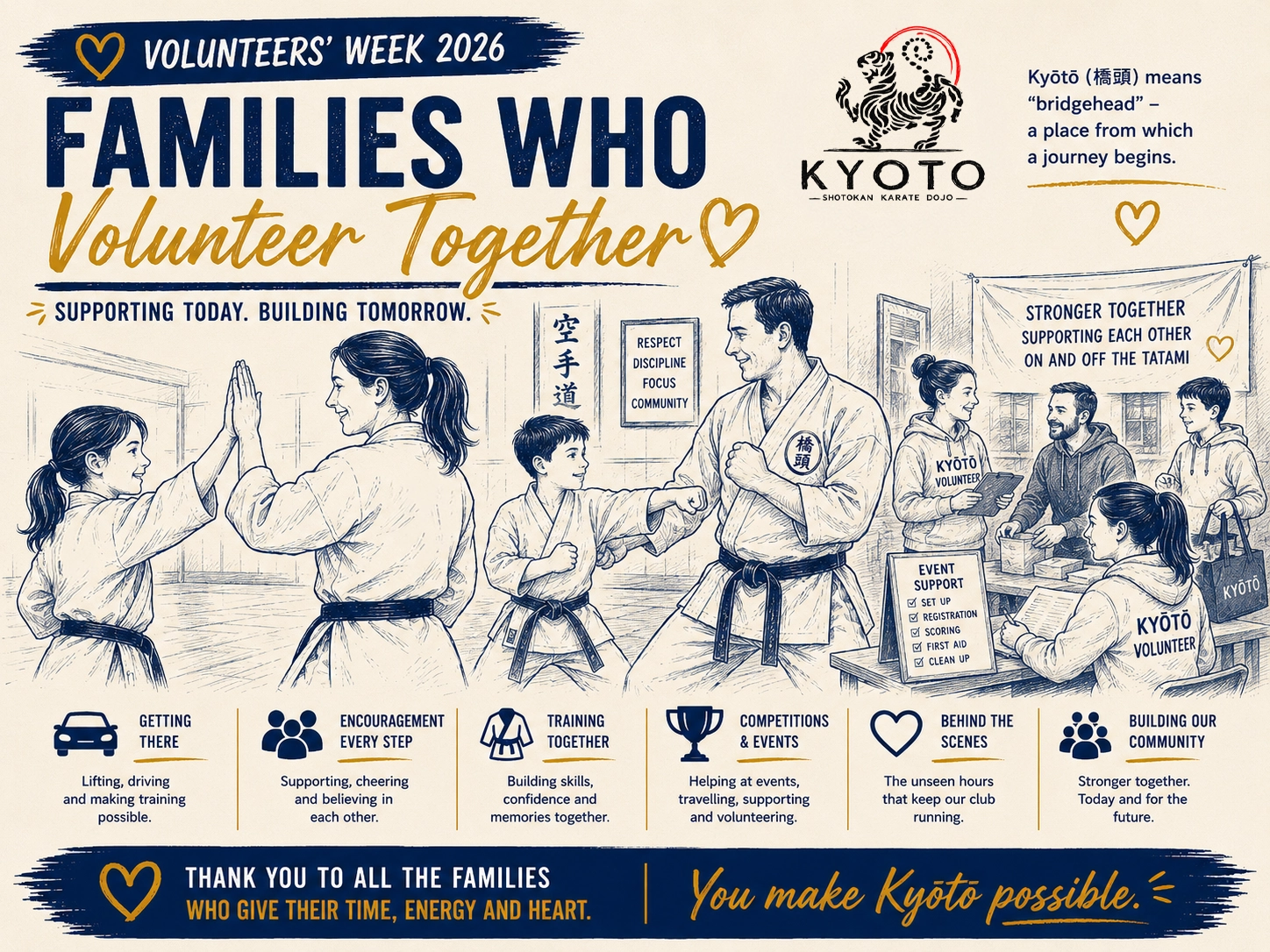
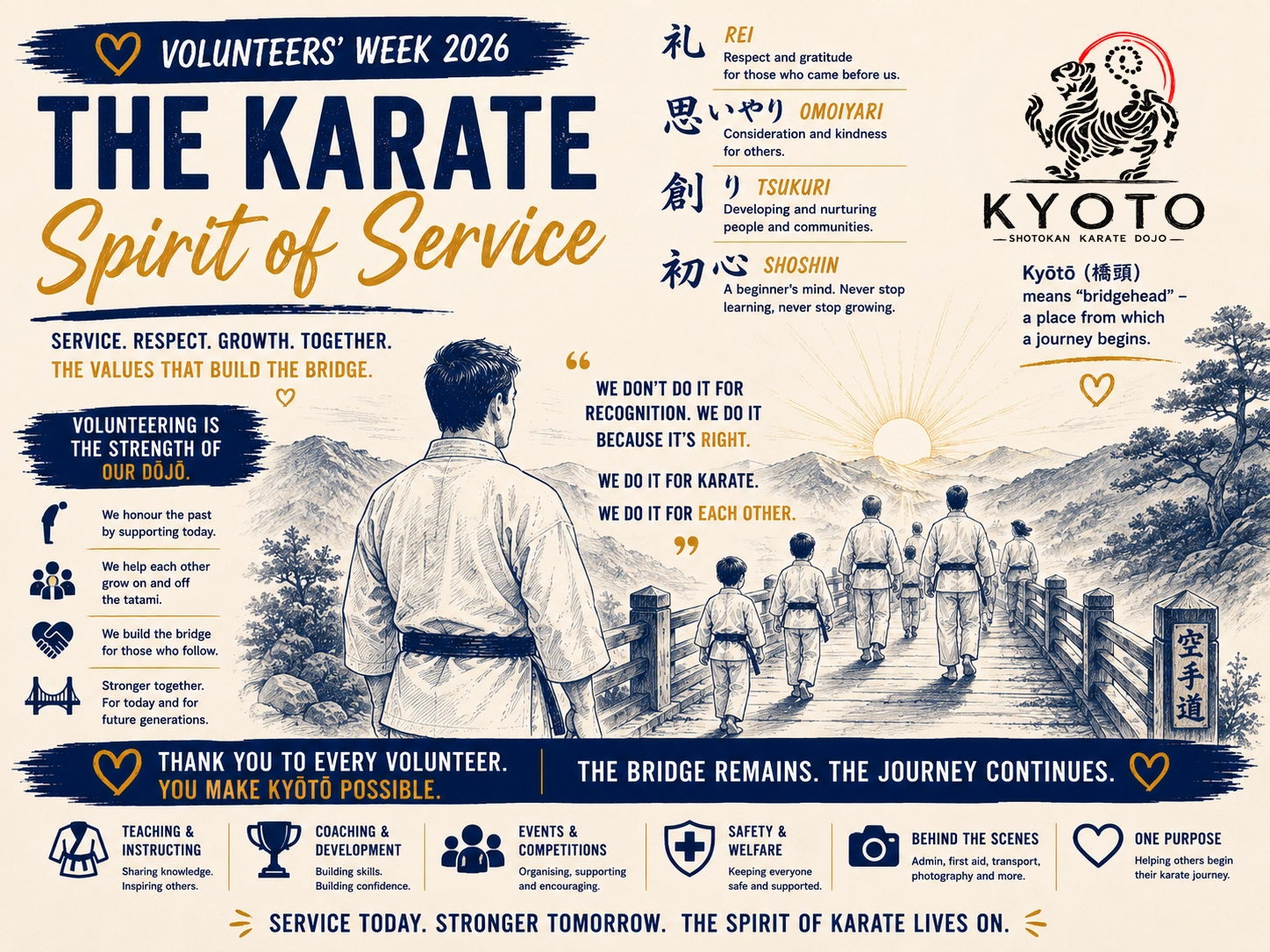
The name Kyōtō (橋頭) means “bridgehead”—a place from which a journey begins.
Every class, grading, competition and event rests upon foundations built by people who were willing to contribute their time and effort for the benefit of others.
Most students will never see much of that work.
Yet without it, the bridge would not exist.
During Volunteers’ Week, we extend our thanks to everyone who helps make Kyōtō possible—both on the dojo floor and behind the scenes.
Your efforts may not always be visible, but they are deeply appreciated.