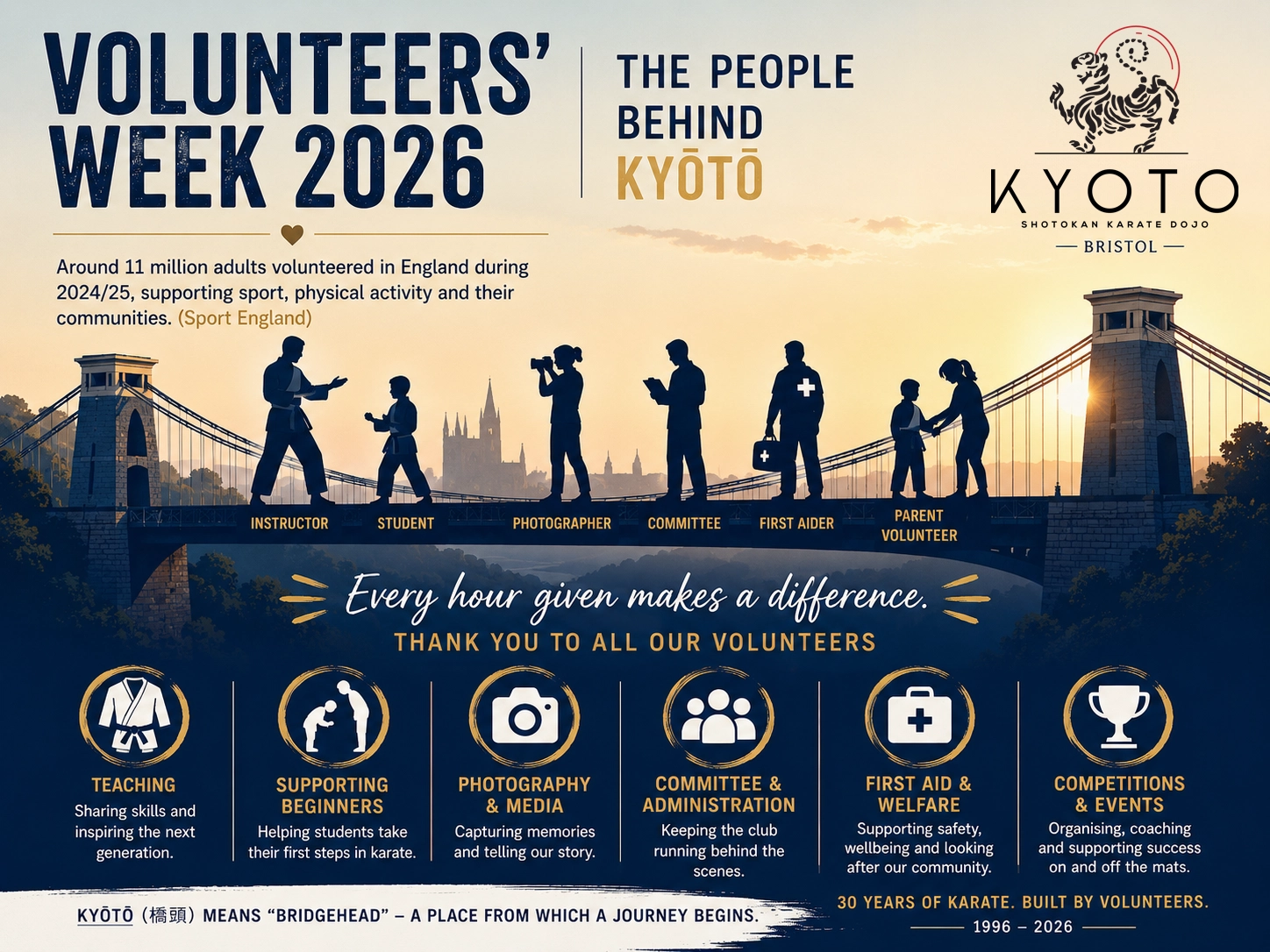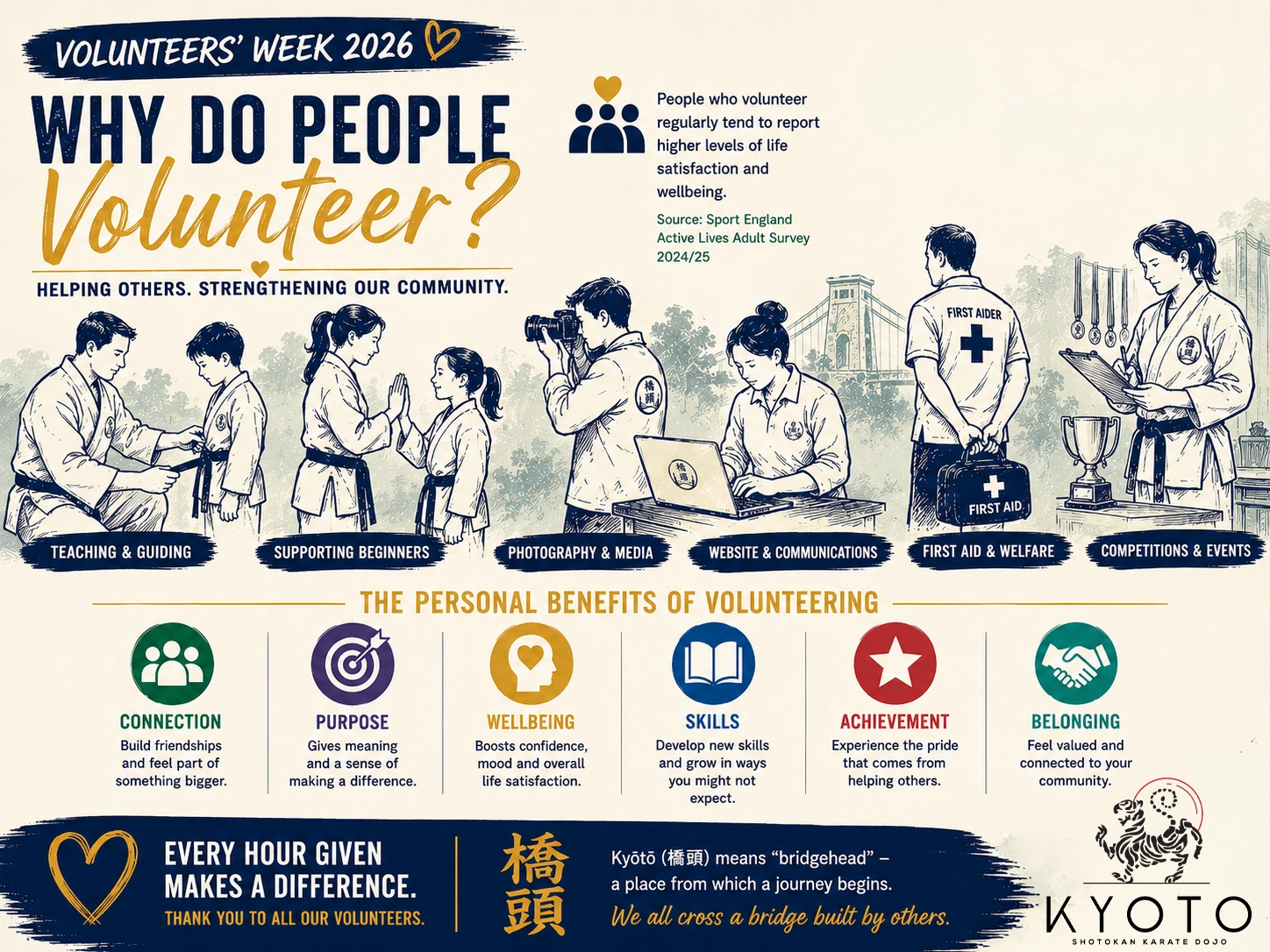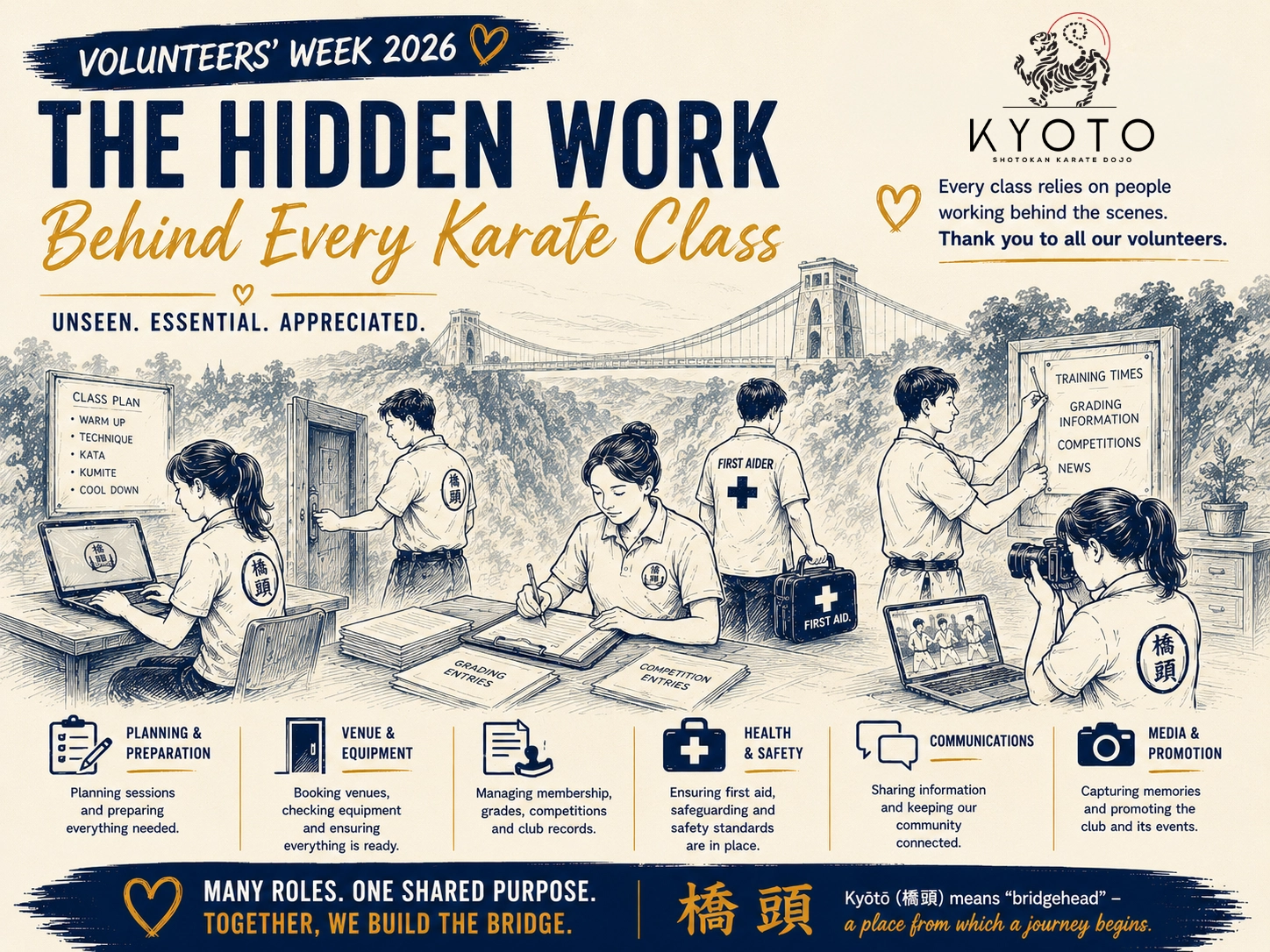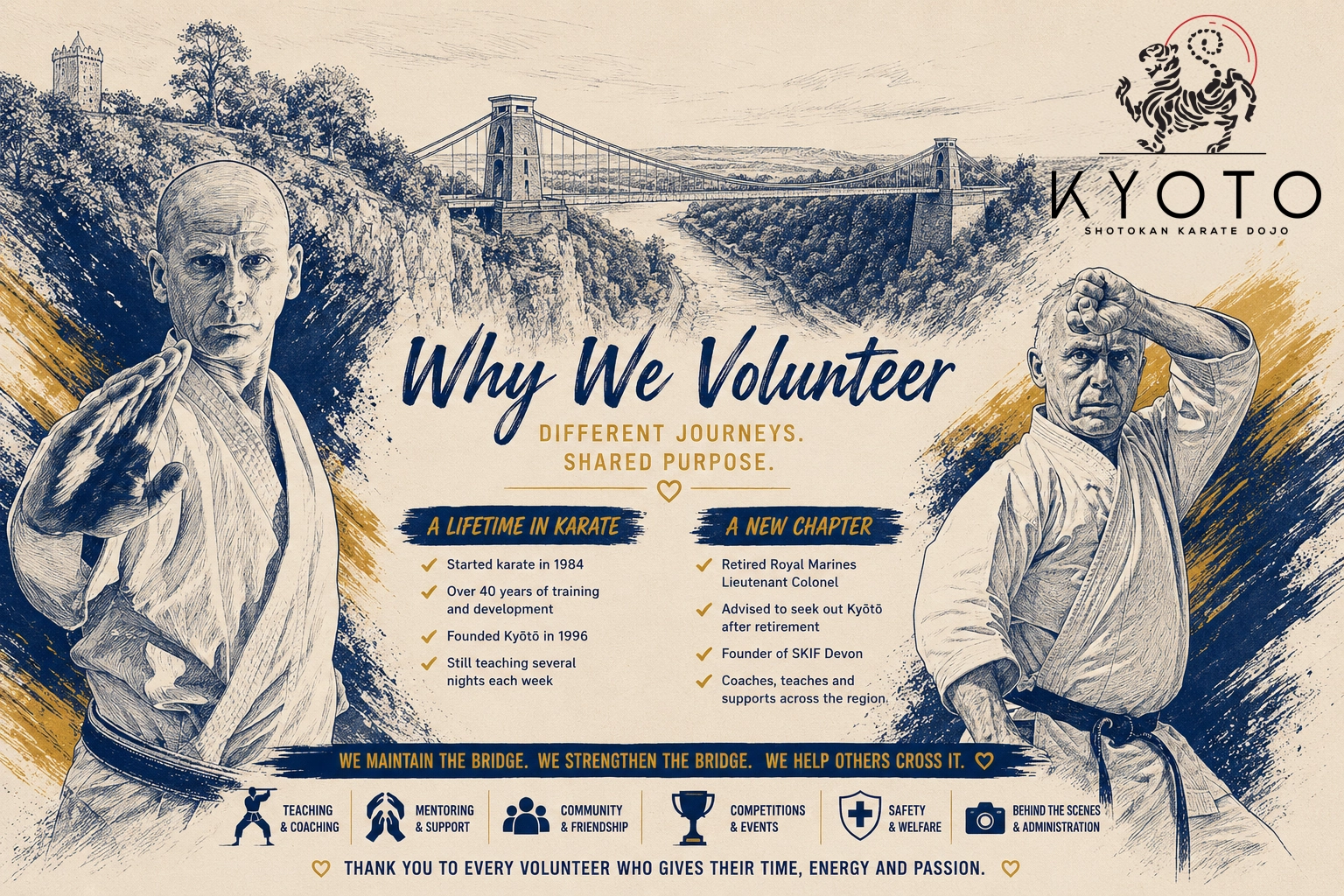
 At first glance, volunteering and karate may appear to be separate things.
One involves giving time to help others.
The other involves training, discipline and personal development.
Yet the longer a person studies traditional karate, the more they begin to realise that the two are closely connected.
Many of the qualities that make a good karateka are the same qualities that make a good volunteer.
Respect.
Humility.
Responsibility.
Consideration for others.
Service.
These principles are woven throughout traditional karate training, even when they are not spoken aloud.
Beyond Personal Achievement
Most people begin karate with personal goals.
To become fitter.
To gain confidence.
To learn self-defence.
To achieve their next grading.
These are all worthwhile objectives.
However, traditional karate-do has always encouraged practitioners to look beyond themselves.
As students progress, they gradually become responsible not only for their own development, but also for helping others along the path.
A senior student assists a beginner.
An instructor shares knowledge accumulated over decades.
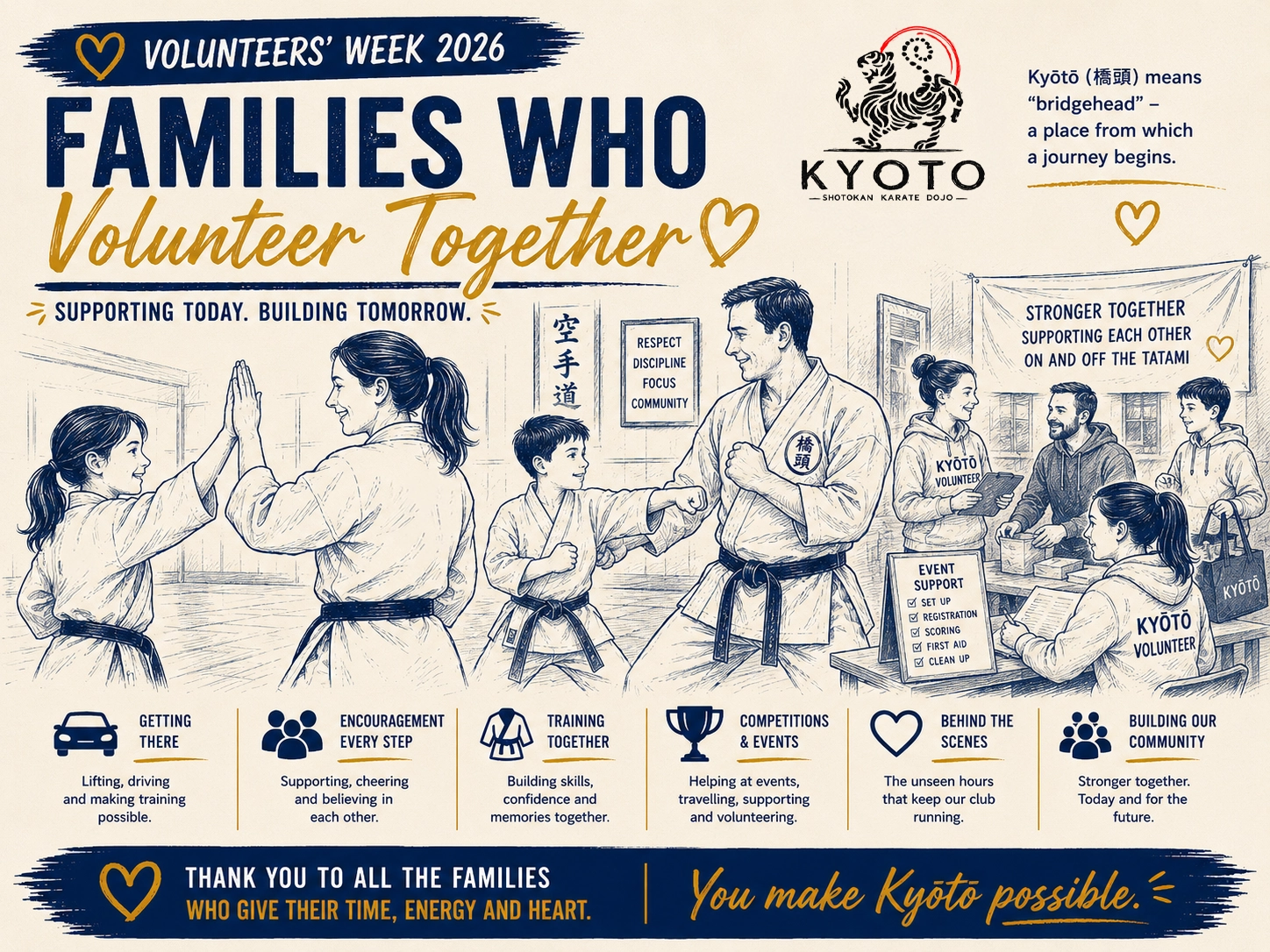
A parent helps support an event.
A volunteer gives up their time so others can train.
In each case, the focus shifts from “What can I gain?” to “What can I contribute?”
That transition is an important part of karate-do.
Rei and Respect
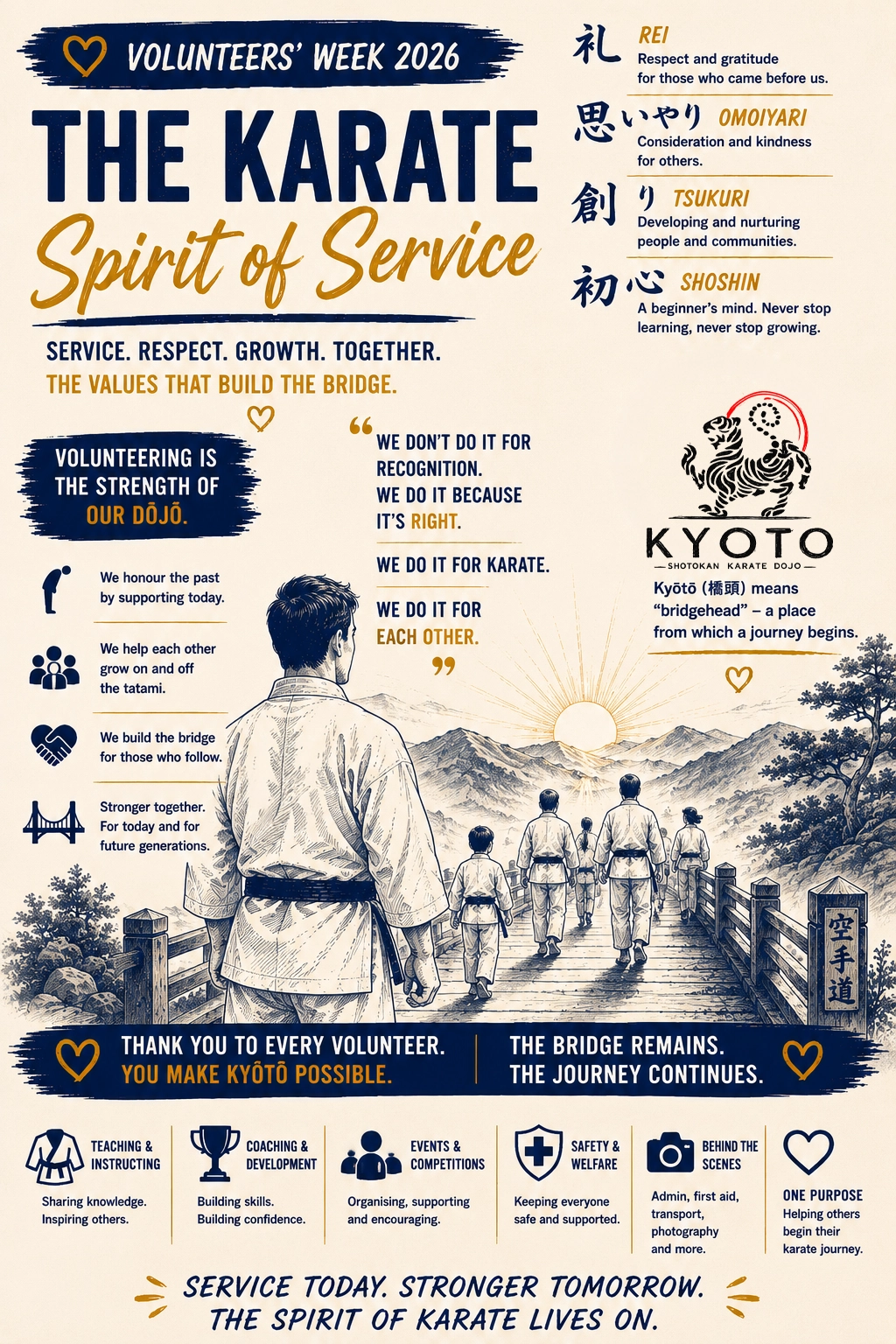
The concept of rei (礼) is often translated simply as “etiquette” or “bowing.”
In reality, it represents something much deeper.
Rei acknowledges that we do not progress alone.
Every lesson learned, every technique improved and every achievement earned has usually been influenced by the efforts of others.
Volunteering can be viewed as one expression of that respect.
It is a way of recognising the value we have received and choosing to contribute in return.
Omoiyari and Consideration
The Japanese concept of omoiyari describes thoughtful consideration for others.
It means recognising the needs of another person and acting with kindness and understanding.
Within a dōjō, this might mean helping a nervous beginner feel welcome, encouraging someone struggling with a technique or supporting a fellow student through a difficult period.
Volunteering often begins with exactly the same mindset.
Someone notices a need and chooses to help.
Tsukuri and Developing People
At Kyōtō, we often speak about tsukuri—the process of creating, developing and nurturing people.
Karate instruction is not simply about teaching techniques.
It is about helping individuals develop confidence, resilience, character and self-belief.
Volunteering supports that same process.
Every contribution helps create an environment in which others can grow.
The Bridgehead
The name Kyōtō (橋頭) means “bridgehead”—a place from which a journey begins.
A bridgehead is not built for the benefit of the people standing upon it.
It exists to help others cross.
That idea lies at the heart of volunteering.
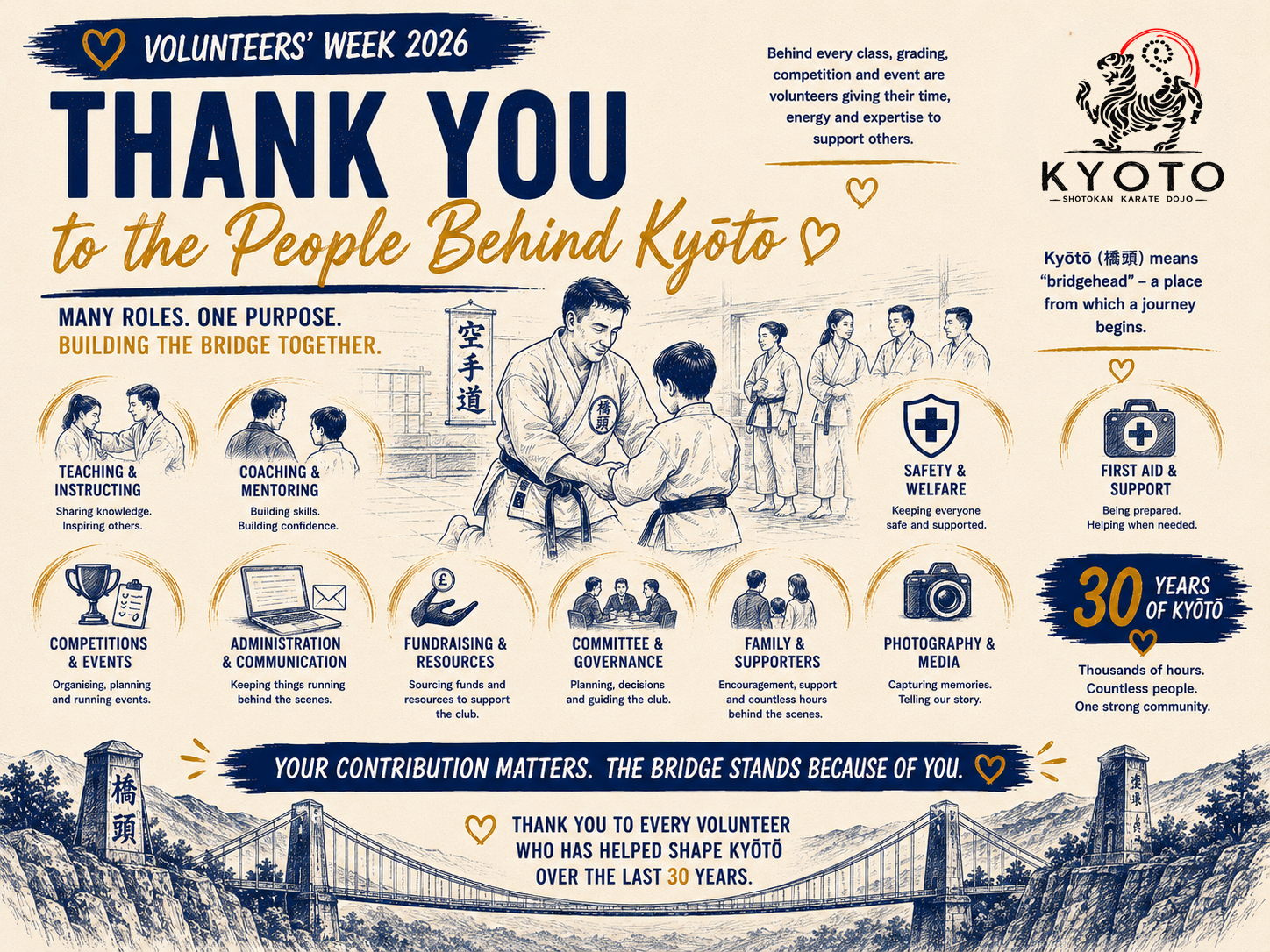
Every instructor who teaches.
Every parent who supports.
Every committee member who serves.
Every first aider, coach, photographer and volunteer contributes to building and maintaining the bridge for those who follow.
The stronger the bridge, the more people can begin their own journeys.
The Kyōtō Perspective
Many years ago, others built the bridge that allowed us to begin our karate journeys.
Instructors gave their time.
Volunteers organised clubs and events.
Families provided support and encouragement.
Today, we have the opportunity to do the same for others.
Perhaps that is the true spirit of service within karate-do.
Not simply helping people train.
Not simply helping a club function.
But ensuring that the bridge remains strong enough for future generations to cross.
As Volunteers’ Week comes to a close, we offer our sincere thanks to everyone who helps make Kyōtō possible.
Through your actions, the bridge continues to stand.