 When people first walk through the doors of a karate dōjō, volunteering is rarely on their mind.
Most arrive looking for something personal. Fitness. Confidence. Self-defence. A new challenge. Perhaps simply a desire to try something different.
Yet, over time, many discover that one of the most rewarding aspects of karate has little to do with belts, gradings or trophies.
They discover the satisfaction of helping others.
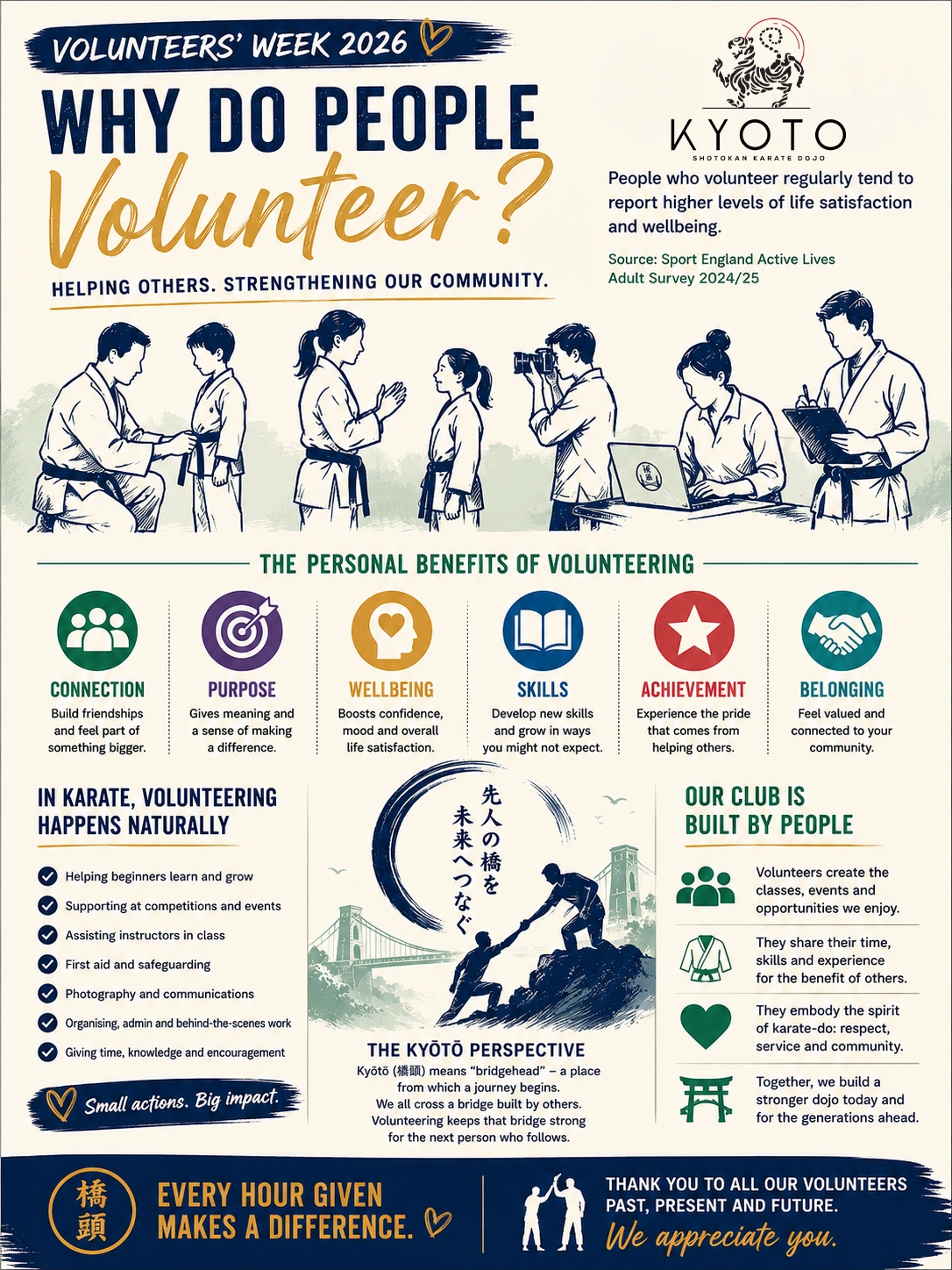
Recent findings from Sport England's Active Lives Adult Survey 2024/25 suggest that people who volunteer regularly tend to report higher levels of life satisfaction and wellbeing than those who do not volunteer. While the reasons behind this are complex, many volunteers would probably recognise some familiar themes.
Volunteering creates connections.
It gives people a sense of purpose.
It provides opportunities to learn new skills.
Most importantly, it allows us to contribute to something larger than ourselves.
Within karate, volunteering often happens naturally.
A senior student spends a few minutes helping a beginner understand a technique.
A parent offers assistance at a competition.
An instructor stays behind after class to answer questions.
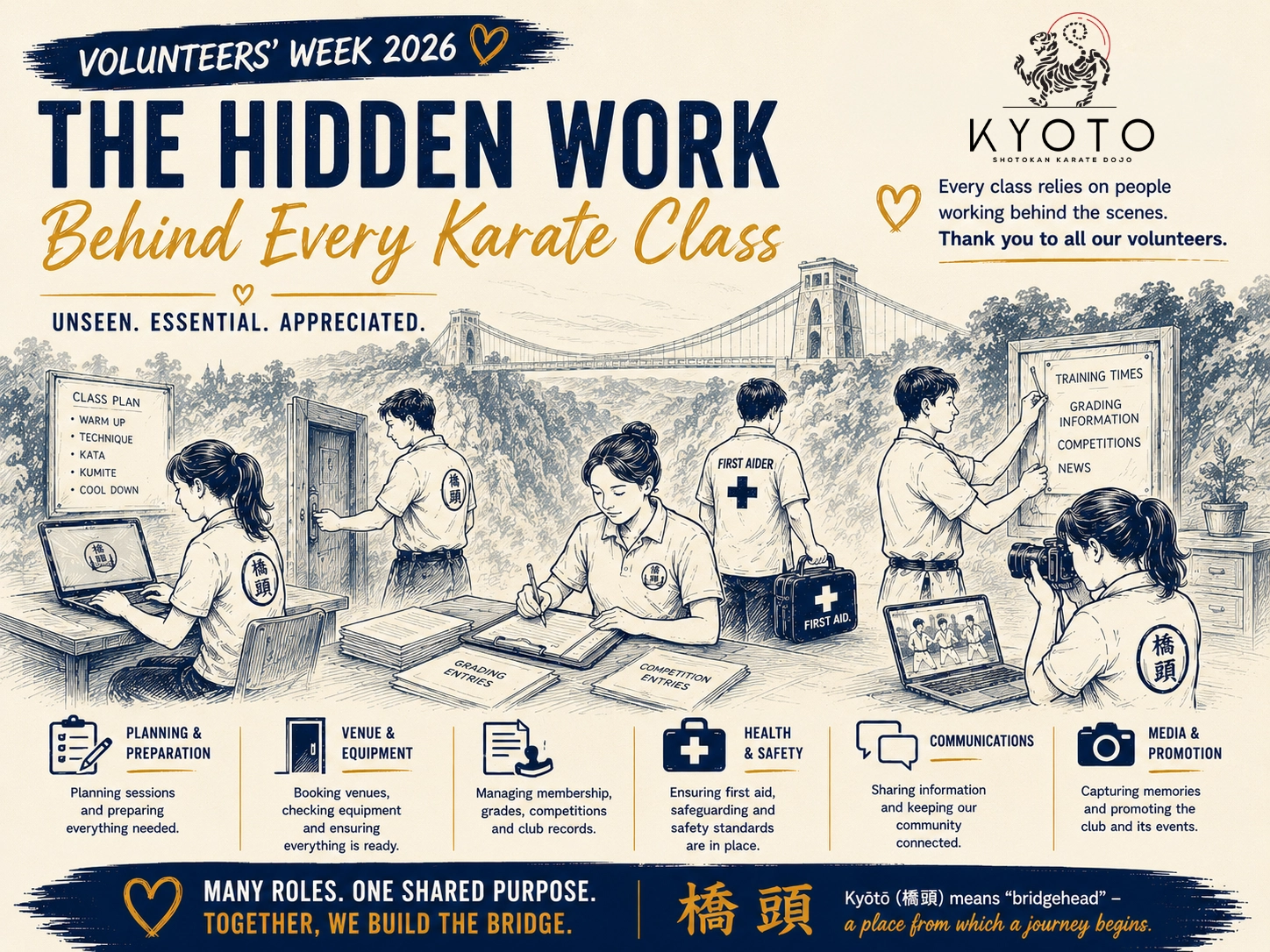
Someone takes photographs, updates a website, organises an event or helps manage club administration.
These acts may seem small in isolation, but together they help create the community that students experience every week.
Many volunteers describe a similar feeling. At some point, they realise that the enjoyment they gain from helping others can be just as rewarding as their own achievements.
This is something that traditional karate has long understood.
While karate training develops individual skill and character, it also encourages responsibility towards others. More experienced students are expected to support newer students. Knowledge is passed forward. The progress of one generation helps create opportunities for the next.
At Kyōtō, we have seen this repeatedly over the years.
Students who once stood nervously at the edge of the dōjō as beginners now help welcome new members.
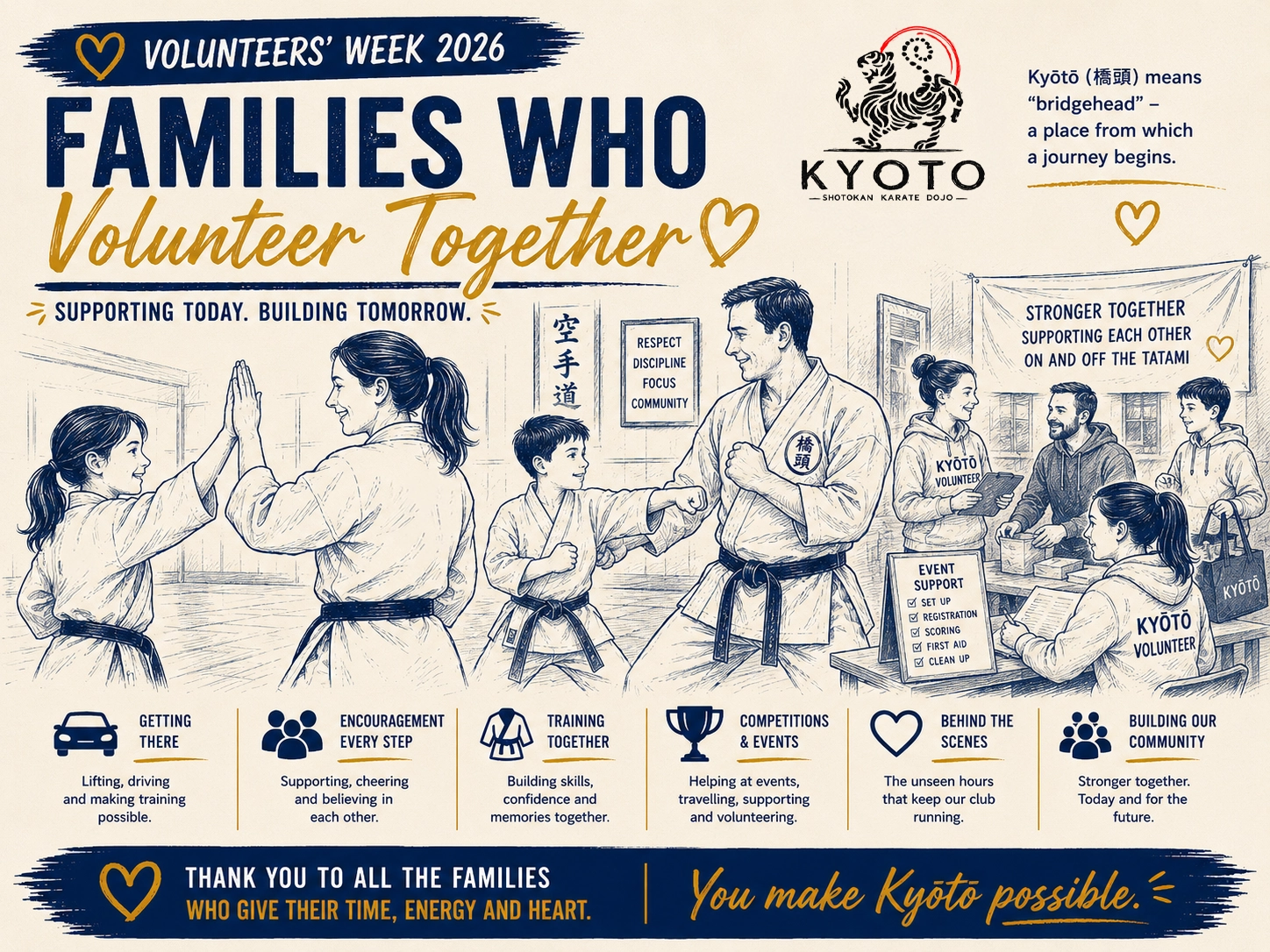
Parents who originally brought their children to class now support events and competitions.
Students who benefited from the guidance of others have chosen to give something back in return.
Perhaps that is one of the greatest benefits of volunteering. It reminds us that communities are not built by buildings, equipment or organisations.
They are built by people.
## The Kyōtō Perspective
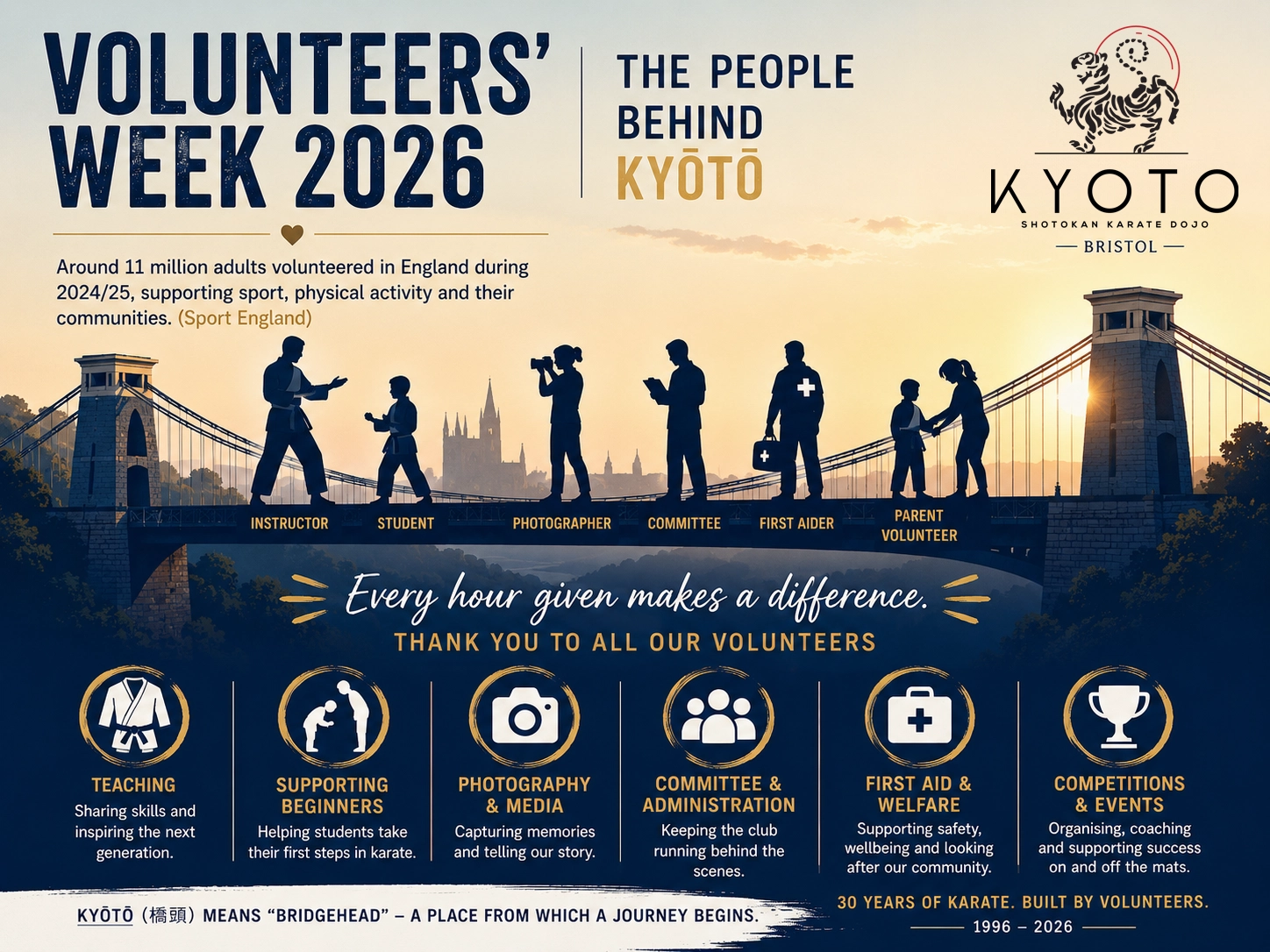
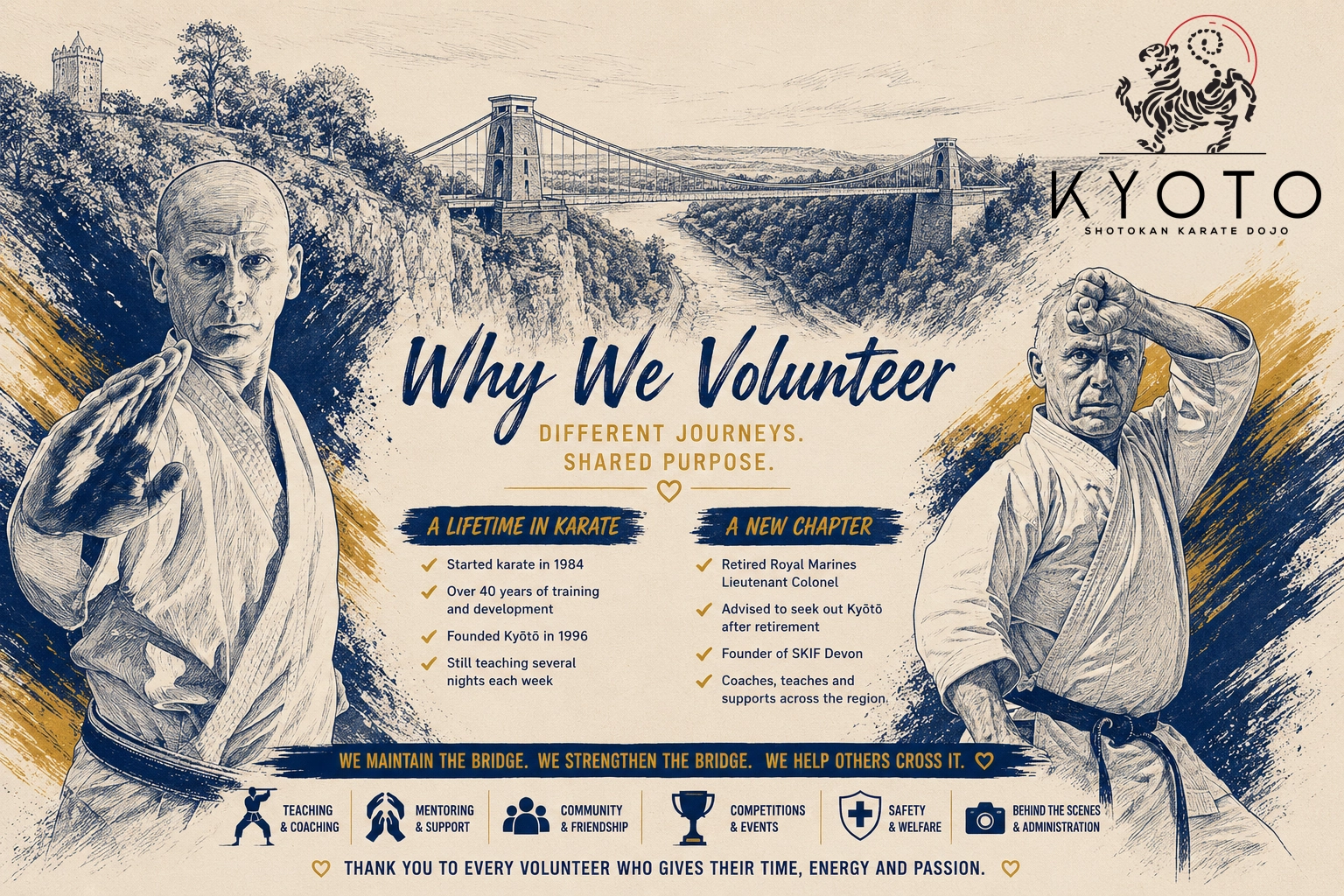
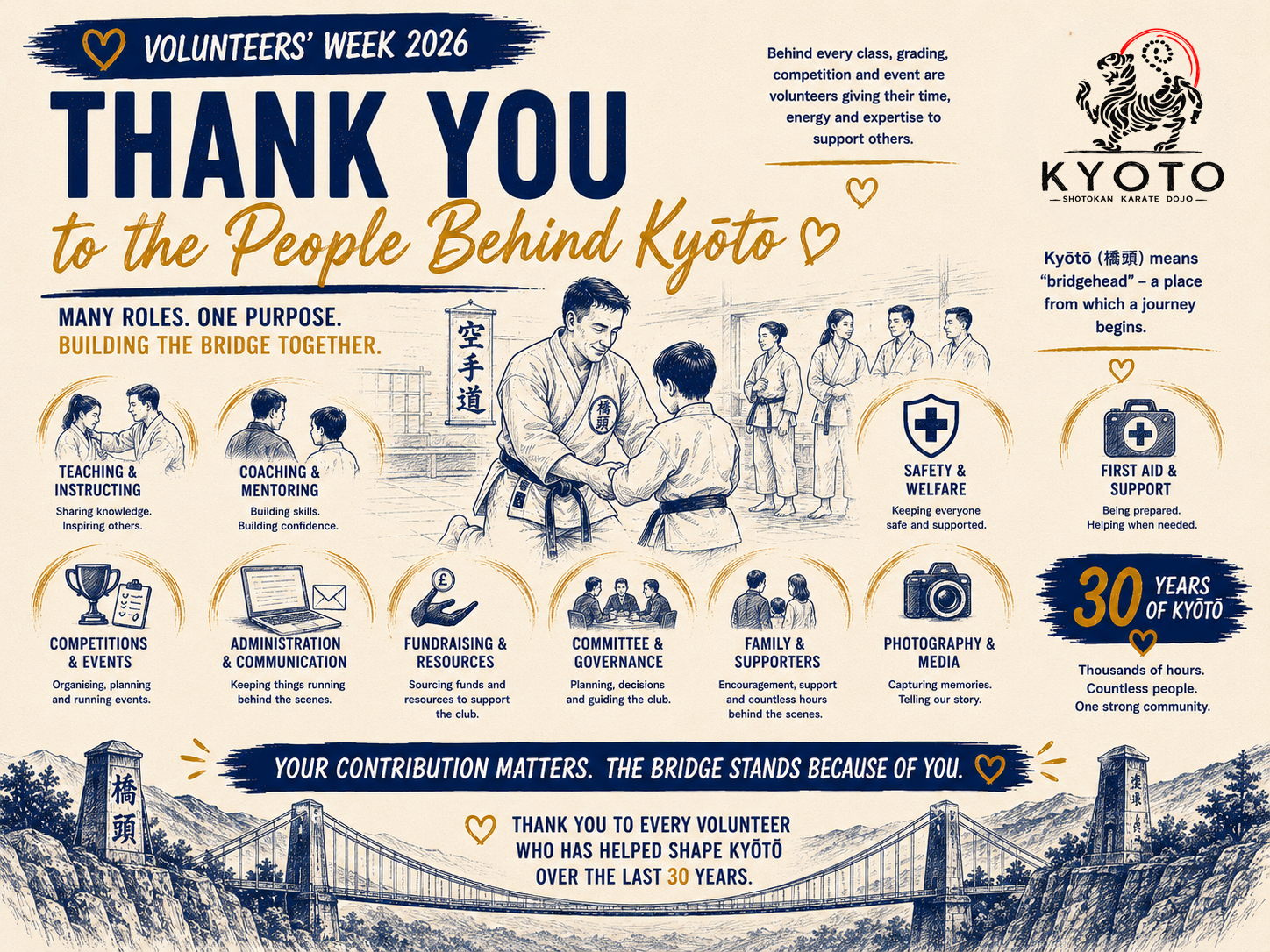
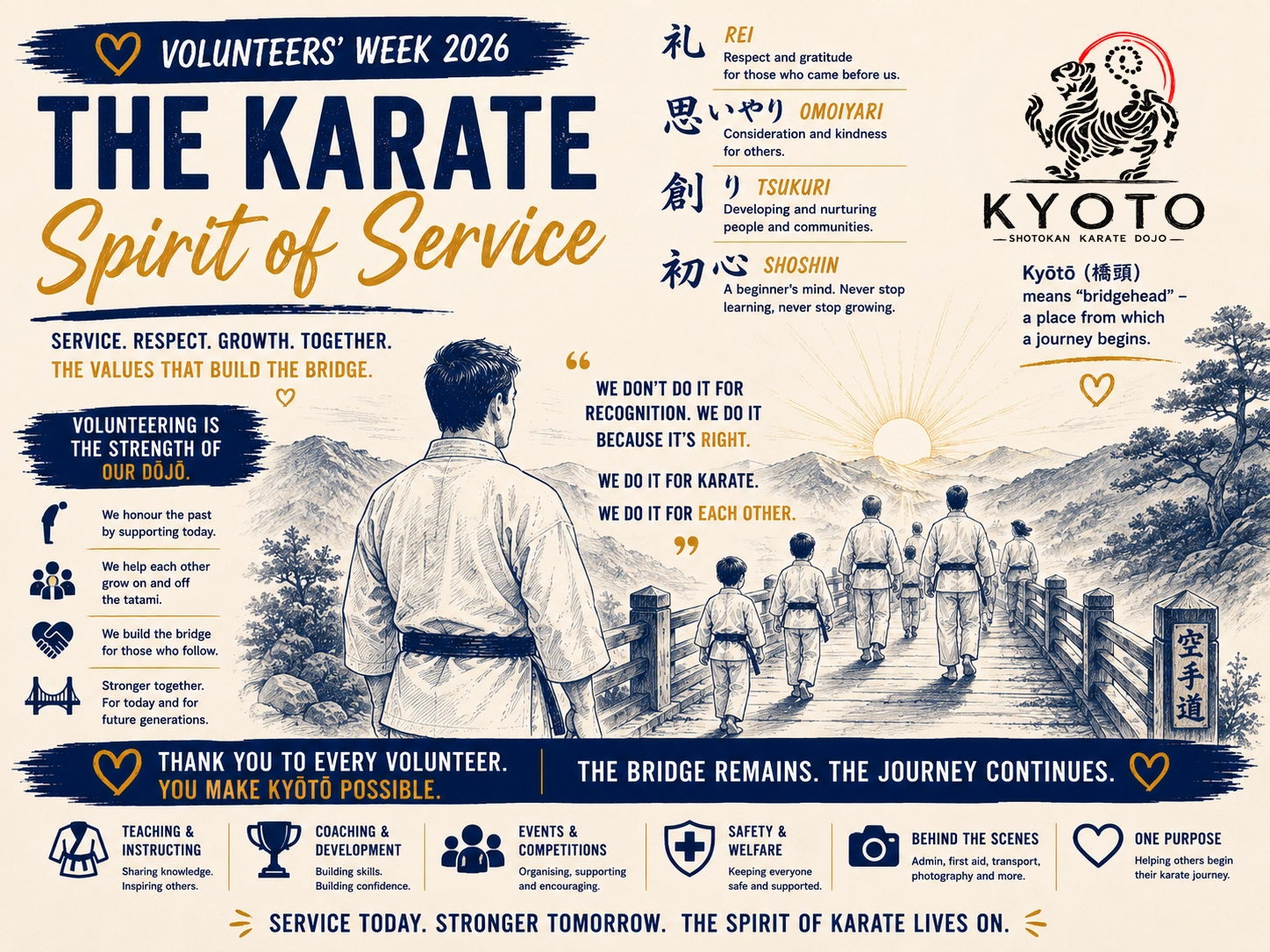
The name Kyōtō (橋頭) means "bridgehead"—a place from which a journey begins.
Every student begins their karate journey by crossing a bridge built by others. Instructors, assistants, volunteers, parents and supporters have all played a part in creating the opportunities available today.
Volunteering is one way of strengthening that bridge for the next person who follows.
For many karateka, that may be the most meaningful achievement of all.